Automotive Locksmithing Tools: Programmers, Cutters & Decoders Explained
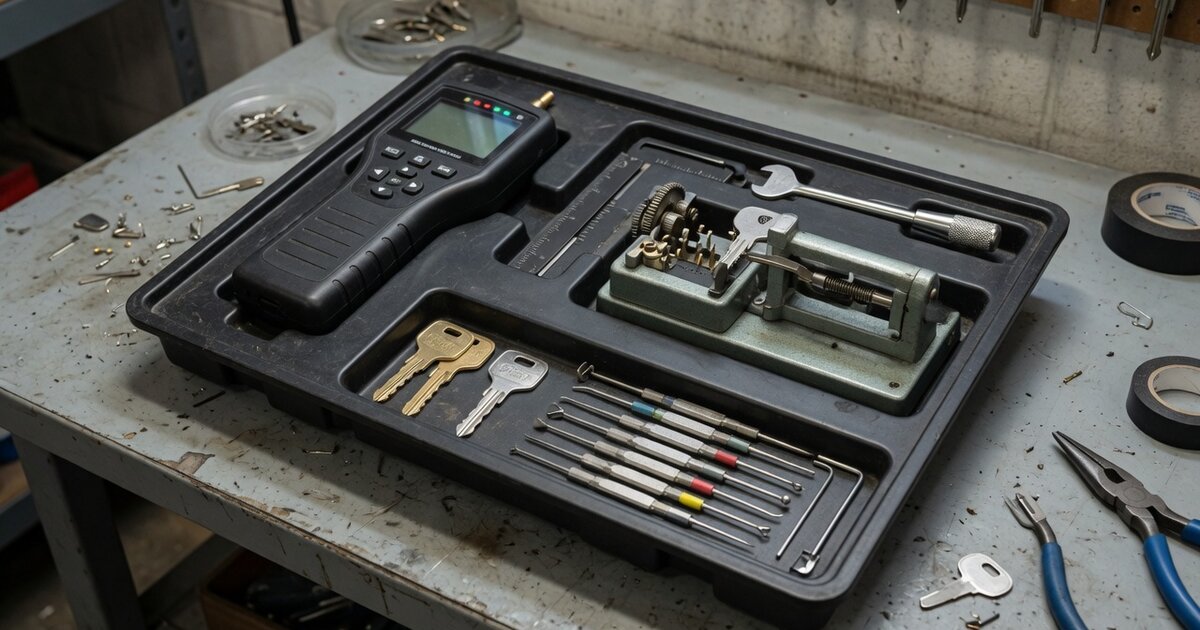
Automotive locksmithing tools are the equipment professionals use to cut, duplicate, decode, and program keys and remotes for cars, trucks, vans, and motorcycles. The category spans mechanical key cutting machines, electronic key programmers that talk to a vehicle's onboard computer, lock pick and decoder tools for opening cylinders without damage, and diagnostic scanners that read the immobilizer and body control modules. Together they let a locksmith replace a lost key, add a spare, or restore access after a lockout without relying on a dealership.
The trade needs dedicated equipment because modern vehicles are built around anti-theft electronics, not just mechanical locks. A transponder chip inside the key communicates with the car's immobilizer, and unless a tool can read that system and write a matching key code, a freshly cut blade will turn the lock but never start the engine. Newer platforms add security gateway modules that block unauthorized access to the vehicle network entirely, so tool makers must keep updating firmware to bypass or work around them. That constant change is why automotive locksmithing tools are sold, supported, and reviewed as an ongoing category rather than a one-time purchase, and why shops that follow tool releases closely, the way this site tracked the CGDI Prog BMW and Mercedes tools test report, tend to stay ahead of coverage gaps on newer models.
Main categories of tools
Key programmers are handheld or laptop-based devices that connect to a vehicle, most often through the OBD2 diagnostic port, to read key data and write new key or remote codes into the immobilizer. Professional-grade units from brands such as Autel, Xhorse, Lonsdor, ACDP, TOPDON, and Advanced Diagnostics cover different mixes of domestic, European, and Asian makes, and vendors regularly push firmware updates to add coverage or restore functions lost when an automaker changes its security protocol, similar in spirit to the OBDSTAR tools upgrade the site reported on.
Key cutting machines shape a physical blade to match a vehicle's lock. Manual machines trace an existing key mechanically, while computerized cutters use a stored code database to cut a blank to factory specification without an original key present. Depending on the model, a cutter may handle standard edge-cut keys, laser (sidewinder) keys used on many late-model vehicles, or both.
Decoder and pick tools, most notably the Lishi family of tools, let a locksmith open and read a lock cylinder at the same time without drilling or damaging it. That decoded information can then be used to cut a working key on the spot, which makes these tools central to non-destructive lockout service.
Diagnostic equipment rounds out the kit. Scanners that read fault codes, check module communication, and confirm an immobilizer has accepted a new key are what separate a job that looks finished from one that is actually finished, since a car can start once in a shop and still fail intermittently if the underlying fault was never cleared.
What to consider
Choosing tools is less about buying the most expensive unit available and more about matching equipment to the vehicles a locksmith actually services and the level of the business. A few practical points worth weighing:
- Start with the makes and models most common in the local market rather than trying to cover every manufacturer on day one.
- Entry-level programmers and manual cutters can support basic transponder and duplicate-key jobs at a lower upfront cost.
- Mid-range and professional bundles typically add broader vehicle coverage, all-keys-lost programming, and remote or smart key support.
- Ongoing subscription or update fees are a real part of the total cost, since coverage for new vehicle years depends on regular firmware updates.
- Formal training or manufacturer certification helps with both competence and credibility, and some tool vendors bundle training with equipment purchases.
- Membership in a locksmith association can provide access to technical bulletins, code lookup services, and peer support that a tool alone does not supply.
- A mobile setup, including a laptop or tablet, reliable power source, and a way to secure equipment in a vehicle, matters as much as the programmer itself for a mobile locksmith.
- Software licensing terms vary between vendors, so it is worth confirming what a subscription actually covers before committing to one ecosystem.
- Insurance and any state or local licensing requirements for locksmith work should be checked before taking on jobs, since rules vary by jurisdiction.
Common mistakes to avoid
New and experienced locksmiths alike run into a handful of recurring problems when building or maintaining a tool set. Recognizing them early saves both money and callbacks.
- Buying a single "do everything" tool and assuming it covers every vehicle, rather than checking actual make and model coverage first.
- Skipping firmware and software updates, which leaves a tool unable to handle newer security systems even though the hardware still works.
- Underestimating the learning curve for all-keys-lost and security gateway procedures, which differ significantly from routine duplicate-key jobs.
- Ignoring the total cost of ownership, including update subscriptions, replacement blades, and adapter cables, when comparing tool prices.
- Relying on a single tool with no backup, which can strand a mobile locksmith mid-job if hardware fails or a signal is lost.
- Neglecting basic mechanical skills like pick-and-decode technique in favor of electronics alone, which limits the range of jobs a locksmith can take.
Frequently asked questions
What is the difference between a key cutter and a key programmer?
A key cutter shapes the physical metal blade of a key so it fits and turns a vehicle's lock mechanically. A key programmer is a separate electronic device that communicates with the car's immobilizer and writes the digital code needed to actually start the engine. Most modern vehicles need both steps: a correctly cut blade and a properly programmed transponder or remote.
Do I need different tools for different car brands?
Coverage varies by tool and vendor rather than being universal. Some professional programmers support a wide range of domestic, European, and Asian makes through firmware updates, while others specialize in a narrower set of brands. It is common for working locksmiths to run more than one programmer to cover gaps between tools, especially for newer or less common models.
What is a Lishi tool used for?
A Lishi tool is a combination pick and decoder designed for a specific lock family, allowing a locksmith to open a cylinder without drilling or damage while simultaneously reading the cuts needed to make a working key. It is one of the more common non-destructive entry tools in automotive locksmithing and is typically used alongside a key cutting machine.
Can these tools handle all-keys-lost situations?
Many professional-grade programmers are built specifically to handle all-keys-lost jobs, where no original key or remote is available to reference. These procedures are generally more involved than adding a spare key, often requiring direct access to the vehicle's module through the OBD2 port or, on some platforms, bypassing a security gateway, so tool capability and locksmith experience both matter.
Why do key programming tools need regular updates?
Automakers periodically change immobilizer protocols, add new security gateway modules, or release new model years, and a tool that cannot read the current version of that system will not be able to program a key. Vendors respond with firmware and software updates, which is why ongoing update access is typically part of the cost of owning a professional-grade programmer.
Is formal training necessary to use automotive locksmithing tools?
Training is not always legally required, but it makes a meaningful difference in how quickly someone can use the equipment correctly and safely, particularly for programming procedures that vary between manufacturers. Many tool vendors and locksmith associations offer courses or certification paths, and some jurisdictions also have their own licensing requirements for locksmith work.