ECU Coding Explained: What It Means and When You Need It
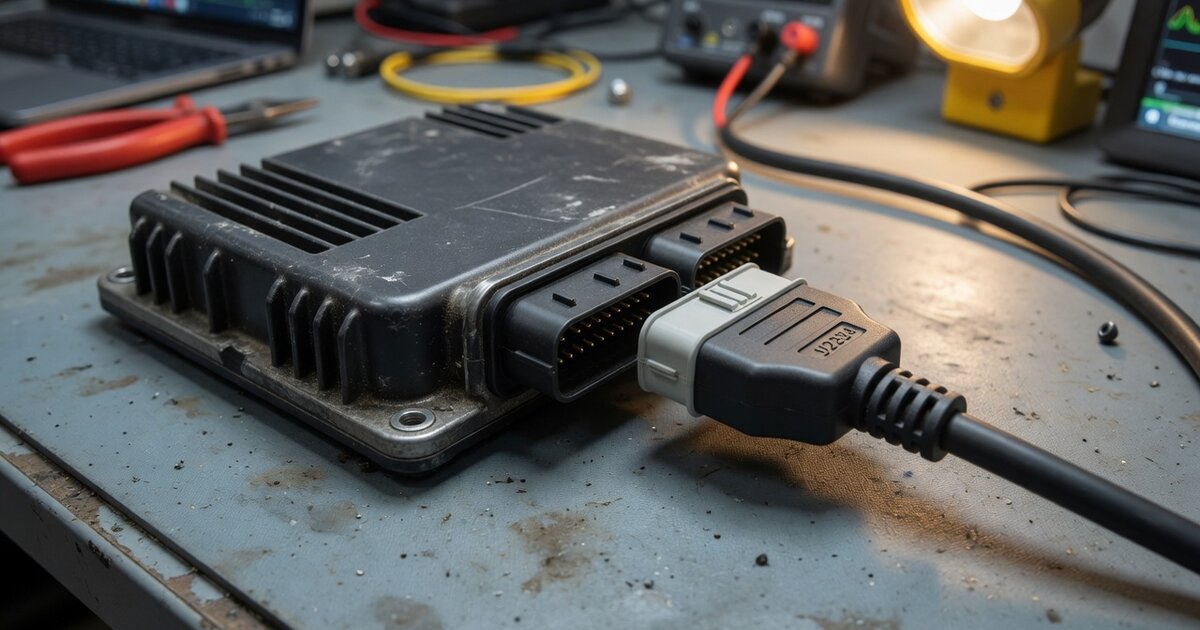
"ECU coding" refers to configuring settings and options that already exist inside a vehicle's electronic control unit or module, enabling features, and telling one module how to recognize and cooperate with another — without rewriting the module's underlying firmware. It sits at the configuration end of a spectrum that also includes ECU programming, often called flashing or reprogramming, which replaces or updates the firmware image the module actually runs. The distinction matters because the tools, skill level, and situations calling for each are different. Programming is typically needed when a manufacturer releases a software update, when firmware has become corrupted, or when a replacement ECU ships with base or blank software that has to be loaded before it will run at all. Coding, by contrast, is usually needed when the settings a technician wants already exist in the module and simply need to be turned on, matched to the vehicle's build, or synchronized with a newly installed part. A common trigger is component replacement: a new instrument cluster, body control module, or engine control unit often needs to be coded to the vehicle identification number, matched to other modules on the network, and in many cases coded for security or immobilizer purposes before the engine will start. Locksmiths and diagnostic technicians run into ECU coding constantly, since key and immobilizer work frequently depends on it.
How it works
In practice, ECU coding starts with a diagnostic interface that can talk to the vehicle's data bus — commonly through the OBD-II port — and software that exposes the module's coding channels. On many vehicles, manufacturers build coding functions directly into their factory-level diagnostic systems, while aftermarket multi-brand tools replicate a subset of those functions for independent shops. The technician connects to the relevant module — engine, body, instrument cluster, or an add-on unit — reads its current coding string or configuration set, and changes only the values that need to change, whether that means enabling a feature, matching a replacement part's serial data, or updating a variant code after a hardware swap.
Security and immobilizer coding is one of the most common real-world uses of this process. When a car's ECU, key, or an immobilizer-related module is replaced, the new component generally doesn't yet "know" the vehicle, and the vehicle doesn't yet trust the new component. Coding — sometimes bundled with a related key-learning or component-protection procedure — links the new part into the vehicle's security system so the engine actually starts and the anti-theft warning light behaves normally. This is the kind of work documented in walkthroughs like fixing immobilizer errors after a Toyota ECU replacement, where a replaced engine control unit needs correct coding and key-matching before the immobilizer stops throwing faults. Programming and coding often happen back-to-back on the same job: a bench-programmed or virgin ECU is installed, then coded to the specific chassis before immobilizer and key procedures can be completed.
What to consider
Before starting an ECU coding job, a handful of practical factors decide whether the procedure goes smoothly or turns into a stalled vehicle on the lift.
- Confirm whether the job actually needs coding, programming, or both — treating them as interchangeable wastes time and can leave a module half-configured.
- Use a stable, adequately rated power supply; a battery voltage drop mid-coding is one of the most common causes of a corrupted or unresponsive module.
- Match the tool and software version to the vehicle's model, market, and production date, since coding menus and channel numbers vary between platforms and revisions.
- Back up the existing coding or configuration data before making changes, so a mistake can be reversed rather than diagnosed from scratch.
- Understand how the module being coded relates to others on the network — body, engine, and security modules often need to agree before a vehicle starts cleanly.
- Check for known coding-related issues, software bulletins, or platform-specific quirks before assuming an unrelated fault is unconnected to the coding step.
- Keep a stable connection between the diagnostic interface and the OBD port; interruptions during a write can leave a module in an unrecoverable state.
- Verify the replacement part's identity and compatibility before coding it in, since coding a mismatched component can mask a hardware problem rather than fix it.
- Where security or immobilizer systems are involved, expect a related key-matching or component-protection step, similar to jobs like replacing a BMW CAS3 N20 ECU with CGDI Prog, where the module swap and its coding go hand in hand.
Common mistakes to avoid
Most failed or problematic coding attempts trace back to a short list of avoidable mistakes rather than a genuinely unusual vehicle.
- Coding a module without first confirming what software or firmware version is already loaded on it.
- Ignoring low or unstable battery voltage and starting a coding session anyway.
- Skipping the pre-coding backup, leaving no way back if a value gets changed incorrectly.
- Assuming every replacement part needs the same coding steps as the last similar job, without checking model-specific procedure differences.
- Interrupting the process — disconnecting the tool, opening a door, or cycling the ignition — before the module confirms the write has completed.
- Treating a coding failure as a hardware fault, or the reverse, without ruling out the simpler explanation first.
Frequently asked questions
Is ECU coding the same as ECU programming?
No. Programming, also called flashing or reprogramming, rewrites the firmware a module runs, while coding adjusts settings, features, and configuration values within firmware that's already installed. A given repair might call for one, the other, or both, depending on whether the module's underlying software or only its configuration needs to change.
When does a vehicle need ECU coding?
Coding is typically needed after replacing a module such as an engine control unit, body control module, or instrument cluster, so the new part matches the vehicle and communicates correctly with other systems on the network. It's also used to enable factory-available features or update configuration values, including steps tied to immobilizer and security systems after a repair.
What tools do technicians use to code an ECU?
Technicians generally use a diagnostic interface connected to the vehicle's OBD port together with coding-capable software. Manufacturer-level diagnostic platforms build coding functions in directly, while multi-brand aftermarket tools replicate similar functions for independent shops. Exactly which coding channels are accessible, and how deep that access goes, varies by vehicle brand, model, and the diagnostic tool in use.
Does replacing a car key or ECU always require coding?
Not always, but it's common. Many replacement engine control units, immobilizer components, and keys need to be coded or matched to the vehicle before the security system will trust them and let the engine start. Whether coding is required, and what form it takes, depends on the specific vehicle, the part being replaced, and how that platform's security system is designed.
Can ECU coding be done without special equipment?
Generally no. Coding relies on a diagnostic interface that can access the module's coding functions over the vehicle's data bus, plus software that exposes those functions correctly for that specific model. Without the right combination of interface and software, the coding channels a technician needs typically aren't reachable at all.
What happens if ECU coding is done incorrectly?
Outcomes range from a feature simply not working as expected to a module rejecting inputs, throwing fault codes, or in more serious cases becoming unresponsive if a write is interrupted. This is why backing up existing configuration data, maintaining stable power, and keeping the connection uninterrupted throughout the process matter before any coding session begins.