Engine Diagnostic Tools: Finding Misfires, Sensor Faults, and Performance Problems
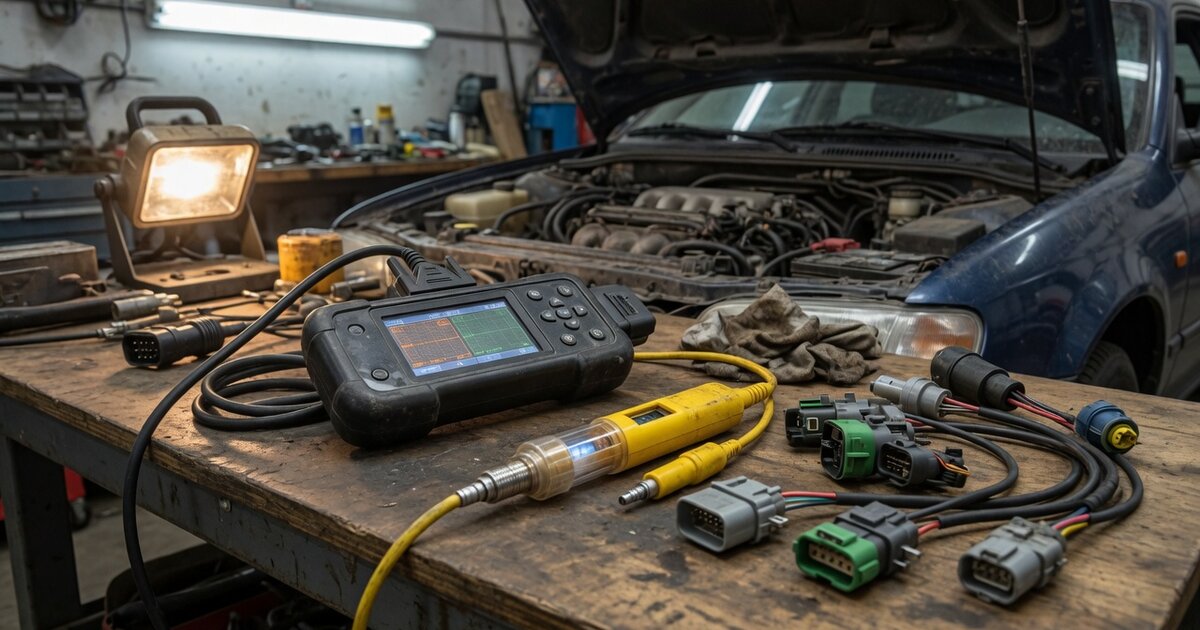
An engine diagnostic tool is built to look specifically at the powertrain side of a vehicle's onboard computer: the systems that control combustion, fuel delivery, ignition timing, and emissions. That is a narrower job than a general diagnostic scan tool, which might also pull codes from ABS, airbag, or body control modules. When a check engine light comes on because of a rough idle, a hesitation on acceleration, a failed emissions test, or a drop in fuel economy, the cause almost always traces back to the engine management system, and that is where an engine-focused tool earns its keep.
At its core, this kind of diagnostics covers three things: reading the trouble codes the engine control module has stored, watching live sensor data as the engine runs, and interpreting what combination of readings points to a specific failing part rather than just a symptom. A single stored code, like a misfire or a lean-condition code, can have several possible root causes, so the tool's real value is in the live data streams and freeze-frame snapshots that let a technician or a careful DIYer narrow those possibilities down before replacing parts.
How it works
Engine diagnostics revolve around a set of sensors the control module constantly monitors: the crankshaft and camshaft position sensors, mass airflow (MAF) or manifold absolute pressure (MAP) sensor, oxygen sensors before and after the catalytic converter, coolant temperature sensor, throttle position sensor, and knock sensor. Each one feeds a value the ECU compares against expected ranges, and a value outside that range triggers a diagnostic trouble code.
Misfire detection is a good example of how this works in practice. The control module tracks the crankshaft position sensor's signal and watches for tiny variations in rotational speed between cylinder firings. When a cylinder isn't firing correctly, the crankshaft's speed dips at that point in the rotation. The system counts these events over time, and if the rate is high enough to risk exceeding emissions limits, it logs a misfire code such as P0300 for random or multiple-cylinder misfires, or a cylinder-specific code like P0301 through P0308.
Fuel trim and air-fuel ratio codes work differently. Codes in the P0171-P0175 range indicate the engine is running lean or rich, which can stem from a vacuum leak, a dirty or failing MAF sensor, weak fuel pressure, or a faulty coolant temperature reading throwing off the fuel calculation. A code like P0420, for catalyst efficiency below threshold, often isn't a catalytic converter problem at all; it can be a downstream effect of an unresolved misfire or a failing oxygen sensor feeding the module inaccurate data. A capable engine diagnostic tool lets you watch these sensor values live and compare them against factory specifications, rather than relying on the code alone.
What to consider
Not every engine diagnostic tool offers the same depth, and the right pick depends on how far past the basic trouble code you need to go. Before choosing one, weigh:
- Live data streaming for the specific sensors involved, not just a code readout
- Freeze-frame data support, showing engine conditions at the moment a code was set
- Misfire counters or graphing functions that show which cylinder is affected and how often
- Manufacturer-specific (enhanced) code coverage in addition to generic OBD-II codes
- Bidirectional controls, such as activating a fuel injector or running a component test
- Update frequency, since new codes and vehicle coverage change over time
- Compatibility with the vehicle's model year and OBD protocol
- Whether the tool also covers other functions a shop needs, since some multi-function units that handle engine diagnostics are built on the same platform used for tasks like choosing a tool to program a Nissan Versa smart key, which can matter if you're deciding between a dedicated engine scanner and a broader diagnostic and programming platform
- Ease of interpreting fuel trim, oxygen sensor, and timing data without extra reference material
A tool that only reports the code number without live data leaves most of the diagnostic work undone, since codes like P0171 or P0420 point to a category of problem, not a single part.
Common mistakes to avoid
Engine diagnostics get misread often enough that a few patterns account for most wasted parts and comebacks. The most frequent one is treating a stored code as a part number rather than a symptom, then replacing a sensor or catalytic converter without confirming the actual cause with live data. Clearing a code without addressing the underlying condition is another, since the light typically returns once the same fault reoccurs.
- Replacing a component based on the code name alone, without checking live sensor values first
- Ignoring freeze-frame data that shows the exact conditions when the fault occurred
- Chasing a P0420 catalyst code before ruling out an active misfire or oxygen sensor fault
- Assuming a lean code always means a bad MAF sensor instead of checking for vacuum leaks
- Clearing codes and driving away instead of verifying the repair with a follow-up scan
- Using a tool with outdated software that doesn't recognize newer manufacturer-specific codes
Frequently asked questions
What is the difference between an engine diagnostic tool and a general OBD2 scanner?
A basic OBD2 scanner mainly reads and clears generic trouble codes. An engine diagnostic tool goes further, streaming live sensor data such as oxygen sensor voltage, fuel trims, and misfire counts, and often supports manufacturer-specific codes and freeze-frame data, which are what's actually needed to pin down the cause of an engine-related fault rather than just identify that one exists.
Can an engine diagnostic tool tell me which cylinder is misfiring?
Yes, in most cases. When the control module detects a misfire tied to a specific cylinder, it stores a cylinder-specific code, such as P0301 for cylinder one. Many engine diagnostic tools also offer a misfire counter or graphing display that shows the frequency of misfire events per cylinder in real time, which helps confirm whether the problem is isolated or affecting multiple cylinders.
Why does my car have a catalytic converter code when the converter seems fine?
A catalyst efficiency code like P0420 doesn't always mean the converter has failed. It's frequently a downstream symptom of an unresolved misfire, a failing oxygen sensor, or a rich or lean fuel condition affecting how the converter is monitored. Diagnosing the oxygen sensor readings and ruling out a misfire first is the usual approach before replacing the converter.
What sensors does an engine diagnostic tool typically monitor?
Common sensors include the crankshaft and camshaft position sensors, mass airflow or manifold absolute pressure sensor, upstream and downstream oxygen sensors, coolant temperature sensor, throttle position sensor, and knock sensor. The control module compares readings from these against expected ranges, and values outside that range are what generate diagnostic trouble codes.
Is a lean condition code always caused by a vacuum leak?
Not always. A lean code such as P0171 is commonly linked to a vacuum leak, but it can also result from a dirty or failing mass airflow sensor, low fuel pressure, or a faulty coolant temperature sensor skewing the fuel calculation. Live data readings for fuel trim and MAF output, alongside a physical smoke test for leaks, are needed to isolate the actual cause.
Do I need a professional-grade tool, or is a basic scanner enough for engine diagnostics?
It depends on the depth of diagnosis needed. A basic scanner can read and clear generic codes, which is enough for simple checks. Tracing a misfire, a lean or rich condition, or a catalyst code to its root cause generally requires a tool with live data streaming, freeze-frame support, and ideally manufacturer-specific code coverage, which basic scanners usually lack.