Key Fob Programmer Devices: Types and Buyer's Guide
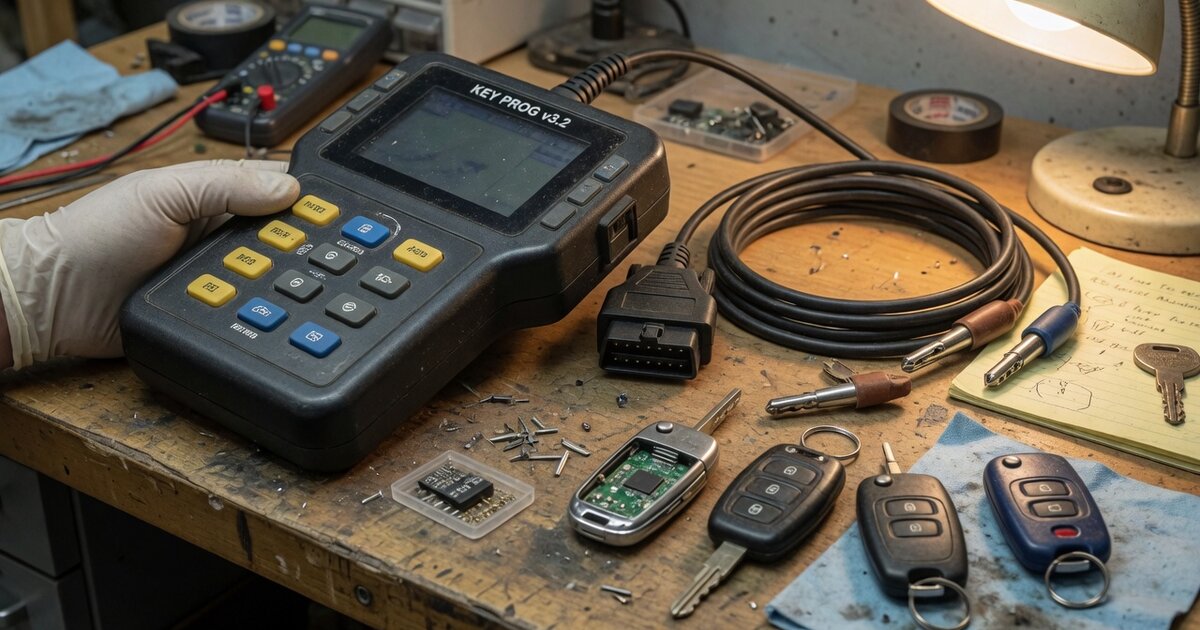
A key fob programmer is a piece of hardware, not software, that reads and writes data to a vehicle's immobilizer system and remote-entry receiver so a new or replacement key fob will start the car and operate central locking. Unlike a simple battery replacement or a shell swap, programming means teaching the vehicle's onboard computer to recognize a transponder chip and, on most modern cars, a rolling-code remote signal at the same time. These devices range from small single-purpose dongles sold with a matching blank key to full diagnostic tablets that also read engine codes, run bi-directional tests, and handle bench-level immobilizer work.
Who actually buys one? Independent and mobile locksmiths make up the largest share of the market, since a capable unit lets them serve several car brands from one van without sending customers to a dealership. Independent repair shops add key programming as a side service once they already own general diagnostic equipment. A smaller but steady group is DIY vehicle owners replacing a lost or worn-out fob on an older, well-documented car where a vehicle-specific kit is realistic. Choosing the right category of device matters more than chasing the newest model number, because coverage, update policy, and workflow differ sharply between entry-level and professional tiers.
Types of programmer devices
Entry-level tools are usually vehicle-specific or brand-limited. A common format is a bundled kit: a new blank fob plus a small OBD2 dongle that walks the user through a guided procedure for one specific make and model range. These are inexpensive, simple, and reasonably reliable for the exact vehicle they're built for, but they don't scale — buy the wrong kit for the wrong car and it simply won't work. Standalone handheld remote programmers sit slightly above this tier: a small LCD unit with a few buttons that plugs into the OBD port or reads a fob wirelessly, aimed at DIYers and hobbyist locksmiths comfortable following on-screen prompts.
Mid-range multi-brand tools are the workhorse of independent and mobile locksmiths. These are typically tablet- or handheld-style devices that combine diagnostic scanning with key and remote programming across dozens of makes, often sold with a subscription for ongoing vehicle coverage and firmware updates. Some product lines split a "basic" and a "full" version of the same hardware, unlocking extra transponder types or all-keys-lost routines at a higher tier — the Tango Basic vs Tango Full key programmer split is a well-known example of that pattern.
Professional multi-brand units add capabilities entry and mid-range tools skip: EEPROM/MCU read-write via a bench adapter, all-keys-lost recovery, and deeper access to body-control and immobilizer modules. These typically pair a diagnostic base unit with an add-on key programmer module, and coverage is maintained through frequent software releases rather than a one-time purchase — the Xhorse VVDI 2 key programmer software updates are a good illustration of how often this tier's vehicle list changes.
What to consider
Picking between categories comes down to how many vehicles you need to cover, how often you'll face a lost-all-keys job, and how much ongoing cost you're willing to carry. Before buying, weigh the following:
- Confirmed vehicle and make coverage list from the manufacturer, not a generic "works on most cars" claim.
- Whether the tool supports all-keys-lost recovery or only adds a spare when one working key already exists.
- Ongoing subscription, token, or credit costs required to keep coverage and firmware current.
- Support for both transponder chip programming and rolling-code remote/smart-key pairing, since some tools only do one.
- Bench or EEPROM programming capability if you plan to take on advanced immobilizer or damaged-module jobs.
- Connectivity method — wired OBD, Bluetooth, or both — and how that affects reliability in a shop or mobile van.
- Build quality and portability if the tool will travel in a service vehicle daily.
- Availability of manufacturer firmware updates and responsive customer support.
- Whether cloud-based token systems are required for certain vehicle unlocks, which adds recurring cost per job.
Common mistakes to avoid
Most buyer's remorse with key fob programmers traces back to a handful of avoidable errors, usually made because a shopper focused on price or brand reputation instead of the actual job requirements.
- Buying a device before checking that it explicitly lists your target vehicle makes and model years.
- Ignoring the ongoing subscription or token cost and budgeting only for the upfront hardware price.
- Assuming any multi-brand tool handles all-keys-lost jobs, when many require at least one working key or a separate module.
- Skipping firmware and software updates, which quietly cuts off support for newer vehicles over time.
- Using unofficial or cracked software, which can brick the device, corrupt a vehicle's module, or void support.
- Confusing transponder-only programming with full smart-key pairing when the job actually needs both.
Frequently asked questions
What is a key fob programmer used for?
It's used to write key and remote data into a vehicle's immobilizer and central-locking systems so a new, replacement, or spare key fob is recognized and can start the engine and operate the locks. It's needed any time a key is lost, damaged, or an extra spare is added, since a blank key or fob won't work until it's paired to that specific vehicle.
Can I use a key fob programmer without dealer access?
Yes, that's the main reason independent tools exist. Mid-range and professional programmers are built specifically so locksmiths and shops can program keys without a dealership subscription, though some newer vehicles with stronger security gateways still limit what independent tools can do without extra hardware or authorization.
Do key fob programmers require a subscription?
Many mid-range and professional units do, since manufacturers release frequent software updates to keep pace with new vehicle models and security systems. Entry-level vehicle-specific kits usually don't need one, since they're built for a fixed, narrow set of vehicles rather than broad, evolving coverage.
What's the difference between a key fob programmer and a diagnostic scanner?
A diagnostic scanner reads fault codes and live data from a vehicle's computer modules. A key fob programmer specifically writes new key and remote data to the immobilizer system. Many modern professional tools combine both functions in one unit, but simpler standalone programmers only handle the key-programming task.
Are cheap key fob programmers worth it?
They can be, for a narrow use case: a DIY owner or hobbyist working on one specific, well-supported vehicle. For anyone serving multiple makes or expecting all-keys-lost jobs, a low-cost tool's limited coverage and lack of bench-level features usually make it a poor long-term value compared with a mid-range multi-brand unit.
Can one device program keys for multiple car brands?
Mid-range and professional multi-brand programmers are designed to cover dozens of makes from a single unit, which is why locksmiths and shops rely on them instead of buying separate tools per brand. Coverage still varies by device and software version, so checking the current supported vehicle list before a job is essential.