Key Reprogramming: Resyncing a Key That Already Exists
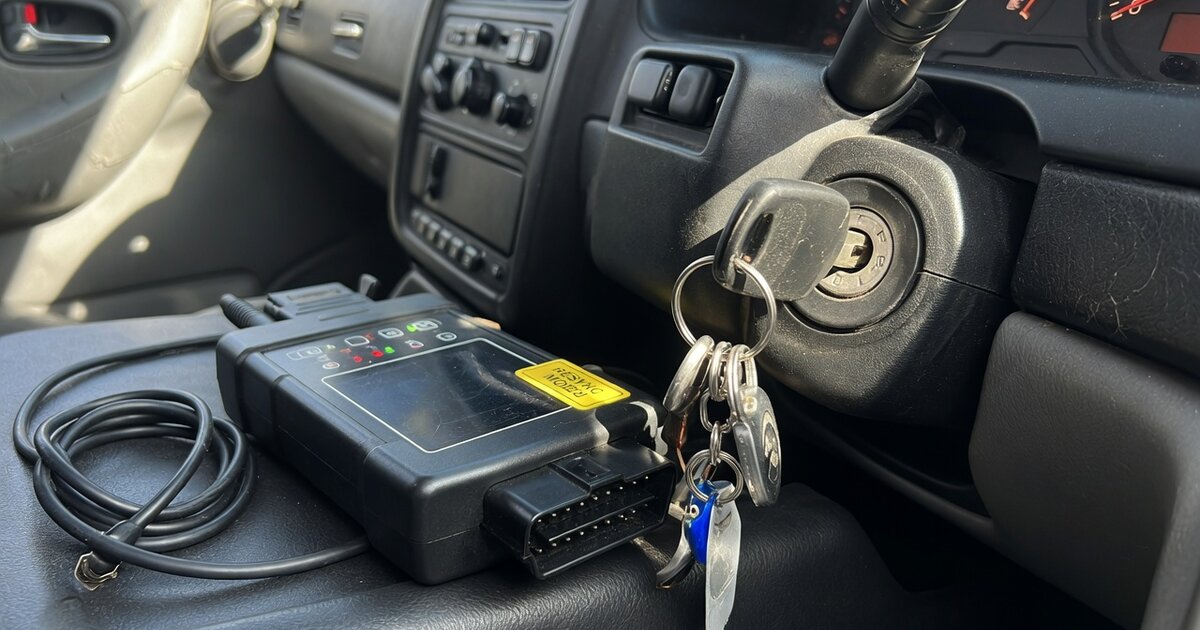
Not every key problem calls for a brand-new key. If a fob or transponder key that has worked for years suddenly stops unlocking the doors or starting the engine, the fix is often reprogramming — resyncing a key that already exists with the car's immobilizer or receiver — rather than buying a replacement. This is different from first-time key fob programming, where a fresh key is paired to a vehicle for the very first time. Reprogramming instead restores a broken link between hardware that is otherwise fine.
A dead coin-cell battery is the single most common trigger, but a battery swap, a jump-start, a disconnected car battery, a software update at the dealer, or simply dropping the fob can knock the rolling code or pairing data out of sync. When that happens, the key still has a working chip and button pad, and the car still has a working receiver — they just need to be told to recognize each other again. Reprogramming is almost always cheaper and faster than cutting and coding a replacement key, and it keeps a spare key in service instead of adding a new one to the system. The exception is when the fob itself is physically damaged, water-soaked, or the chip has failed internally; then reprogramming will not help and replacement is the only route.
How it works
Resyncing an existing key follows a narrower path than programming a first key, because the car already "knows" the key's identity — the goal is simply to refresh that relationship. On many vehicles a manual in-car sequence still works: cycling the ignition or door locks in a specific order puts the car into a programming window, then pressing a button on the fob re-establishes the pairing. This method is free and takes a couple of minutes, but not every make supports it, and some models limit how many times it can be repeated before locking out.
When the manual sequence doesn't apply — most vehicles built in the last decade, and nearly all with encrypted immobilizer chips such as ID46, ID48, or DST80 — a technician connects a diagnostic tool to the OBD-II port. The tool talks directly to the body control module or immobilizer, reads the current key data, and writes the existing key back into the accepted list, or refreshes the rolling code counter so the two sides count in step again. Locksmiths and independent shops commonly use handheld or PC-based programmers for this; the same category of tool, for example, is what let aftermarket programmers add Xhorse VVDI Prog BMW CAS4 key support so an existing BMW key could be resynced without dealer-only equipment.
Throughout the process the technician usually checks the key's battery and chip continuity first, since a resync attempt on a truly dead battery or a cracked chip will simply fail and look like a deeper fault. Once the module accepts the key, most systems confirm the pairing with a lock cycle, a dash light change, or an audible chime, and the technician tests the remote functions and the engine start before calling the job done.
What to consider
Before booking a reprogramming appointment, a few practical checks can save a wasted trip or an unnecessary purchase:
- Rule out a simple battery replacement first — many "dead" fobs work again after a fresh coin-cell battery and no reprogramming at all.
- Check whether the manufacturer supports an in-car self-programming sequence, since that route can be free if the key is only out of sync, not lost from memory.
- Confirm how many keys the vehicle currently has programmed; some immobilizer systems erase all keys when a new one is added, meaning every spare needs to be brought along and reprogrammed at once.
- Ask whether the job needs OBD-II diagnostic access or a full disassembly of the ignition module, since pricing and time differ sharply between the two.
- Bring proof of ownership and vehicle registration — locksmiths and dealers generally require it before touching immobilizer data, for theft-prevention reasons.
- Expect the price to vary by brand and by whether a dealer or an independent locksmith performs the work, since equipment access differs by manufacturer.
- Have all existing keys and fobs on hand during the appointment, not just the one that stopped working, so the technician can verify the full set.
- Ask what happens if the resync fails — on some vehicles a failed attempt points to a chip or module fault rather than a simple sync issue, and the estimate should account for that possibility.
- Check the vehicle's key count limit; some models only support a fixed number of programmed keys, and old unused fobs may need to be cleared first.
Common mistakes to avoid
A few missteps turn a routine resync into a bigger repair bill:
- Assuming a non-responsive fob is automatically dead and buying a replacement before trying a battery swap or a basic resync.
- Attempting the in-car programming sequence found in an online video without checking it matches the exact model year, since sequences vary and a wrong one can do nothing or trigger a lockout.
- Removing the car battery or jump-starting incorrectly during troubleshooting, which can itself desync additional keys and modules.
- Skipping ownership documentation, then being turned away by a locksmith or dealer who cannot legally program an immobilizer without it.
- Forgetting to bring every existing key to the appointment when the system requires all keys present to complete programming.
- Ignoring repeated failed attempts instead of stopping, since some immobilizers impose a timeout or lockout after too many incorrect tries.
Frequently asked questions
What is the difference between key reprogramming and key fob programming?
Key fob programming usually refers to pairing a new or replacement key to a vehicle for the first time. Key reprogramming applies to a key that already worked with the car and needs to be resynced after an event like a battery change, a disconnected car battery, or a lost signal. The key and the car both already recognize each other's hardware — reprogramming just restores the communication between them.
Why did my key fob suddenly stop working if nothing changed?
Even without an obvious cause, fobs can desync from a weak or aging battery, electromagnetic interference, a software update performed during unrelated dealer service, or simply being out of range for too long. Rolling codes used for security can also drift out of step if the fob is pressed many times outside the car's receiving range, prompting the need for a resync.
Can I reprogram a key fob myself at home?
On some vehicles, yes — many manufacturers publish an in-car sequence involving the ignition and door locks that lets an owner resync an existing key without special tools. It does not work on every model, especially newer vehicles with encrypted immobilizers, where a diagnostic tool connected to the OBD-II port is required instead.
How long does key reprogramming take?
A manual in-car resync typically takes only a few minutes once the correct sequence is known. A shop or locksmith visit using diagnostic equipment usually takes 20 to 45 minutes, depending on the vehicle and whether other keys also need to be reprogrammed as part of the same session.
Does reprogramming a key fob cost less than replacing it?
Generally yes, since reprogramming reuses the existing fob hardware and chip rather than paying for a new key blank or transponder. Reported service costs for programming work commonly fall in a roughly $50 to $250 range depending on the vehicle and provider, though a simple in-car resync can cost nothing beyond a battery.
What if reprogramming does not fix the problem?
If the fob still fails to communicate after a proper resync attempt, the issue is likely hardware rather than software — a cracked transponder chip, corroded button contacts, or water damage inside the case. At that point replacement becomes the more reliable option, since no amount of reprogramming restores a physically failed component.