Keyless Programming: How Proximity Key Systems Work
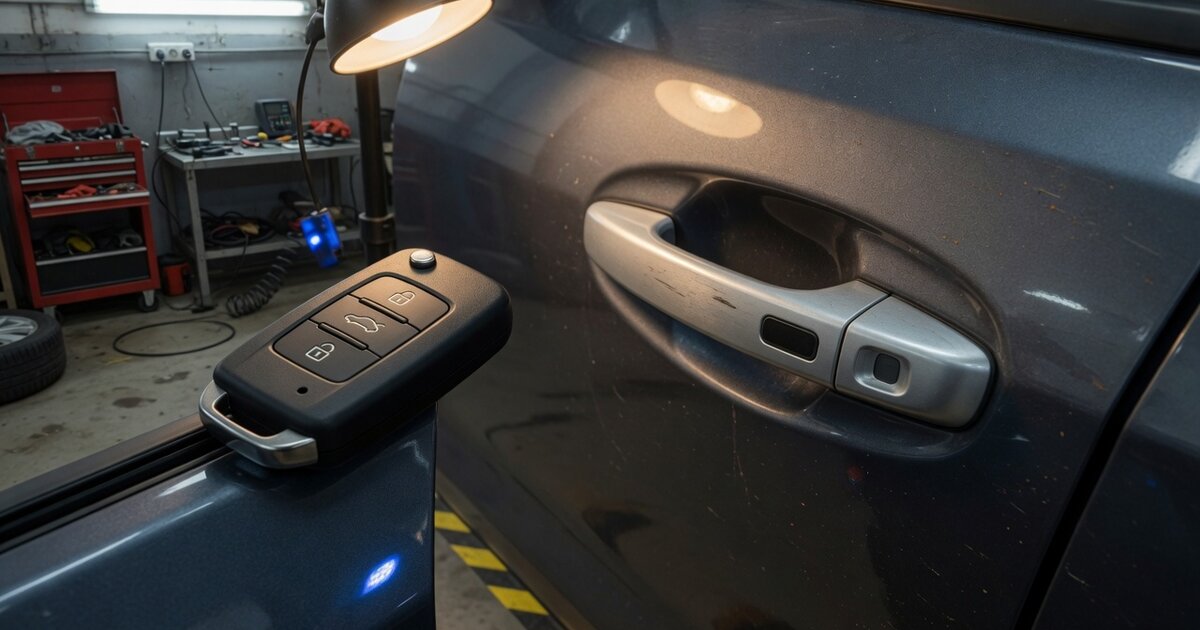
Keyless programming refers to setting up a vehicle's proximity entry and push-button start system to recognize a smart key fob, rather than simply cutting or cloning a basic transponder key. A proximity system is a two-way conversation between the car and the fob: the vehicle's body control module sends out a low-frequency signal, the fob answers on a separate radio frequency, and only after that handshake matches an expected code does the car unlock the doors or allow the engine to start. Programming this kind of key means teaching the car's modules to accept a new fob into that conversation, which is a different job from writing data onto a transponder chip that only needs to satisfy an immobilizer at the ignition barrel.
That difference matters for anyone doing the work, whether it is a locksmith, an independent shop, or an owner trying to add a spare. Proximity systems typically involve more modules, stricter security access requirements, and procedures that vary more from one manufacturer to the next than older remote-only or transponder-only setups. Getting keyless programming right calls for the correct diagnostic tool, an understanding of how the antennas and modules talk to each other, and awareness of the mistakes that most often derail a job partway through.
How it works
A proximity key system relies on a network of small antennas built into the bumpers, door handles, and cabin of the vehicle. These antennas constantly broadcast a low-frequency (LF) signal at short range, usually no more than a meter or two. When a paired fob enters that field, it wakes up and sends back an encrypted response over a separate radio frequency, commonly in the 315 MHz or 433 MHz range depending on the region and model. The vehicle checks that response against the fob identities stored in its body control module or smart key module before it allows door unlocking, or before it lets the push-button start circuit fire the ignition and start relay.
Programming a new key into that system means registering its unique identifier with the relevant control module, and on most vehicles that requires more than plugging in a fob and pressing buttons. A diagnostic tool connected through the OBD-II port typically needs to authenticate with the vehicle first, often by reading or calculating a security access PIN, before it is allowed to write new key data. Depending on the manufacturer, the tool may need to erase all previously known keys and relearn every fob at once, or it may support adding a single key without disturbing the others. Because these protocols differ so much between brands and even between model years of the same brand, tool coverage and up-to-date software matter a great deal; the Xtool 2022 Volvo key programming update is a good example of how a single software revision can extend which model years and modules a tool can actually reach.
What to consider
Before starting a keyless programming job, it helps to confirm a few basics rather than discover them mid-procedure. Proximity systems tend to be less forgiving of interruptions than simple transponder work, and a failed attempt can sometimes leave a vehicle temporarily unable to start.
- Confirm how many fobs the module needs present during programming — many systems require at least two working keys, or all existing keys, in the vehicle at once.
- Check whether the procedure needs a security access PIN, and whether your tool can read, calculate, or has to request that code from the manufacturer.
- Verify battery voltage and use a stabilizer or charger, since a voltage drop mid-write can corrupt the programming session.
- Make sure the diagnostic tool explicitly supports the vehicle's proximity or smart key protocol, not just transponder or remote-only programming.
- Look up whether the vehicle has a security gateway module, which some newer platforms use to block direct OBD-II access without an authorized bypass.
- Match the replacement fob's frequency and part number to the vehicle's region and trim, since fobs are not universally interchangeable across markets.
- Budget realistic time for the relearn procedure — some all-keys-lost jobs take considerably longer than adding a spare to an existing set.
- Confirm whether the fob includes a hidden mechanical blade or backup transponder for emergency entry and starting if the battery dies.
- Keep the vehicle's mileage, VIN, and any related recall or module-replacement history handy, since they can affect which programming path applies.
Common mistakes to avoid
Most problems in keyless programming come from skipping a preparation step rather than from faulty equipment. A rushed job on a proximity system tends to fail in ways that are harder to diagnose afterward than a simple bad key cut, so it pays to slow down at a few predictable points.
- Starting the procedure without confirming the tool actually supports that model's smart key protocol, not just its transponder chip.
- Skipping the security PIN step or entering it incorrectly, which can lock out further programming attempts on some modules.
- Interrupting the write process — disconnecting the tool, opening a door, or losing power partway through a session.
- Assuming a reprogram will fix a hardware fault, such as a failing antenna or a module with a communication error.
- Ordering or cloning a fob with the wrong frequency or chip type for the vehicle's specific region and build.
- Not accounting for how erasing all keys affects every existing fob, leaving a customer's spare unusable until it is relearned too.
Frequently asked questions
What is the difference between keyless programming and transponder key programming?
Transponder programming writes an identifier to a chip that the ignition immobilizer checks when the key is inserted or held near the barrel. Keyless programming registers a fob with the body control or smart key module so the vehicle can detect it wirelessly through proximity antennas, enabling passive entry and push-button start rather than requiring a physical key to be turned.
Can I program a keyless fob myself at home?
Some vehicles support an owner-level procedure using the existing keys and a specific sequence of ignition or door actions, described in the owner's manual. Many proximity systems, however, require a professional diagnostic tool with security access, especially for all-keys-lost situations, so home programming is not possible on every model.
Why does keyless programming sometimes need a security PIN?
Manufacturers use a PIN or security access code to stop unauthorized devices from writing new keys into the vehicle's modules, which is a theft-prevention measure. Depending on the platform, this code can sometimes be calculated from the VIN using diagnostic software, read directly from the module, or in other cases must be obtained through an authorized channel.
What happens if the programming session gets interrupted?
An interrupted write can leave the module in an inconsistent state, which may prevent existing keys from working correctly until the procedure is completed successfully. This is one reason stable power and an uninterrupted connection matter more with proximity systems than with simpler remote or transponder programming.
Do all proximity key fobs work the same way across brands?
No. The underlying idea of an LF wake-up signal answered by an RF response is common, but the specific frequencies, encryption schemes, and relearn procedures vary by manufacturer and often by model year. Tool coverage for these systems has historically lagged behind coverage for older transponder-based keys, similar to how SKP900 programming ID46 Nissan key setups are specific to that chip family rather than universal.
Is a backup mechanical key still useful with a proximity system?
Yes. Most smart key fobs hide a mechanical blade or include a backup transponder inside the housing so the vehicle can still be unlocked or started if the fob's battery dies or the proximity system fails to detect it. Keeping that backup functional is a normal part of maintaining a keyless entry system.