What Is a Transponder Key? How It Works and What to Know
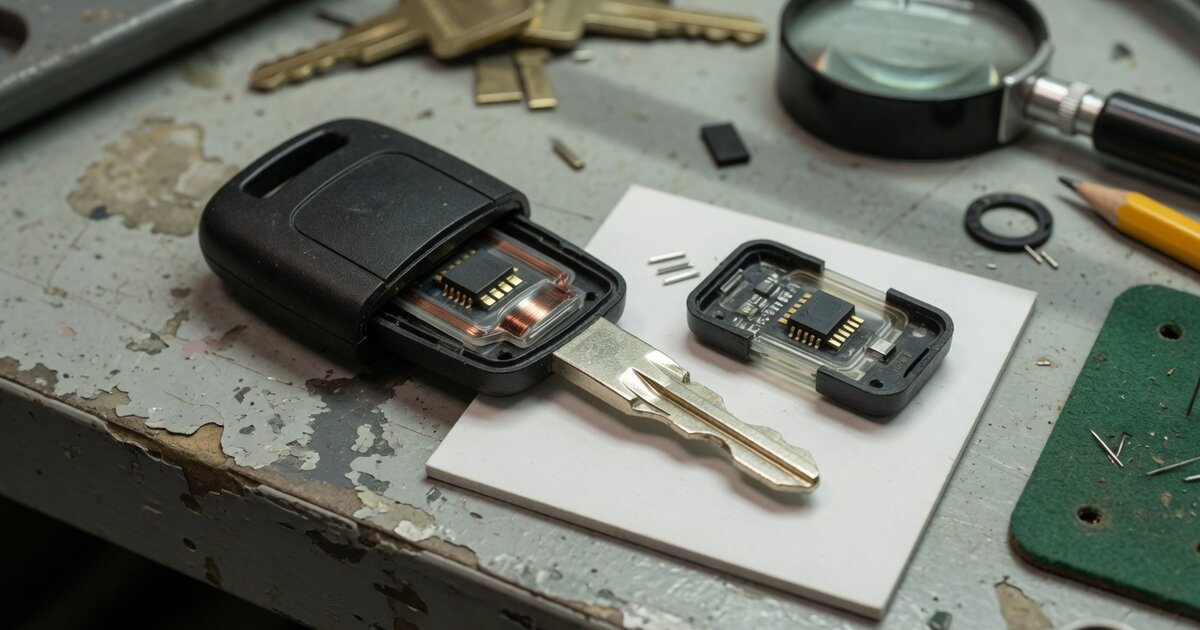
A transponder key is a car key with a small electronic chip embedded in its plastic head, alongside the traditional metal blade. The chip has no battery of its own; it is a passive device that only wakes up when it is close to the vehicle's ignition lock or a receiver ring built into the steering column. Automakers began fitting transponder keys as standard equipment in the late 1990s and through the 2000s, as part of an anti-theft system called an immobilizer. The idea was simple: a cut key alone, no matter how well it fit the lock, would no longer be enough to start the engine. The car's onboard computer also had to recognize a hidden digital code broadcast by the chip.
This single change had an outsized effect on vehicle theft. Older methods like hot-wiring or duplicating a key from a blank became far less useful once the vehicle refused to fire without the matching transponder signal nearby. Today nearly every gasoline and diesel passenger car built in the last two decades relies on some form of transponder or immobilizer technology, even as newer vehicles add smart keys and proximity fobs layered on top of the same basic chip-and-antenna principle. Locksmiths, technicians, and DIY owners dealing with a lost or spare key need to understand what the chip does before they can talk sensibly about cloning, cutting, or programming one.
How it works
Two components have to agree before a transponder-equipped car will start: the chip inside the key and the immobilizer control unit inside the vehicle. When the key is inserted into the ignition, or on newer cars brought close to a start button, a small antenna coil circling the ignition lock or built into the dashboard sends out a low-frequency electromagnetic field, typically around 125 kHz. That field induces just enough current in the chip to power it up, since the chip itself carries no battery. Once energized, the chip transmits its stored identification code back through the same antenna. The immobilizer module compares that code against the codes it has stored in memory. If they match, it unlocks the fuel injection or engine-management system and the car is allowed to start; if not, cranking may continue but the engine never actually fires, or in some systems it fires briefly and then cuts out.
Not every chip works the same way. Fixed-code chips, common in early transponder systems like the Texas Instruments 4C family, broadcast the same static code every single time, which makes them relatively easy to read and clone with basic equipment. Rolling-code and encrypted chips, such as the 4D series or NXP's ID46 and ID47 families, change or cryptographically challenge the response on each use, which is far harder to duplicate without proper programming tools. This is also why the specific chip inside a key matters as much as its cut shape — a closer look at the NXP PCF7939MA vs PCF7939FA transponder chip shows how two chips that look interchangeable on paper can behave very differently once a technician actually tries to program or clone them.
What to consider
Before assuming any transponder key can simply be cut and used, it helps to understand a few practical realities that determine how straightforward, or how expensive, a replacement will be.
- Not all transponder chips are interchangeable, even within the same brand; the wrong chip frequency or protocol will cut but never start the car.
- A cut key and a programmed key are two separate jobs — cutting matches the lock, programming matches the immobilizer, and both are required for the key to work.
- Some vehicles require all existing keys to be present during programming, while others allow "all keys lost" programming through the OBD port with the right equipment.
- Rolling-code and encrypted chips generally cannot be cloned with basic equipment and instead require a dedicated key programmer.
- Professional programmers vary widely in what they support; comparing an entry-level and a full-featured tool, such as the Tango Basic vs Tango Full transponder key programmer, is a good example of how coverage and capability differ between tool tiers.
- Proof of ownership is standard practice for a legitimate locksmith or dealer before they will cut and program a replacement key.
- Replacement cost varies significantly by make, model, and key type, and can run well into the hundreds of dollars for laser-cut or smart keys compared to a basic transponder key.
- A dealer can usually program a key but may not offer same-day or mobile service, while a qualified mobile locksmith can often do the job faster and on location.
- Aftermarket and OEM chips are not always identical in reliability, so sourcing matters when a replacement is being cut for a vehicle still under warranty.
Common mistakes to avoid
Most transponder key problems that turn into expensive emergencies were avoidable earlier in the process. A few recurring mistakes account for the majority of the trouble owners and even some inexperienced technicians run into.
- Waiting until only one working key is left before getting a spare cut and programmed, turning a routine job into an emergency lockout.
- Assuming any key blank that physically fits the lock will also start the car, without checking whether it even contains a chip.
- Buying a replacement key or chip online without confirming the exact chip type and frequency the vehicle actually uses.
- Hiring a locksmith who does not ask for proof of ownership, which is a red flag rather than a convenience.
- Attempting to clone an encrypted or rolling-code chip with equipment only designed for basic fixed-code chips.
- Forgetting that some vehicles require all existing keys present during programming, which can stall a job halfway through if that detail is missed.
Frequently asked questions
What is the difference between a transponder key and a regular car key?
A regular key is just a cut piece of metal that operates the mechanical lock. A transponder key looks similar but has a small chip embedded in its head that communicates with the car's immobilizer. Without a chip broadcasting the correct code, the engine either will not crank or will crank without ever actually starting, even if the metal cut is a perfect match for the lock.
Can a transponder key work without a battery?
Yes. The transponder chip itself is passive and has no battery — it is powered briefly by the electromagnetic field generated by the antenna ring around the ignition lock when the key is inserted or brought close. This is different from a remote key fob, which uses a battery to send lock and unlock signals over a longer range and can stop working once that battery dies.
Can any locksmith program a transponder key?
Many automotive locksmiths carry programming equipment capable of handling common transponder systems, and mobile locksmiths can often do this at the customer's location. Coverage still varies by tool and by vehicle, though — some newer or more heavily encrypted systems require dealer-level equipment or manufacturer authorization, so it is worth confirming a locksmith supports the specific make and model before scheduling.
How much does it cost to replace a transponder key?
Cost depends heavily on the vehicle and key type. A basic transponder key is generally the least expensive option, while laser-cut keys and smart or proximity keys with additional electronics cost more, sometimes running into the hundreds of dollars. Dealers are often pricier than independent or mobile locksmiths for the same job, though pricing always depends on the specific make, model, and chip involved.
What happens if all transponder keys for a car are lost?
This is commonly called an "all keys lost" situation. Depending on the vehicle, a locksmith or dealer may be able to program a new key through the OBD diagnostic port after verifying ownership, though some manufacturers require the immobilizer module itself to be reset or replaced. This is typically the most involved and most expensive transponder key scenario, which is one more reason to keep a spare on hand.
Are all transponder chips the same?
No. Chips differ by manufacturer, frequency, and security level — some use a fixed code that repeats every time, while others use rolling or cryptographically encrypted codes that change with each use. Older fixed-code chips are far easier to clone with basic tools, while newer encrypted chips generally require dedicated programming equipment matched to that specific chip family and vehicle system.