Where to Get Car Keys Copied: Hardware Store, Locksmith, or Dealer
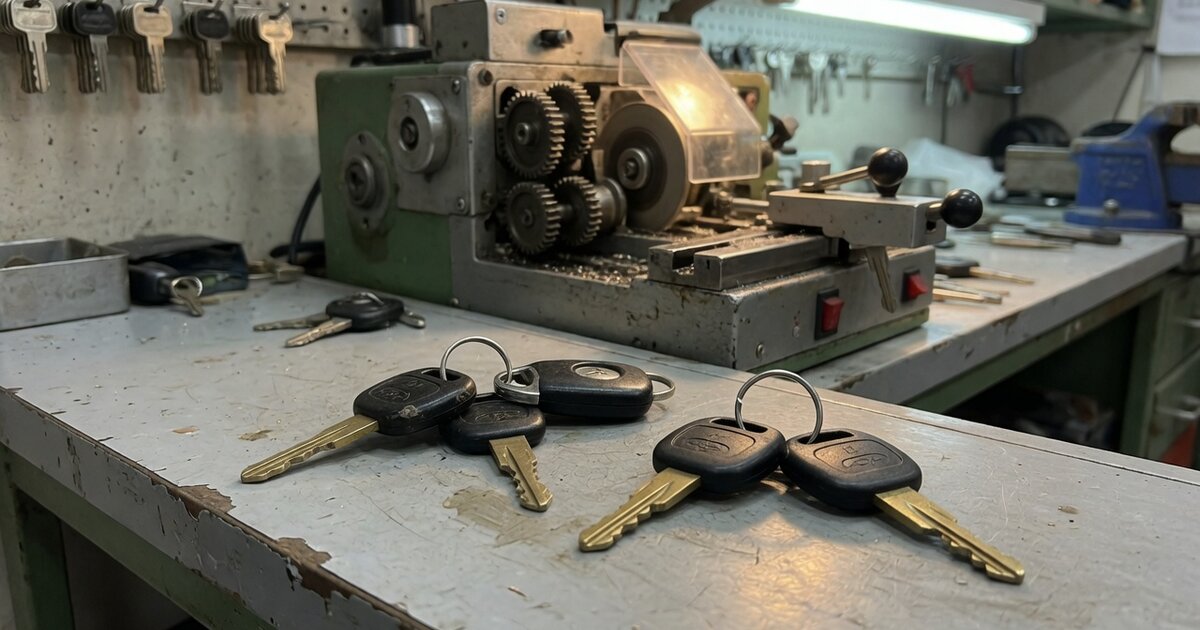
Ask five drivers where they got their last spare car key made, and you'll likely get five different answers. A basic metal key blank can be cut in minutes at a hardware store counter or a mall kiosk. A modern key with a built-in chip or a fob that talks to the car's computer is a different job entirely, and it usually needs equipment that only a locksmith or a dealership keeps on hand. Somewhere in between are mobile locksmiths who drive out with a full key-cutting and programming setup, and mail-in or online services that clone a key from a photo or a code.
None of these options is universally "best." The right one depends on what kind of key the car actually uses, how quickly the copy is needed, and how much control the owner wants over price and quality. A 15-year-old sedan with a simple metal key is a five-minute stop almost anywhere. A late-model SUV with a proximity fob is a narrower list of options, and picking the wrong one can mean paying for a key that never gets programmed. Knowing which places handle which jobs saves a wasted trip.
Where to go and why
Hardware stores and big-box retail kiosks are built for volume: house keys, padlock keys, and older mechanical car keys that carry no electronics. The machines are fast and the price is usually the lowest available, but the trade-off is depth of service. Most of these locations cannot program a transponder chip, an integrated smart fob, or any key tied to the vehicle's immobilizer system, because that work needs vehicle-specific software and security access that a general retail counter doesn't have. A worn or slightly misaligned key blank at this level of service is also a more common complaint than at a dedicated key shop, simply because staff turnover is high and training is limited.
Locksmiths sit a step up in capability. A shop that specializes in automotive keys typically owns transponder programming tools and keeps a library of vehicle protocols, so it can cut and program a chipped key, clone certain fobs, and often work from the vehicle's VIN if every original key has been lost. Pricing is negotiable more often than at a dealer, and many locksmiths also come to the car rather than requiring a shop visit.
Dealerships are the fallback for the newest, most security-hardened vehicles, and for the rare case where a key can only be sourced and coded through the manufacturer. A dealer technician has factory-level access, so quality and compatibility are essentially guaranteed. That certainty comes at a price: dealer key work commonly runs well above what a locksmith charges for the same result, and turnaround can take longer if the key has to be special-ordered. For anyone replacing more than one missing key at once, it's worth asking whether the shop can handle programming two replacement keys in one session, since doing both together often costs less than two separate visits.
What to consider
Before choosing where to go, it helps to know a few basic facts about the key and the vehicle. A quick look at the existing key, the owner's manual, or the vehicle's build sticker usually answers most of these questions before making any calls.
- Whether the key is a plain mechanical blade, a transponder key with an embedded chip, or a proximity/smart fob — each category narrows the list of shops that can help.
- Whether at least one working original key is available, since cloning from an existing key is faster and often cheaper than coding from the VIN alone.
- Proof of ownership requirements — many locksmiths and all dealers will ask for a registration, title, or ID matching the vehicle before cutting a key with no original present.
- Whether the car's specific make and model requires special dealer-only security access, which is more common on newer and luxury vehicles.
- Turnaround time, since a rare fob or a special-order key blank can take days to arrive even at a well-stocked shop.
- Whether the service is mobile, in case the car is stranded rather than sitting in a driveway.
- Total cost including programming, not just the price of the blank or shell, since the electronic work is usually the larger part of the bill.
- Warranty or guarantee on the finished key, in case it fails to start the car or stops working after a short time.
- Whether the shop can also cut a matching spare at the same visit, since a second copy made later usually costs close to the same as the first.
Common mistakes to avoid
Most bad experiences with key copying come from skipping a step rather than choosing the "wrong" type of shop. A little preparation avoids most of the common problems.
- Assuming any hardware store can copy a fob or chipped key, then discovering only the metal blade got cut and the car still won't start.
- Not bringing a working original key, which can turn a simple duplication into a slower and pricier VIN-based coding job.
- Skipping proof of ownership and getting turned away, especially at locksmiths and dealers that follow strict verification rules.
- Choosing a shop purely on the lowest quoted price without asking whether that price includes programming, not just cutting.
- Waiting until the last working key is failing or already lost before getting a spare made, which removes the option of simple cloning.
- Forgetting to test the new key, including remote functions like unlock and trunk release, before leaving the shop or letting the technician go.
Frequently asked questions
Can any locksmith copy a car key?
Most locksmiths can cut a basic mechanical car key, but not every locksmith carries the transponder programming tools needed for chipped keys or smart fobs. Automotive-focused locksmiths are more likely to stock the right software and hardware for a wide range of makes. It's worth calling ahead and describing the key type, or reading the shop's listed services, before driving over expecting a fob to be programmed on the spot.
Is it cheaper to get a car key copied at a hardware store or a locksmith?
For a simple mechanical key, a hardware store or retail kiosk is usually the cheapest option. Once programming is involved, the price gap narrows or reverses, since hardware stores generally can't do that work at all. A locksmith who can cut and program in one visit often ends up costing less overall than paying for a blank in one place and programming somewhere else.
Do I need my car with me to get a key copied?
For a plain metal key, no — a correct blank can be cut from an existing key alone. For a transponder key or fob, the vehicle is usually required, because programming has to communicate with the car's onboard computer or immobilizer. Some mobile locksmiths bring the equipment to the car instead, which is useful if the vehicle can't be driven.
Can a dealer make a key without any original key present?
Yes, dealerships can generally generate a new key using the vehicle identification number, but the process takes longer and costs more than duplicating from an existing key. Some dealers order the key and schedule a separate programming appointment, so it may not be a same-day service. A locksmith with VIN-based coding tools can sometimes offer a faster or cheaper alternative.
What proof do I need to get a car key copied?
Requirements vary by shop, but many locksmiths and virtually all dealers ask for vehicle registration, title, or photo ID matching the name on the registration before cutting a key with no original present. This is a security precaution against key duplication for stolen vehicles. Bringing this paperwork along, even for a routine spare, avoids a wasted trip.
How long does it take to get a car key copied and programmed?
A basic mechanical key copy takes only a few minutes almost anywhere. A transponder key or fob usually takes longer, from roughly 20 minutes to over an hour depending on the vehicle and whether programming happens on-site. If a key has to be special-ordered, the total wait can stretch to several days before the shop is ready to program it.