Xhorse Emulator: What It Actually Is and How Locksmiths Use It
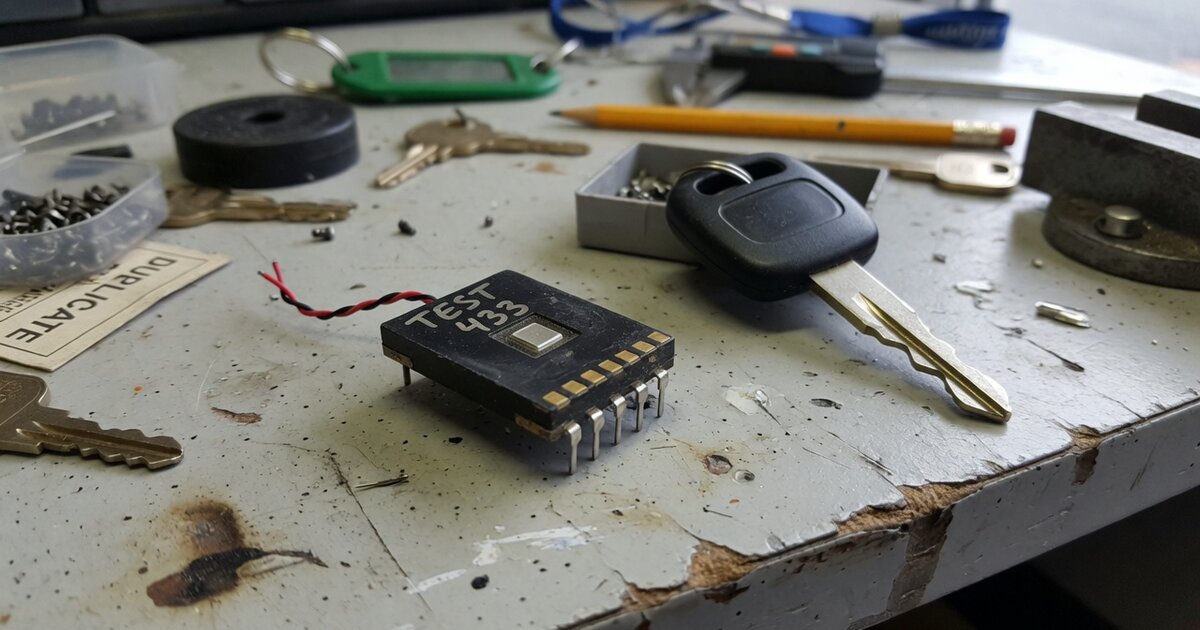
Search for "Xhorse emulator" and you land in one of the more confusing corners of the Xhorse catalog. The term covers at least two different families of hardware: rewritable transponder chips (marketed as "Super Chip," part numbers like XT27A66, XT27A01, and the newer XT57B) that stand in for a genuine OEM chip during key generation and cloning, and a separate line of ELV/ESL emulator modules used to work around damaged steering-lock hardware on certain Mercedes-Benz models. This article focuses on the first category — the transponder emulator that pairs with tools such as the VVDI2 and the VVDI Key Tool family — since that's what most locksmiths mean when the term comes up in an all-keys-lost or chip-cloning context. It's a different product from a remote-key shell, and a different concept from the general Xhorse lineup covered in our overview of the Xhorse brand and its key programming tools.
What It Is and What It Does
A transponder immobilizer works by having the vehicle's engine control unit or body control module send a challenge signal to the chip embedded in the key, then check the response against a stored value before allowing the engine to start. Genuine replacement chips normally have to be bought pre-matched to the make and chip family in question — Philips/NXP PCF793x variants, ID4D, ID4C, ID46, ID48, and so on — which means a shop working across many brands has to carry an expensive inventory of blanks that mostly sit unused.
Xhorse's answer is a single rewritable chip that a technician can program, repeatedly, to behave like whichever transponder family a given job requires. According to Xhorse's own dealer listings, the Super Chip is described as "a virtually universal transponder chip that, when paired with the VVDI2, Mini Key Tool or VVDI Key Tool, has the ability to be converted into a wide variety of automotive transponder chips," with listed coverage spanning chip types such as ID11, ID12, ID13, PCF7935/36/37/38/39/46, ID47, ID49, ID48, 4C, 4D (including 4D80), 4E, 8A, 8C, and 8E across brands including Toyota, Honda, VAG, and Ford. Instead of stocking a dozen blank part numbers, the shop stocks one rewritable chip and writes the correct protocol onto it through the Xhorse app before cutting or fitting the key. Newer parts in the same family, such as the XT57B, are marketed as extending coverage to more recent MQB-platform chip generations, including ID49, ID4A, and MQB48/MQB49(5C), which matters for shops seeing more modern VW, Audi, Skoda, and Seat traffic.
In practice, the emulator chip gets used in two overlapping scenarios. The first is straightforward cloning, where the tool reads data from a working original key and writes an equivalent onto the Super Chip so the new key starts the car the same way a duplicate would. The second is all-keys-lost work, where the immobilizer needs to "see" a valid, correctly matched transponder during the learning sequence before it will accept a brand-new key into its list — the Super Chip is programmed to present itself as that expected chip type so the procedure can complete. This has nothing to do with remote-only products that just generate a fob's RF signal without touching the transponder side of the immobilizer.
It's worth naming the other "emulator" so a search for the term doesn't send anyone down the wrong aisle: Xhorse also sells ELV/ESL emulator hardware for Mercedes-Benz models such as the W204, W207, and W212, used with the VVDI MB Tool when the steering lock unit itself is damaged. That product replaces a failed lock component rather than simulating a transponder chip, and it's not something a VVDI2 or Key Tool user needs for ordinary cloning work.
What to Consider Before Buying
Confirm which tool you actually own before ordering. The Super Chip line is written and managed through the Xhorse app, and it needs a compatible device on the other end — VVDI2, VVDI Mini Key Tool, VVDI Key Tool Plus, or a Key Tool Max/Max Pro. An older or unsupported device may not expose the chip-generation function at all, so check your tool's current firmware and app version against the listed compatibility for the specific chip variant before buying a batch.
Check the chip family list against the vehicles you actually work on rather than assuming "universal" means everything. Coverage differs between generations of the Super Chip — older XT27 variants versus newer XT57B-type parts — and a listing covering older ID4D/ID46-era chips won't automatically include newer MQB-generation protocols. Read the part's advertised chip list, not the product name.
Some rewrite operations are gated by the Xhorse app and may require an active account, a live data connection, or consumable credits depending on the chip type — this has changed across past updates, so verify current requirements before assuming a chip works purely offline.
Buy from an authorized Xhorse dealer. Counterfeit and mislabeled chips are a known problem across the transponder-clone market, and a mismatched chip can waste a job or leave a car unable to start. Multi-packs (5, 10, 50, 100 pieces) are the normal sales unit, so buy a small batch first when testing a new chip family before committing to bulk stock.
Common Mistakes to Avoid
Do not confuse a transponder emulator with a remote-key generator. The Super Chip only deals with the immobilizer side of a key — it does nothing for the RF remote-control function, which is a separate procedure and, on many universal remotes such as the Xhorse XKKF02EN, separate hardware entirely.
Do not assume every "Xhorse emulator" listing is the same product. The ELV/ESL emulator for Mercedes steering-lock repair and the transponder Super Chip solve completely different problems and work with different tools — VVDI MB Tool versus VVDI2/Key Tool family — and ordering the wrong one wastes money without fixing the job in front of you.
Do not skip verifying tool and app compatibility before a job. Discovering mid-appointment that your Key Tool's firmware doesn't support the needed chip-generation function turns a routine cloning job into a comeback.
Do not treat every chip as infinitely reusable in the same way. Xhorse markets these chips as rewritable, but real-world write cycles, protocol-specific limitations, and app-side restrictions on certain data types mean it's worth testing on bench vehicles before relying on a given chip for time-sensitive field work.
Frequently Asked Questions
Is the Xhorse emulator the same thing as the Xhorse Panda?
No. The transponder emulator (Super Chip) simulates an immobilizer chip and is used with tools like the VVDI2 or VVDI Key Tool family. The Xhorse Panda (XA006) is a different device in the Xhorse lineup with its own function set — see our dedicated guide before assuming the two are interchangeable.
Does the emulator chip generate a remote key fob too?
No. It only handles the transponder/immobilizer side of a key. Generating a working remote-control signal is a separate function, handled by different products such as universal remote key shells.
Which Xhorse tools do I need to use a Super Chip emulator?
Xhorse's own dealer documentation lists the VVDI2, VVDI Mini Key Tool, VVDI Key Tool Plus, and Key Tool Max/Max Pro as compatible devices for generating a Super Chip. Confirm your tool's current firmware supports the chip variant you're buying, since coverage has expanded across successive releases rather than being fixed from day one.
Can one emulator chip be reused across different vehicles?
The chips are designed to be rewritten rather than used once, which is the core selling point over stocking single-use OEM blanks. Always confirm through the Xhorse app which chip protocol you're currently writing before a job, since reusing a chip still set up for a previous vehicle's protocol without reprogramming it will not work.
What is the difference between the transponder emulator and the ELV/ESL emulator?
They solve unrelated problems. The transponder Super Chip simulates an immobilizer chip for cloning or all-keys-lost key generation and works with VVDI2/Key Tool devices. The ELV/ESL emulator is Mercedes-Benz-specific hardware used with the VVDI MB Tool to work around a damaged electronic steering-lock unit — it has nothing to do with transponder chips or key generation.
Do I need an internet connection or credits to use the emulator?
Some chip-generation operations run through the Xhorse app and can require an active connection or consumable credits depending on the chip type and current app version — this has varied across Xhorse's own updates, so check the app's current requirements for the specific chip and vehicle before promising a customer a same-visit turnaround.