immobilizer diagnostics
-
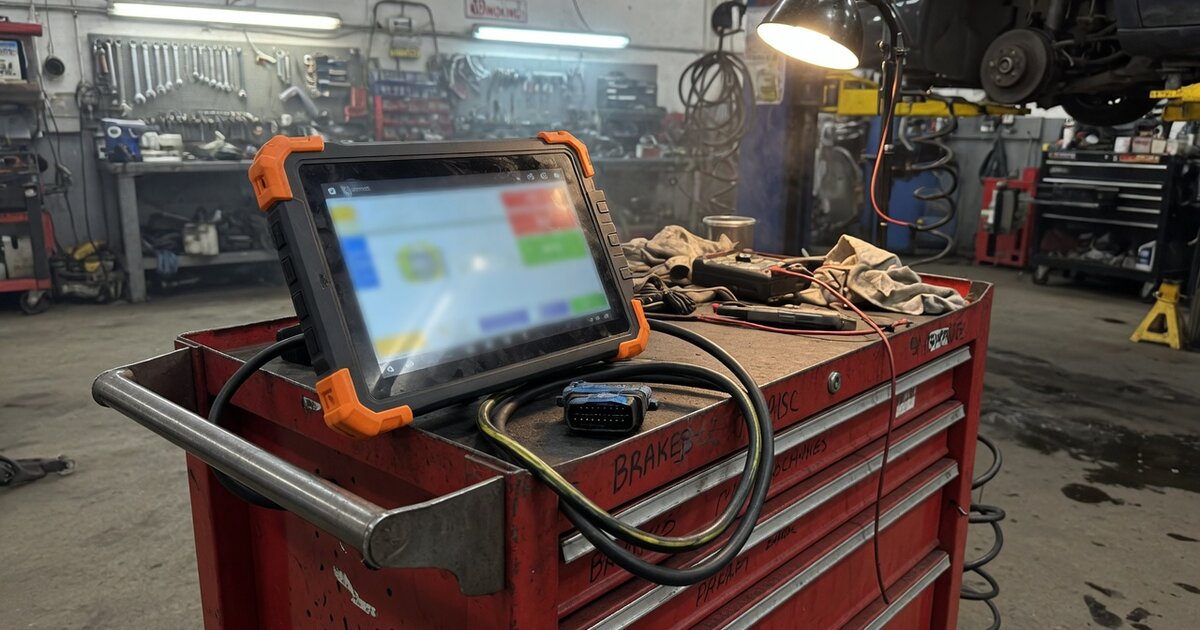
Launch CRP919E: What This Scan Tool Actually Covers
A grounded look at the Launch CRP919E scan tool: real diagnostic functions, reset services, IMMO limits, and what to check before buying.
-
Security wait time during key programming: why the countdown must not be interrupted
A security wait countdown is a vehicle or service access delay, not a frozen programmer. Keep the required ignition, power supply, interface, and docu
-
Virgin-renewed-and-locked-keys-what-the-labels-mean-before-programming
Virgin, renewed, and locked describe a key’s electronic state in a tool or manufacturer workflow, not its cosmetic condition. A virgin key has not been ass
-
Why every working key may need to be present during programming
Every working key may need to be present because many programming procedures replace a stored list rather than append one item. Any key or remote omitted.
-
Why transponder frequency reading is not enough to choose a replacement key
Transponder frequency reading is not enough to choose a replacement key because frequency is only one radio or reader characteristic. Vehicle compatib
-
Can a key fob battery change erase programming?
A battery change normally does not erase a remote’s vehicle registration. Ford owner documentation specifically says replacing the remote battery does not
-
How to test a newly programmed car key: a function-by-function checklist
A newly programmed key is proven only by the vehicle functions it is meant to perform, checked one at a time. Test mechanical entry where applicable, lock,
-
Can a used smart key be programmed to another car?
A used smart key may be reusable only when its electronic state, vehicle system, and documented procedure permit it; many keys retain prior association or
-
Why a key can pass the programming screen but fail in real use
A programming screen can report completion while a key still fails in real use because the screen may cover only one stage: a remote-board write, a transpo
-
What car key programming actually changes
Car key programming changes the vehicle’s authorised-key record or the key’s electronic data; it does not cut metal. A correctly cut blade can turn a lock
-
Why a car key unlocks the doors but will not start the engine
The door-unlock radio channel and the engine-authorisation channel are separate. A key that unlocks doors but will not start the engine has proved only.
-
Why a matching-looking replacement remote may still be incompatible
A matching-looking replacement remote can be incompatible because the shell does not prove the radio protocol, board revision, transponder type, button map
-
Key cloning vs key programming: when they are not interchangeable
Key cloning copies readable transponder data from one key to another; key programming changes or adds authorisation in the vehicle or prepares a key for th
-
Key blade cutting vs electronic programming: why a cut key may not start the car
Blade cutting reproduces the mechanical pattern for a lock or ignition; electronic programming authorises a transponder or smart-key credential for the imm
-
Why a smart key must have the correct button layout and board version
A smart key needs the correct button layout and board version because the vehicle can expect a specific radio board, passive-entry hardware, transpond
-
Why a key programmer cannot communicate with the immobilizer module
A key programmer that cannot communicate with an immobilizer module has not proved that the module is failed. Check the 12-volt supply, ignition state
-
How to identify a car key before selecting a programmer menu
Identify the vehicle, immobilizer system, key electronics, and symptom before selecting a programmer menu. Make, model, and model year alone are not enough
-
Key not detected on a push-button car: key, battery, or vehicle antenna?
“Key not detected” means the push-button system has not completed a valid proximity-key recognition event. The cause can be a depleted fob cell, a damaged.
-
Remote fob vs transponder vs smart key: which part has failed?
A remote fob, a transponder, and a smart key can fail independently: door buttons use a radio path, engine authorisation uses an immobilizer credential, an
-
Immobilizer warning light after key programming: what it does and does not prove
An immobilizer warning light after key programming is a diagnostic clue, not a universal verdict. A lamp that keeps flashing with ignition on can support.
-
How to tell a dead key-fob battery from a programming problem
A weak key-fob battery and a programming failure produce different evidence. A battery fault usually reduces or removes radio operation while the vehicle s
-
How many keys can a vehicle remember, and what happens when memory is full?
A vehicle’s key-memory limit is platform-specific; there is no safe universal number. When the authorised-key list is full, an add-key function may refuse.
-
Why use a battery maintainer during key programming?
A battery maintainer or regulated programming power supply is used during key programming to keep vehicle voltage stable while modules, ignition circuits,.
-
Why a programmed key starts the car but the remote buttons do not work
A replacement key that starts the engine but has dead remote buttons is usually authorised by the immobilizer while its remote-control transmitter has not.
-
Can you program two replacement keys in one session?
Two replacement keys can sometimes be learned in one legitimate session when the vehicle procedure supports multiple keys and the keys are confirmed compat
-
Adding a spare key vs all keys lost: what changes before programming
Adding a spare key begins with a working authorised credential; all keys lost begins without one and can require a different security path, proof of owners
-
Remote generation vs vehicle learning: why “write success” is not a finished key
A “write success” message can mean that a remote board received generated data, not that the vehicle has learned the remote or authorized engine start
-
CAN FD and DoIP in key programming: when an older interface is the limitation
An older diagnostic interface can be the limitation when a vehicle requires CAN FD or DoIP transport and the interface cannot carry that transport. A
-
Why a smart key works in the emergency slot but not wirelessly
A smart key that starts only when placed at the documented emergency reader can still have valid immobilizer authorization. That result often means the low
-
Wrong vehicle selection in a key programmer: symptoms before any data is written
Wrong vehicle selection often shows itself before data is written: the listed module name, key type, connector, function wording, or identification re
-
FCC ID, part number and frequency: which identifier confirms remote compatibility?
No single marking confirms remote compatibility. Compare the original and candidate remote’s part number or board number, regulatory identifier such as FCC
-
How to verify a blank transponder before cloning or programming
Verify a blank transponder before cloning or programming by reading its chip family, state, and supported application with the correct reader, then co
-
What to do when voltage drops or the programmer disconnects mid-procedure
When voltage drops or a programmer disconnects during a key procedure, stop repeating commands. Preserve the screen message, keep vehicle power stable
-
Why auto-VIN detection can be wrong for key programming
Auto-VIN detection can identify a vehicle while still selecting the wrong key-programming path. The VIN may be read from one accessible module, wherea
-
How to remove a lost or stolen key from vehicle memory
Removing a lost or stolen key from vehicle memory means revoking its engine-authorisation and, where applicable, its remote-control identity. Replacing a.
-
When to stop a key-programming attempt and preserve the vehicle state
Stop a key-programming attempt when vehicle identity, module identity, key compatibility, stable power, or the selected operation conflicts with the docume
-
What vehicle and key details to record before asking for programming support
A useful key-programming support record names the vehicle, exact symptom, key markings, module identity, interface and software version, selected function,
-
Why a vehicle may require all keys to be erased before adding replacements
A vehicle may require an all-keys erase because its documented security procedure rebuilds the authorized-key list rather than appending one key. That requ
-
Will programming a new key erase the old keys?
Programming a new key can preserve old keys or erase them, depending on the vehicle, the menu, and the procedure chosen. “Add key” and “erase then learn”.
-
Why the original key works but the newly programmed key does not
When the original key starts the vehicle but the newly programmed key does not, the vehicle-side immobilizer is at least partly functional. The first.
-
Why a remote works only at very short range after programming
A remote that works only at very short range is not automatically misprogrammed. A weak cell, poor battery contact, local radio interference, damaged remot