2014 Chevrolet Impala Key Fob: Which Type You Have and How to Replace It
The 2014 Chevrolet Impala is a confusing year to shop for a replacement key fob, and it's not the owner's fault. General Motors sold two different vehicles under the same "2014 Impala" name that year: the newly redesigned, tenth-generation Impala, and the outgoing previous-generation body style, which GM kept in production for fleet and rental use under the separate "Impala Limited" nameplate through roughly 2016. The two use different key hardware, so before ordering a fob or calling a locksmith, it helps to know which Impala is actually parked in the driveway and which trim it is.
What kind of key/fob the 2014 Impala uses
If the vehicle is the redesigned 2014 Impala (the one most people mean when they search for this model year), the key system depends on trim level. Base LS and mid-range LT trims generally use a traditional insert-and-turn ignition paired with a key that has an integrated transponder chip and separate remote buttons, often in a folding "flip key" housing. Aftermarket parts listings commonly reference this style under FCC ID OHT01060512, with part numbers such as 13504199, 13500221, or 23335584 turning up across different suppliers.
The top LTZ trim, by contrast, typically came with keyless access and push-button start — a true proximity system where the fob only needs to be in the driver's pocket or bag, not physically turned in a cylinder. Listings for this fob commonly reference FCC ID OHT05918179, with part numbers like 5921873 or 13584829 appearing across retailers. Because it's a proximity system, the fob usually still hides a small mechanical emergency blade inside the housing for manually unlocking the driver's door if the battery dies.
Then there's the parallel-production Impala Limited, which carried over the prior generation's remote design entirely — a separate metal key plus a standalone five-button remote, referenced under FCC IDs like OUC60221 or OUC60270 with part numbers such as 15912860. This fob is not interchangeable with either tenth-generation Impala key, even though all three get labeled "2014 Impala" in casual conversation and in some online catalogs.
Because the FCC ID and part number conventions overlap and get mislabeled between listings, the safest way to confirm which one applies to a specific car is to check the vehicle's own key or its glovebox documentation rather than assume based on model year alone. On the battery side, multiple fob battery-replacement guides for this model consistently point to a CR2032 coin cell across the flip-key styles, though it's worth confirming against the small print on the back of the fob itself before buying a replacement battery, since exact cell type can vary by supplier revision.
Replacement options
Once the correct fob type is confirmed, there are generally three paths to a working spare or replacement. A dealership can cut and program either style using factory tools tied to the vehicle's security system, which is the most dependable route when the situation is unusual — for example, if no working key remains at all. A mobile automotive locksmith can typically handle the same job on-site for either the transponder-key trims or the proximity LTZ system, usually with faster scheduling than a dealer visit, provided the owner can show proof of ownership and the VIN.
For owners comfortable doing the legwork themselves, ordering a compatible aftermarket fob and self-programming is realistic for some setups but not others, which is where trim matters again. On the metal-key LS/LT ignition, GM's documented add-a-key procedure only works if there is already one functioning programmed key: the working key starts the engine, is removed, and the new key is inserted and turned to "on" within a short window, teaching the module to recognize it. That procedure does not erase existing keys, but it also cannot help if every key has already been lost, since there's no working key left to start the learning cycle.
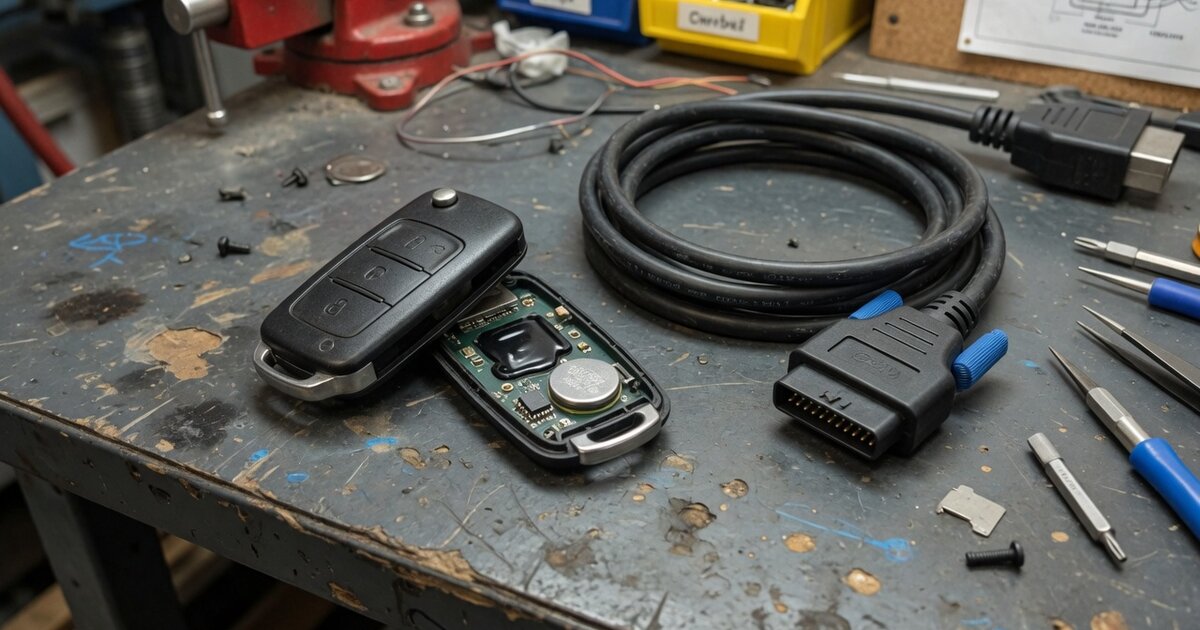
The push-button LTZ proximity system is a different animal. Programming a new smart fob generally requires a bidirectional scan tool capable of communicating with the body control module over GM's CAN protocol, not a basic OBD-II code reader — functionality that isn't built into most consumer diagnostic tools. Some owners instead use dedicated aftermarket programming kits made for this GM platform, which plug into the OBD-II port and walk through programming all fobs together; these exist as a middle option between a full locksmith visit and stock dealer tools, though results and compatibility can vary by kit and by the vehicle's specific module revision. For a broader walkthrough of what a typical fob replacement visit involves from start to finish, see Key Fob Replacement: How It Works and What to Expect.
One thing worth ruling out before assuming a fob itself is bad: if the remote stopped responding shortly after the 12-volt battery was serviced, the fob may not be the problem at all. Some GM systems need the remote re-synced or the module needs a moment to relearn after power is restored, which can look identical to a dead fob from the driver's seat. That scenario, along with why it happens, is covered in Why a Key Fob Stops Working After the Vehicle 12-Volt Battery Is Replaced or Disconnected.
Common mistakes to avoid
The most common early mistake is ordering a fob based on the model year alone rather than confirming trim and body style, given how differently the LS/LT transponder key, LTZ proximity fob, and Impala Limited remote are built. A part that looks right in a thumbnail photo can still be the wrong FCC ID for the actual vehicle.
Another frequent misstep is trying to run the metal-key add-a-key cycle on a push-button LTZ, or assuming the proximity system will respond to the same ignition-cycling trick — the two systems don't share a programming method, so the metal-key procedure simply won't do anything on a keyless-start car.
It's also easy to let the last working key get damaged or lost before ordering a spare. Since the standard self-programming route for the transponder-key trims depends on having one functioning key to teach the new one, waiting until there are zero working keys removes that option entirely and forces a locksmith or dealer visit with security verification.
Finally, don't assume every intermittent fob issue is a dead battery or a failed unit. If the fob has been dropped in water or gone through a wash cycle, corrosion or a stuck button can mimic the symptoms of a low battery or a programming fault. Steps for handling that specific situation are covered in What to Do When a Car Key Fob Gets Wet or Goes Through the Wash.
Frequently asked questions
Does every 2014 Impala have a push-button start key fob?
No. On the redesigned tenth-generation 2014 Impala, push-button start with a proximity fob was tied to the LTZ trim, while LS and LT trims used a traditional insert-and-turn ignition with a transponder key. The separately produced Impala Limited used a conventional metal key and remote altogether. Check the actual key or the trim badge on the vehicle rather than assuming from the model year.
How do I know which FCC ID or part number fits my Impala?
Because listings for this model year get mixed up between the transponder-key trims, the proximity LTZ fob, and the unrelated Impala Limited remote, the most reliable check is to compare a replacement against the physical key already in hand, or to have a parts counter or locksmith confirm compatibility against the VIN before ordering.
What battery does a 2014 Impala key fob use?
Multiple fob battery-replacement guides for this generation point to a CR2032 coin cell as the common battery across the flip-key styles. It's still worth opening the fob and checking the printed cell type on the old battery before buying a replacement, since exact specifications can vary between supplier revisions.
Can I program a new key fob myself?
On the metal-key LS/LT ignition, GM's owner-level add-a-key procedure can work, but only if a working programmed key is already available to start the learning cycle. On the push-button LTZ proximity system, programming typically requires a scan tool that can talk to the body control module, which goes beyond basic OBD-II readers; some owners use aftermarket programming kits built for this purpose instead.
What if I've lost all my keys, not just one?
If no working key remains, self-programming isn't possible on either system, since the standard owner procedures rely on an existing key to authorize the new one. At that point a dealer or a locksmith with the proper security access and programming equipment is needed.
Is the Impala Limited key fob the same as the regular 2014 Impala fob?
No. The Impala Limited continued the prior-generation body and remote design, using a separate metal key with a standalone multi-button remote rather than the flip-key or proximity fobs found on the redesigned 2014 Impala. The two are not interchangeable, even though both get called a "2014 Impala" informally.