Automotive Key Cutting Machines Explained
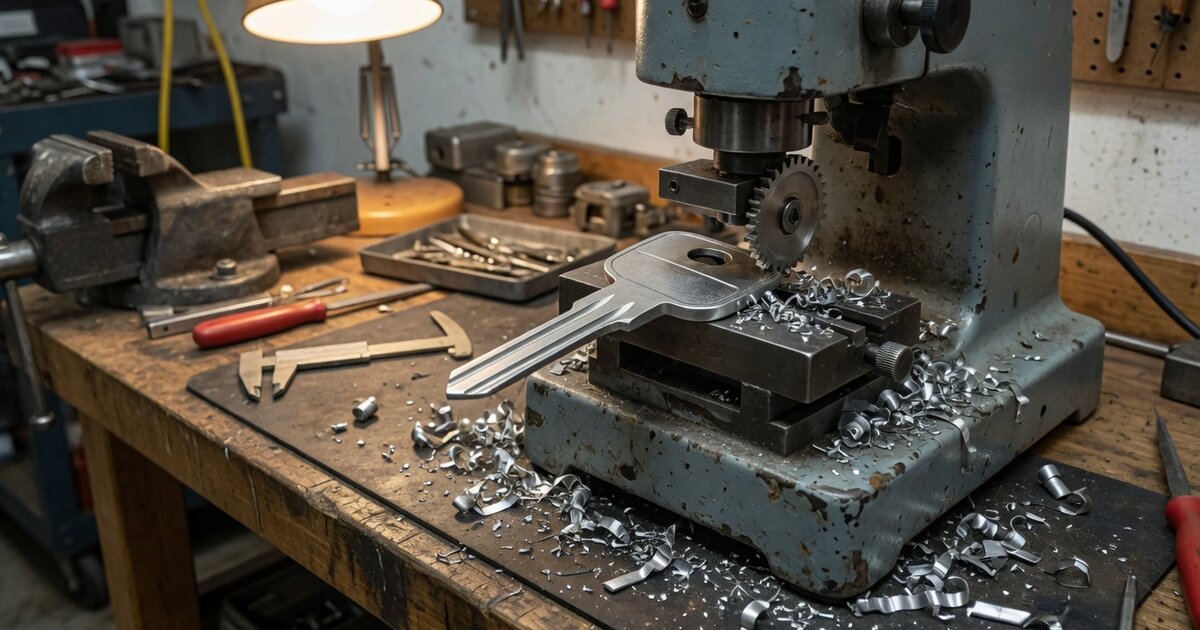
A key cutting machine is a specialized tool that reproduces the physical shape of a key onto a blank so it will operate the same lock or ignition. For automotive applications, these machines have to do more than duplicate a simple house key: modern car keys carry milled grooves, internal side-cuts, and embedded transponder chips that communicate with the vehicle's immobilizer system. Because of that added complexity, general-purpose hardware-store duplicators usually can't handle late-model automotive keys, and shops that work on vehicles rely on purpose-built key machines instead.
Automotive key machines range from simple manual cutters meant for older mechanical keys to computerized, code-driven systems capable of producing laser and sidewinder-style keys, plus high-security transponder keys, without an original sample present. The right machine depends heavily on what a shop actually services: a mobile locksmith working mostly on older domestic vehicles has very different needs than a shop cutting late-model laser keys every day.
Because automotive key cutting sits at the intersection of mechanical precision and electronic key programming, choosing a machine is really choosing a workflow: how keys will be read, how blanks will be sourced, and how the finished cut key will later be paired with a programmer to activate the immobilizer. This overview covers how these machines work, what to weigh before buying, and mistakes that trip up new locksmiths.
How it works
Automotive key cutting generally follows one of two approaches: tracing an existing key, or cutting from a code without a sample key present.
Manual and semi-automatic machines work by tracing. The original key is clamped on one side of the machine, a blank is clamped on the other, and a stylus follows the grooves of the original while a cutting wheel reproduces the same pattern on the blank. This method is inexpensive and works well for straightforward edge-cut keys, but it takes practice: pressure, blade wear, and clamp alignment all affect accuracy, and a worn original key gets its imperfections copied straight onto the new one.
Electronic and computerized machines shift the work to a motor and software. The key, or a code, is read digitally, the machine calculates the correct depths and spacing, and a precision motor cuts the blank automatically. Many of these machines include onboard key databases covering a wide range of makes and key profiles, so an operator can select a vehicle and get the correct cutting specification without measuring by hand.
Laser and high-security machines go a step further, using side-milling or laser-guided cutting heads to produce the internal, sidewinder-style cuts found on many modern transponder keys — cuts a standard edge-cutter simply cannot make.
Cutting the metal blade is only half the job on transponder-equipped vehicles. The blank also has to be programmed to the car's immobilizer before it will start the engine, which is done with a separate key programmer rather than the cutting machine itself. Tools like the Xhorse VVDI Prog BMW CAS4 key support illustrate how cutting and programming stay two distinct steps in the workflow, even when the same shop handles both.
What to consider
Not every shop needs the same class of machine, and buying more capability than the job requires just adds cost and maintenance. Before choosing a key cutting machine, it helps to match the tool to the vehicles actually being serviced, the volume of work expected, and how much manual skill the operator already has. A few practical factors tend to decide whether a manual tracer, a semi-automatic unit, or a full electronic or laser system makes the most sense:
- Which key types are needed most often — standard edge-cut, laser/sidewinder, dimple, or tibbe-style keys
- Whether the machine needs an onboard vehicle and key database or works purely from a physical original
- Cutting accuracy and repeatability, since a poorly cut blade can wear or damage a lock cylinder over time
- Compatibility with common blank brands so replacement stock stays affordable and easy to source
- Clamp and jaw versatility for handling different key head shapes and blade thicknesses
- Whether the machine can cut from a code alone when no working key is available
- Build quality and duty cycle if the machine will run daily in a commercial shop
- Software or firmware update availability, since new vehicle key profiles are added over time
- Total cost of ownership, including cutting wheels, calibration, and service — not just the purchase price
Common mistakes to avoid
Even a capable machine produces bad keys if it's used carelessly, and automotive keys are less forgiving of errors than basic house keys, since a bad transponder key can leave a vehicle immobilized entirely. Most problems trace back to skipping calibration, ignoring wear on cutting parts, or assuming one machine can cover every vehicle on the road.
- Cutting from a worn or already-duplicated key instead of tracking down a factory-cut original
- Skipping regular calibration checks, which lets small errors compound into keys that bind or fail to turn
- Using generic blanks that don't match the OEM key profile closely enough
- Forgetting that cutting a transponder key's blade is separate from programming its chip to the vehicle
- Letting cutting wheels or cutters dull without replacement, which produces rough or undersized cuts
- Buying a machine based on price alone without confirming it actually supports the key types needed
Frequently asked questions
What's the difference between a manual and an electronic key cutting machine?
A manual machine relies on an operator to trace an original key by hand, guiding a stylus and cutting wheel along its grooves. An electronic machine reads the key or a code digitally and cuts the blank automatically using a motorized head, often referencing an onboard database of vehicle key specifications. Electronic machines are generally faster and more consistent, while manual machines cost less and give experienced operators more direct control over the cut.
Can a key cutting machine program a transponder chip?
No. A key cutting machine only shapes the metal blade so it fits and turns the lock. Activating a transponder key so the vehicle will actually start requires a separate key programmer that communicates with the car's immobilizer system. Cutting and programming are two distinct steps, often done with two different tools, even when a shop performs both as part of the same job.
Can keys be cut without an original key present?
Yes, if the vehicle's key code is available. Locksmiths can retrieve a bitting code from manufacturer records, lock documentation, or professional locksmith databases, then cut a blank directly from that code using a compatible machine. This code-based approach is how replacement keys get made when a customer has lost every working key and there's nothing left to trace from.
Do laser-cut keys need a different machine than standard keys?
Generally yes. Laser or sidewinder keys have internal cuts running down the middle of the blade rather than along the edges, and a standard edge-cutting machine can't reproduce that pattern. Cutting these keys correctly typically requires a machine built for side-milling or laser-guided cutting, which is one reason shops servicing a wide range of vehicles often carry more than one type of machine.
How accurate does a key cutting machine need to be?
Very accurate, because automotive locks and ignitions have tight tolerances. A cut that's off by even a small amount can bind, wear the lock cylinder prematurely, or fail to turn at all. Accuracy depends on machine calibration, the condition of cutting wheels, and clamp alignment, which is why regular maintenance and periodic calibration checks matter as much as the machine's original specifications.
What should a beginner locksmith look for in a first key machine?
A beginner is usually better served by a reliable machine covering the key types most commonly needed locally, rather than the most expensive full-featured unit available. Look for solid build quality, available blanks, clear documentation, and manageable maintenance requirements. Building skill on a dependable manual or semi-automatic machine before moving to code-based or laser cutting systems tends to produce better long-term results.