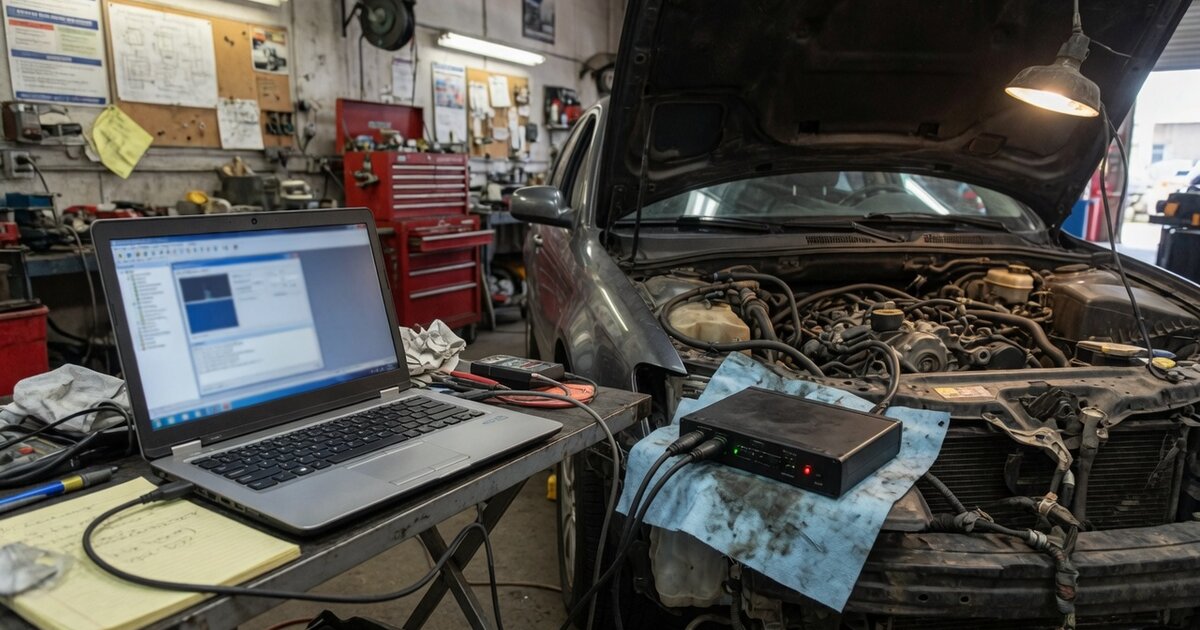
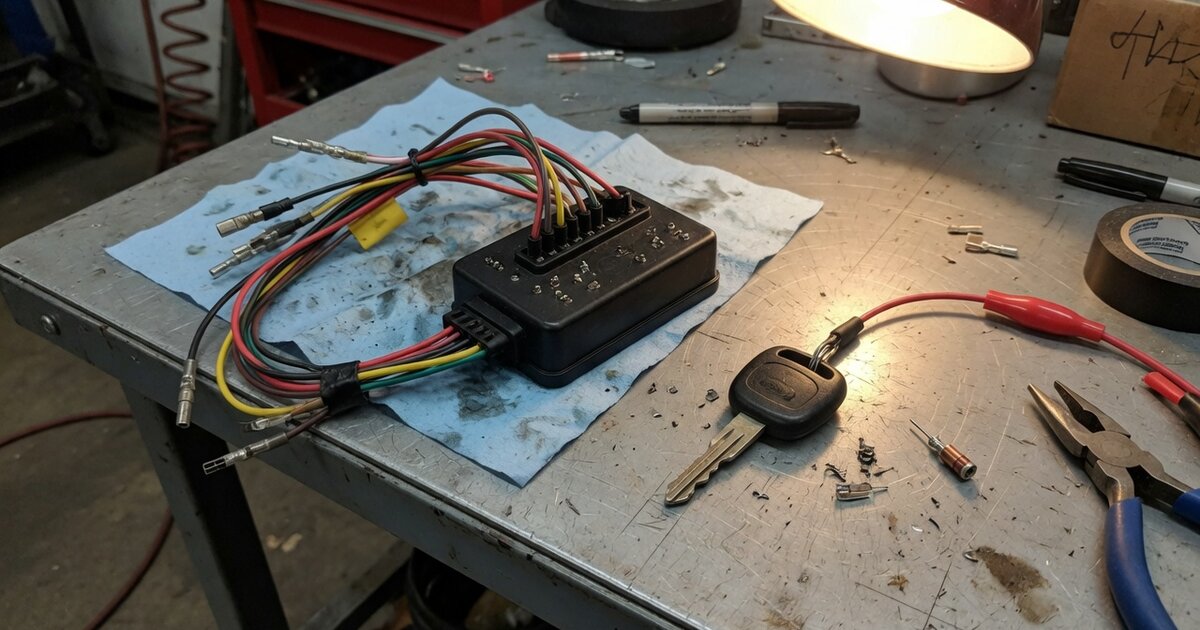
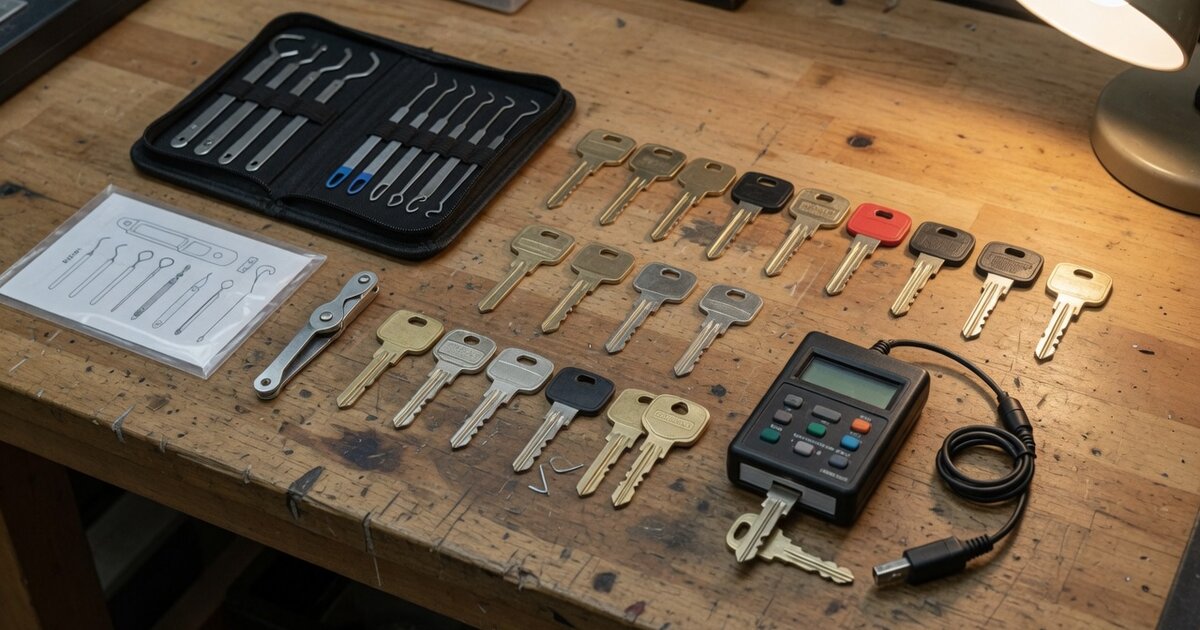
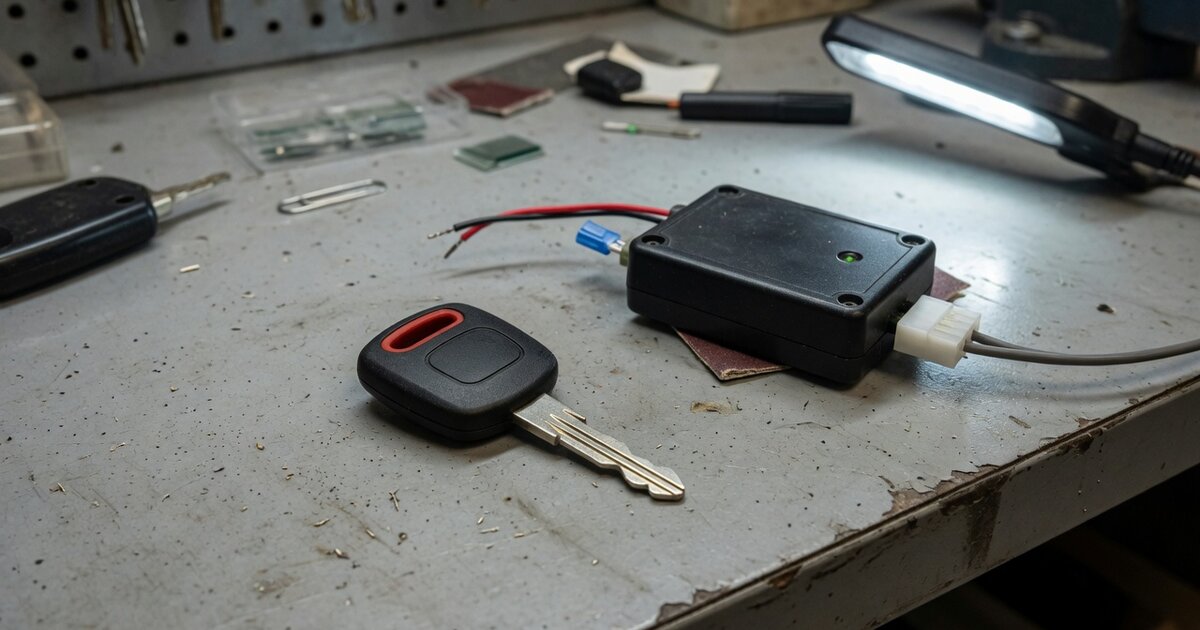
key programming
-
1999 Nissan Maxima Immobilizer Bypass: A NATS Service Guide
A technician's guide to the 1999 Nissan Maxima's NATS immobilizer: legitimate ECU-swap and service scenarios, required tools, and mistakes to avoid.
-
2001 Nissan Pathfinder Immobilizer Bypass: A NATS Service Guide
How the 2001 Nissan Pathfinder's NATS immobilizer works, and the legitimate ECU replacement, diagnostic, and all-keys-lost scenarios technicians handle.
-
2005 Nissan Altima Immobilizer Bypass: A NATS Service Guide
A technician guide to the 2005 Nissan Altima NATS immobilizer: legitimate ECM replacement, all-keys-lost, and remote-start bypass service scenarios.
-
2006 Chrysler 300 Immobilizer Bypass: A SKIM Service Guide
How the SKIM immobilizer works on a 2006 Chrysler 300, plus legitimate bypass/service scenarios technicians use for PCM swaps and all-keys-lost jobs.
-
2008 Dodge Avenger Immobilizer Bypass: A WIN-Era Service Guide
A technician guide to the 2008 Dodge Avenger WIN-era immobilizer: legitimate PCM replacement, all-keys-lost, and failed-module service scenarios explained.
-
Automotive Key Cutting Machines Explained
How automotive key cutting machines work, manual vs electronic options, what to weigh before buying, and mistakes to avoid.
-
Automotive Scan Tool: What It Does and How to Choose One
A practical guide to how automotive scan tools work, what they can diagnose, and what to weigh before buying one.
-
B3055:00 Transponder Key Problem: What the Code Really Means
B3055:00 doesn't appear in public DTC databases. Here is what is confirmable about this transponder key code and how to diagnose the underlying fault.
-
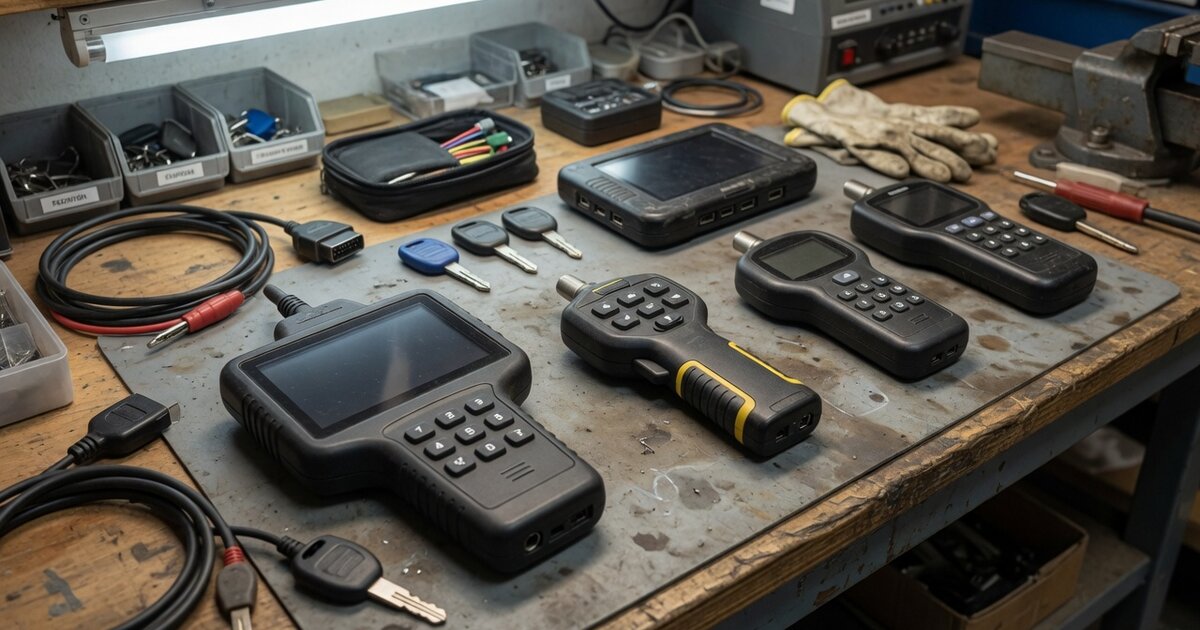
Car Diagnostic Tools: A Complete Overview of the Market
A clear overview of car diagnostic tools: code readers, scan tools, dealer systems, and key programming tools, and how to choose.
-
Chevy Cobalt Immobilizer Bypass: A Passlock Service Guide
A technician's guide to the Chevy Cobalt's GM Passlock immobilizer system: how it works, legitimate bypass and service scenarios, and mistakes to avoid.
-
Do Transponder Keys Need to Be Programmed?
Yes, transponder keys must be programmed to your car immobilizer to start the engine. Learn why, common mistakes, and the exceptions that exist.
-
ECU Programming Explained: How It Works and What to Know
A practical guide to ECU programming: how flashing works, when it's needed, common tools, and mistakes to avoid before reprogramming an ECU.
-
Immobilizer Bypass Explained for Automotive Technicians
What immobilizer bypass actually means in professional locksmith and diagnostic work, plus the legal, ethical, and technical considerations that matter.
-
Locksmith Tools for Beginners: Building a Starter Automotive Kit
A practical buying guide to essential locksmith tools for beginners entering automotive key and lock work, from entry tools to key programmers.
-
Mazda MX-5 NB Immobiliser Bypass
How the Mazda MX-5 NB's factory immobiliser works, when technicians legitimately bypass or work around it, and the mistakes pros should avoid.
-
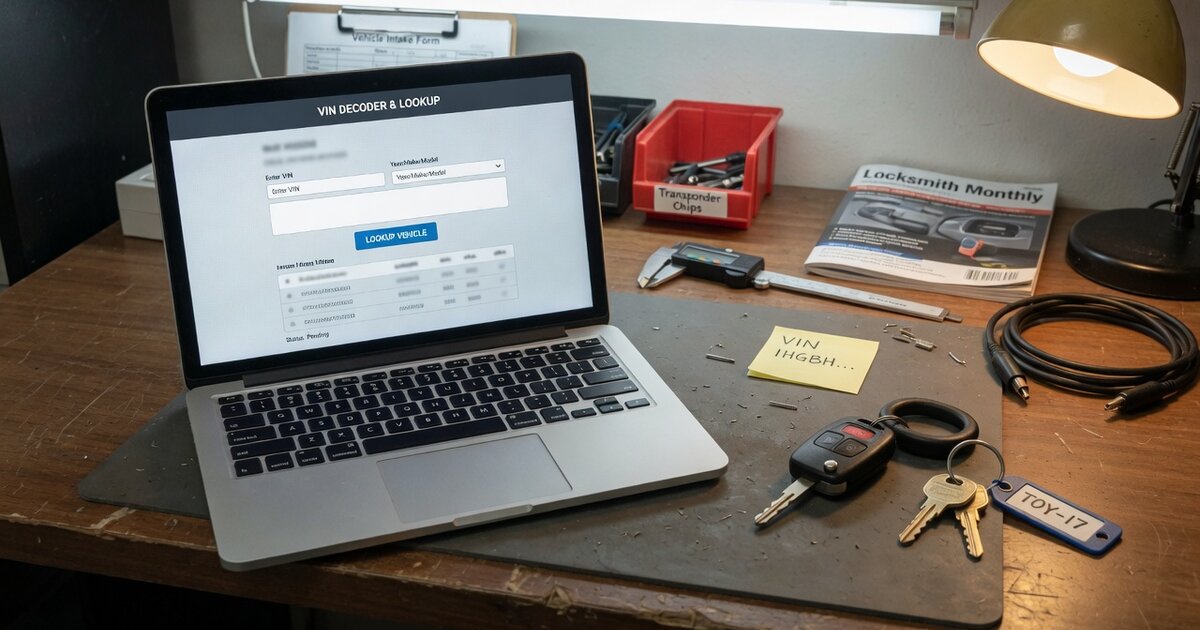
VIN Decoder: What It Reveals for Key Codes and Replacement Fobs
How a VIN decoder pulls factory key codes, confirms immobilizer system generation, and finds the correct FCC ID before you order a replacement key.
-
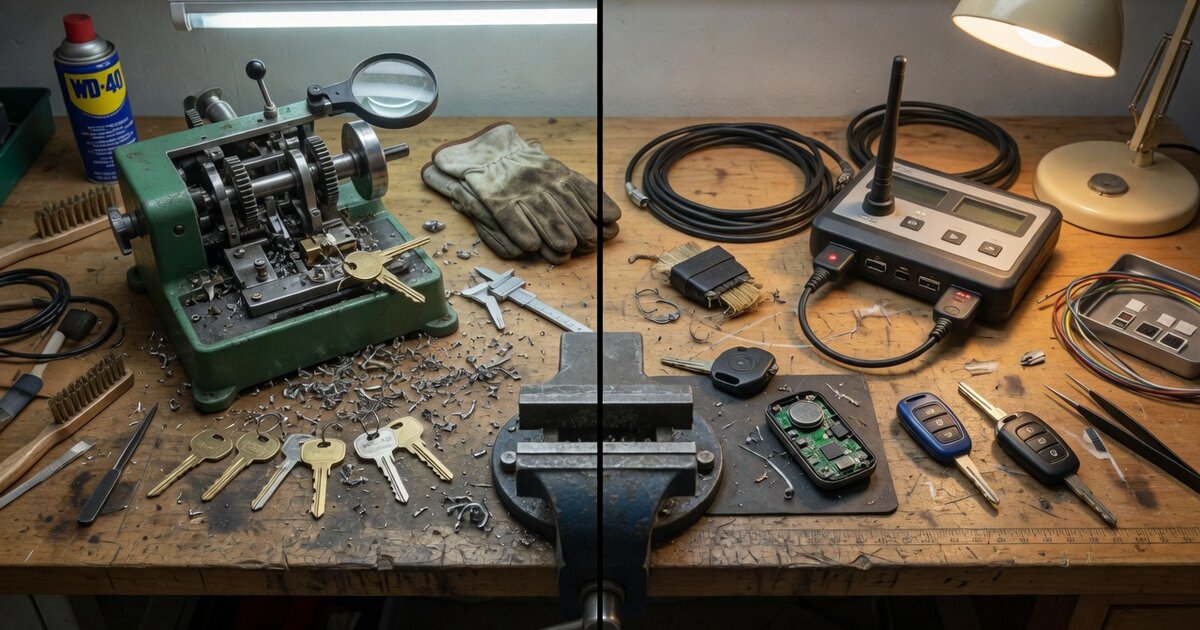
What Is Key Coding? Mechanical Bitting vs. Electronic Programming Explained
Key coding covers two different jobs: deriving a key's cut pattern from a code, and programming a chip to a car's immobilizer. Here's how each works.
-
Xhorse: An Overview of the Brand and Its Key Programming Tools
An overview of Xhorse, its VVDI key programmers, Dolphin key cutting machines, and remote lineup for locksmiths and technicians.
-
Xhorse XKKF02EN: What This Universal Remote Key Actually Is
The Xhorse XKKF02EN is a wired universal remote key for Xhorse VVDI tools, with no transponder chip included. Here is what it is and how it is used.
-
Security wait time during key programming: why the countdown must not be interrupted
A security wait countdown is a vehicle or service access delay, not a frozen programmer. Keep the required ignition, power supply, interface, and docu
-
Virgin-renewed-and-locked-keys-what-the-labels-mean-before-programming
Virgin, renewed, and locked describe a key’s electronic state in a tool or manufacturer workflow, not its cosmetic condition. A virgin key has not been ass
-
Why every working key may need to be present during programming
Every working key may need to be present because many programming procedures replace a stored list rather than append one item. Any key or remote omitted.
-
Why transponder frequency reading is not enough to choose a replacement key
Transponder frequency reading is not enough to choose a replacement key because frequency is only one radio or reader characteristic. Vehicle compatib
-
Can a key fob battery change erase programming?
A battery change normally does not erase a remote’s vehicle registration. Ford owner documentation specifically says replacing the remote battery does not
-
How to test a newly programmed car key: a function-by-function checklist
A newly programmed key is proven only by the vehicle functions it is meant to perform, checked one at a time. Test mechanical entry where applicable, lock,
-
Can a used smart key be programmed to another car?
A used smart key may be reusable only when its electronic state, vehicle system, and documented procedure permit it; many keys retain prior association or
-
What is a dealer key, and why making one is not the final programming step
A dealer key is a prepared credential for a named vehicle system; vehicle learning and functional verification are separate steps.
-
Why a key can pass the programming screen but fail in real use
A programming screen can report completion while a key still fails in real use because the screen may cover only one stage: a remote-board write, a transpo
-
What car key programming actually changes
Car key programming changes the vehicle’s authorised-key record or the key’s electronic data; it does not cut metal. A correctly cut blade can turn a lock
-
Why a car key unlocks the doors but will not start the engine
The door-unlock radio channel and the engine-authorisation channel are separate. A key that unlocks doors but will not start the engine has proved only.
-
Why a matching-looking replacement remote may still be incompatible
A matching-looking replacement remote can be incompatible because the shell does not prove the radio protocol, board revision, transponder type, button map
-
Key cloning vs key programming: when they are not interchangeable
Key cloning copies readable transponder data from one key to another; key programming changes or adds authorisation in the vehicle or prepares a key for th
-
Key blade cutting vs electronic programming: why a cut key may not start the car
Blade cutting reproduces the mechanical pattern for a lock or ignition; electronic programming authorises a transponder or smart-key credential for the imm
-
Why a smart key must have the correct button layout and board version
A smart key needs the correct button layout and board version because the vehicle can expect a specific radio board, passive-entry hardware, transpond
-
Why a key programmer cannot communicate with the immobilizer module
A key programmer that cannot communicate with an immobilizer module has not proved that the module is failed. Check the 12-volt supply, ignition state
-
How to identify a car key before selecting a programmer menu
Identify the vehicle, immobilizer system, key electronics, and symptom before selecting a programmer menu. Make, model, and model year alone are not enough
-
Key not detected on a push-button car: key, battery, or vehicle antenna?
“Key not detected” means the push-button system has not completed a valid proximity-key recognition event. The cause can be a depleted fob cell, a damaged.
-
OBD, bench and boot mode for key programming: how to choose the access method
Choose OBD, bench, or boot access from the documented module and operation, not from the fastest-looking menu.
-
Remote fob vs transponder vs smart key: which part has failed?
A remote fob, a transponder, and a smart key can fail independently: door buttons use a radio path, engine authorisation uses an immobilizer credential, an
-
Immobilizer warning light after key programming: what it does and does not prove
An immobilizer warning light after key programming is a diagnostic clue, not a universal verdict. A lamp that keeps flashing with ignition on can support.
-
How to tell a dead key-fob battery from a programming problem
A weak key-fob battery and a programming failure produce different evidence. A battery fault usually reduces or removes radio operation while the vehicle s
-
How many keys can a vehicle remember, and what happens when memory is full?
A vehicle’s key-memory limit is platform-specific; there is no safe universal number. When the authorised-key list is full, an add-key function may refuse.
-
Why use a battery maintainer during key programming?
A battery maintainer or regulated programming power supply is used during key programming to keep vehicle voltage stable while modules, ignition circuits,.
-
Why a programmed key starts the car but the remote buttons do not work
A replacement key that starts the engine but has dead remote buttons is usually authorised by the immobilizer while its remote-control transmitter has not.
-
Can you program two replacement keys in one session?
Two replacement keys can sometimes be learned in one legitimate session when the vehicle procedure supports multiple keys and the keys are confirmed compat
-
Adding a spare key vs all keys lost: what changes before programming
Adding a spare key begins with a working authorised credential; all keys lost begins without one and can require a different security path, proof of owners
-
Remote generation vs vehicle learning: why “write success” is not a finished key
A “write success” message can mean that a remote board received generated data, not that the vehicle has learned the remote or authorized engine start
-
CAN FD and DoIP in key programming: when an older interface is the limitation
An older diagnostic interface can be the limitation when a vehicle requires CAN FD or DoIP transport and the interface cannot carry that transport. A
-
Why a smart key works in the emergency slot but not wirelessly
A smart key that starts only when placed at the documented emergency reader can still have valid immobilizer authorization. That result often means the low
-
Wrong vehicle selection in a key programmer: symptoms before any data is written
Wrong vehicle selection often shows itself before data is written: the listed module name, key type, connector, function wording, or identification re
-
FCC ID, part number and frequency: which identifier confirms remote compatibility?
No single marking confirms remote compatibility. Compare the original and candidate remote’s part number or board number, regulatory identifier such as FCC
-
How to verify a blank transponder before cloning or programming
Verify a blank transponder before cloning or programming by reading its chip family, state, and supported application with the correct reader, then co
-
What to do when voltage drops or the programmer disconnects mid-procedure
When voltage drops or a programmer disconnects during a key procedure, stop repeating commands. Preserve the screen message, keep vehicle power stable
-
Why auto-VIN detection can be wrong for key programming
Auto-VIN detection can identify a vehicle while still selecting the wrong key-programming path. The VIN may be read from one accessible module, wherea
-
How to remove a lost or stolen key from vehicle memory
Removing a lost or stolen key from vehicle memory means revoking its engine-authorisation and, where applicable, its remote-control identity. Replacing a.
-
When to stop a key-programming attempt and preserve the vehicle state
Stop a key-programming attempt when vehicle identity, module identity, key compatibility, stable power, or the selected operation conflicts with the docume
-
What vehicle and key details to record before asking for programming support
A useful key-programming support record names the vehicle, exact symptom, key markings, module identity, interface and software version, selected function,
-
PIN, CS, MAC and sync data in key programming: what each value is for
PIN, CS, MAC and synchronization values are platform-specific security inputs that must not be substituted for one another.
-
Why a vehicle may require all keys to be erased before adding replacements
A vehicle may require an all-keys erase because its documented security procedure rebuilds the authorized-key list rather than appending one key. That requ
-
Will programming a new key erase the old keys?
Programming a new key can preserve old keys or erase them, depending on the vehicle, the menu, and the procedure chosen. “Add key” and “erase then learn”.
-
Why the original key works but the newly programmed key does not
When the original key starts the vehicle but the newly programmed key does not, the vehicle-side immobilizer is at least partly functional. The first.
-
Why a remote works only at very short range after programming
A remote that works only at very short range is not automatically misprogrammed. A weak cell, poor battery contact, local radio interference, damaged remot
-
BMW FEM Bench Programming: What Equipment You Need
An overview of the equipment required for bench-level programming on BMW FEM modules, and when this approach becomes necessary.
-
Programming a Replacement Remote Without Dealer Access
A practical overview of programming a replacement remote independently, covering common approaches and when dealer-level access is genuinely needed.
-
SKP900 for Budget Key Programming: What It Can Do
An honest look at the SKP900's capability and limitations, covering what this budget-friendly tool can realistically handle.
-
Reading Mercedes EIS Data via Bench Connection
A technical look at bench-level reading of Mercedes EIS module data when OBD access is not sufficient for the job.
-
Bench Programming Basics for New Locksmiths
An introduction to bench programming fundamentals for locksmiths new to this category of work, covering equipment and safe practices.
-
Kia PIN Code Reading for Key Programming
How PIN code reading works for Kia key programming, why it matters, and what methods technicians commonly use to retrieve it.
-
Ford F-150 Key Fob Programming Without a Dealer
A practical look at programming a Ford F-150 key fob independently, covering what tools and steps are typically involved.
-
Common Mistakes When Programming Toyota Keys with OBDSTAR X300
The most frequent errors locksmiths make when using the OBDSTAR X300 on Toyota vehicles, and how to avoid each one in the field.
-
How EEPROM Reading Works in Key Programming
A technical explanation of how EEPROM reading functions as part of key programming, covering the underlying process and its purpose.
-
Reading BMW ISN Data for Key Programming
An explanation of what ISN data is on BMW vehicles, why it matters for key programming, and how technicians typically access it.
-
Troubleshooting No-Start After VW Key Programming
A diagnostic approach for resolving a no-start condition that appears after Volkswagen key programming, covering the most common causes.
-
Programming Aftermarket Remotes on Kia Models
What technicians should understand about programming aftermarket remotes on Kia vehicles, including compatibility and testing considerations.
-
Comparing All-in-One vs Modular Key Programming Tools
A comparison of all-in-one and modular key programming tool philosophies, covering the practical tradeoffs of each approach.
-
Reading Data via OBD vs Bench: When to Choose Which
A practical framework for deciding between OBD-based and bench-level data reading approaches on a given key programming job.
-
Transponder Chip Types Explained: 4C, 4D, 46, 47, 48, 49
A practical overview of the most common automotive transponder chip families locksmiths encounter, and how to tell them apart in the field.
-
Common Ford Key Programming Errors and Fixes
The most frequent errors locksmiths encounter when programming Ford keys, and the practical fixes for each situation.
-
Common Hyundai/Kia Key Programming Mistakes
The most frequent mistakes locksmiths make when programming Hyundai and Kia keys, and practical ways to avoid each one.
-
Honda Smart Key Programming Basics
An introduction to Honda smart key programming, covering the system's general architecture and typical session workflow.
-
Mercedes Infrared Key Programming Explained
An explanation of Mercedes infrared key technology, how it differs from radio frequency systems, and what programming it involves.
-
Ford Module Configuration After Key Programming
Why some Ford vehicles require module configuration steps after key programming, and what these steps typically involve.
-
Mercedes Sprinter Key Programming Notes for Vans
Practical notes on key programming for the Mercedes Sprinter van, covering fleet considerations and immobilizer generation differences.
-
Choosing the Right Tool for Mercedes FBS4 Key Work
A practical framework for choosing key programming equipment capable of handling Mercedes FBS4 vehicles reliably.
-
How to Renew a Remote Key Fob After Programming
A step-by-step explanation of remote key fob renewal after programming, covering when this step is needed and how to complete it properly.
-
Choosing Your First Key Programming Tool as a New Locksmith
Practical guidance for new locksmiths choosing their first key programming tool, covering budget, coverage, and growth planning.
-
BMW Motorcycle Key Programming Basics
An introduction to key programming on BMW motorcycles, covering how the process differs from BMW automobile work.
-
Adding a Key to Audi MQB49 Platform via OBD
A walkthrough of adding a spare key to an Audi MQB49 vehicle through the OBD port, including the security steps involved.
-
Zed-Full Programmer: Features for Professional Locksmiths
An overview of the Zed-Full key programmer's features and how it fits into a professional locksmith's toolkit.