Automotive Lock Picking Tools: A Professional Locksmith's Overview
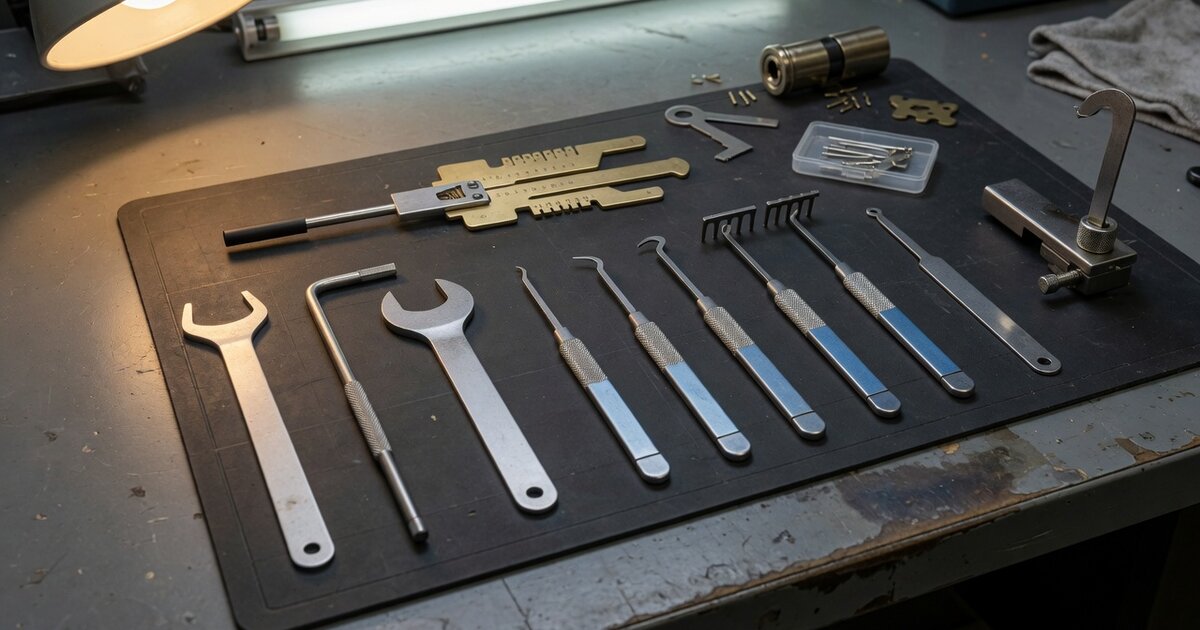
Automotive lock picking tools are precision instruments professional locksmiths use to open and manipulate vehicle door, trunk, and ignition locks mechanically, without a working key and without forcing or destroying the lock. This overview is written for licensed, professional automotive locksmiths performing legitimate work: lockouts where the customer can show proof of ownership or written authorization, insured and bonded service calls, and shop jobs on vehicles a locksmith has been contracted to service. These tools are not intended for defeating a vehicle's security system without the owner's consent, and depending on your state or country, owning or using them outside a licensed trade context can carry real legal consequences, including criminal liability. If you're still assembling your basic gear, it's worth reading our guide to building a starter automotive locksmith kit before adding dedicated pick tools.
What professional automotive lock picking tools actually are
Automotive lock picking is a distinct discipline from residential lock picking, mainly because most vehicle door, trunk, and ignition locks use wafer tumbler mechanisms rather than the pin tumbler cylinders found in home deadbolts. Wafers have looser tolerances and fewer possible cut depths than pins, and many vehicles — particularly GM and Asian-market models — add a sidebar mechanism as a second locking element, changing how tension has to be applied. That's why automotive pick sets look different from a residential kit, and why the tools fall into a handful of categories.
Tension tools apply light rotational pressure to the lock plug while the wafers are set, holding each one at the shear line as it's picked. Automotive tension tools tend to be thinner and flatter than residential tension wrenches, built to fit the shallow, narrow keyways used on car doors and trunks without binding.
Pick guns use a spring-loaded or electric-powered striker to snap the wafers upward so they briefly bounce to the shear line while tension is held, letting the plug turn. Automotive-rated pick guns are sized down from general-purpose models to work inside a car keyway, and are generally faster on simple wafer locks than manual picking, though they offer less feedback and control.
Lishi 2-in-1 pick-and-decoder tools are the tool most associated with modern automotive locksmithing. Each one combines a built-in tension component with a picking arm and a calibrated reading scale in a single instrument, and — critically — each model is machined to match one specific keyway family (for example HU100, HU66, or SIP22). As the locksmith manipulates the wafers to open the lock, the tool's gauge reads the depth of each cut, so by the time the lock turns, the bitting for a duplicate key is already known — opening and decoding happen in a single pass, without disassembling the cylinder. Our Lishi locksmith tools user guide covers the mechanics in more depth.
Jiggler keys, sometimes called try-out keys, are sets of pre-cut key blanks shaped to approximate the most common wafer patterns for a given keyway. Rather than picking wafer by wafer, the locksmith inserts a jiggler and works it with a light up-and-down motion and rotational pressure, walking several wafers toward alignment at once. They're most effective on older vehicles with simple wafer locks made before laser-cut keys and transponder immobilizers became standard, and far less reliable on modern sidebar or high-security locks.
All of these tools address the mechanical lock only. On any vehicle built since the late 1990s, a mechanically opened door or ignition lock still leaves the separate transponder or smart-key immobilizer engaged, so opening the lock doesn't defeat the vehicle's electronic security — that's a different job, covered by key programming tools rather than pick tools.
What to consider before buying or using them
Keyway matching is the first practical constraint. Lishi tools in particular are not universal — a tool cut for one keyway profile will not properly seat or read a different one, and forcing a near-match tool into the wrong lock is one of the fastest ways to damage a wafer stack. Before buying, check the manufacturer's keyway-to-vehicle application chart against the exact make, model, and year you'll be servicing, since automakers sometimes change profiles mid-generation.
Licensing, insurance, and bonding requirements for locksmith work vary by state and country, and a growing number of jurisdictions specifically regulate who may lawfully use lock picking tools commercially. Before offering automotive lock picking as a paid service, verify local requirements and keep that documentation current — this also matters on the job itself, since a professional should have a routine way of confirming a customer's ownership or authorization before opening any vehicle.
Tool quality matters more here than in many trades, because the tolerances are small and the tools flex under load. Inexpensive, imprecisely machined pick guns and off-brand Lishi-style tools are more likely to bind, slip, or mis-read a cut depth, costing more time than the money saved. It's also worth holding to a non-destructive-entry standard: the goal of picking, unlike forced or drilled entry, is to leave the lock working and walk away with the bitting needed to cut a proper key.
Common mistakes to avoid
Using the wrong Lishi model, or one that's "close enough" to the correct keyway, is the most common source of damaged wafers and bent tools; always confirm the exact application first. Applying too much tension while picking — especially with a pick gun — can shear or deform wafers instead of setting them, turning a clean pick into a lock that now needs replacing. Treating jiggler keys as a universal skeleton key is another frequent error: they work well on older, simple wafer locks, but are unreliable against sidebar locks and the tighter-tolerance cylinders on newer vehicles. Skipping the decoding step and cutting a key by trial and error, rather than reading the cuts with a 2-in-1 tool as you go, adds unnecessary rework. Finally, and most importantly, proceeding without verifying the customer's ownership or authorization is a mistake that has nothing to do with tool technique and everything to do with legal exposure.
Frequently asked questions
Are automotive lock picking tools legal to own?
In most US states, simple possession is legal, but some states treat possession as evidence of criminal intent unless you can show a legitimate reason, such as an active locksmith license. Laws vary by state and country, so confirm the specific possession and use rules where you operate rather than assuming national uniformity.
What's the real difference between automotive and residential lock picking tools?
Automotive tools are built around wafer tumbler mechanisms and, in many vehicles, an added sidebar element, sized for the shallow, narrow keyways used in car doors, trunks, and ignitions. Residential tools are built around pin tumbler cylinders with different tolerances and deeper keyways, so home-lock tension tools, picks, and pick guns usually aren't the right fit for a car even when they look similar.
Can a Lishi 2-in-1 tool actually cut a new key on its own?
No — it picks the lock open and reads (decodes) the bitting depth of each wafer as it does so, but it doesn't cut key blanks. The decoded bitting is then used on a separate key-cutting machine to produce a working duplicate.
Do jiggler keys work on modern vehicles with transponder or keyless systems?
Jiggler keys only affect the mechanical wafer lock, and work best on older, simpler patterns found in vehicles built before laser-cut keys and transponder immobilizers became standard. On newer vehicles, mechanically opening the door still leaves the separate immobilizer or smart-key system engaged, so it won't start the car — that requires key programming tools, not picking tools.
How is a pick gun different from a Lishi pick-and-decoder tool?
A pick gun is built for speed on simple wafer locks — it strikes the wafers toward the shear line while tension is held, but gives no information about the cuts. A Lishi 2-in-1 tool is slower and more deliberate, but decodes the bitting as it picks, so the locksmith leaves with both an open lock and the data needed to cut a matching key.
Do I need a locksmith license to buy or use these tools?
Retailers generally sell automotive pick sets, pick guns, and Lishi tools to the public, so purchase alone usually isn't restricted. Using them commercially on a customer's vehicle is different: many states require a locksmith license, bond, or insurance to legally offer lock picking as a paid service, and operating without the required credentials can create liability even where tool possession itself is lawful.