Automotive Scan Tool: What It Does and How to Choose One
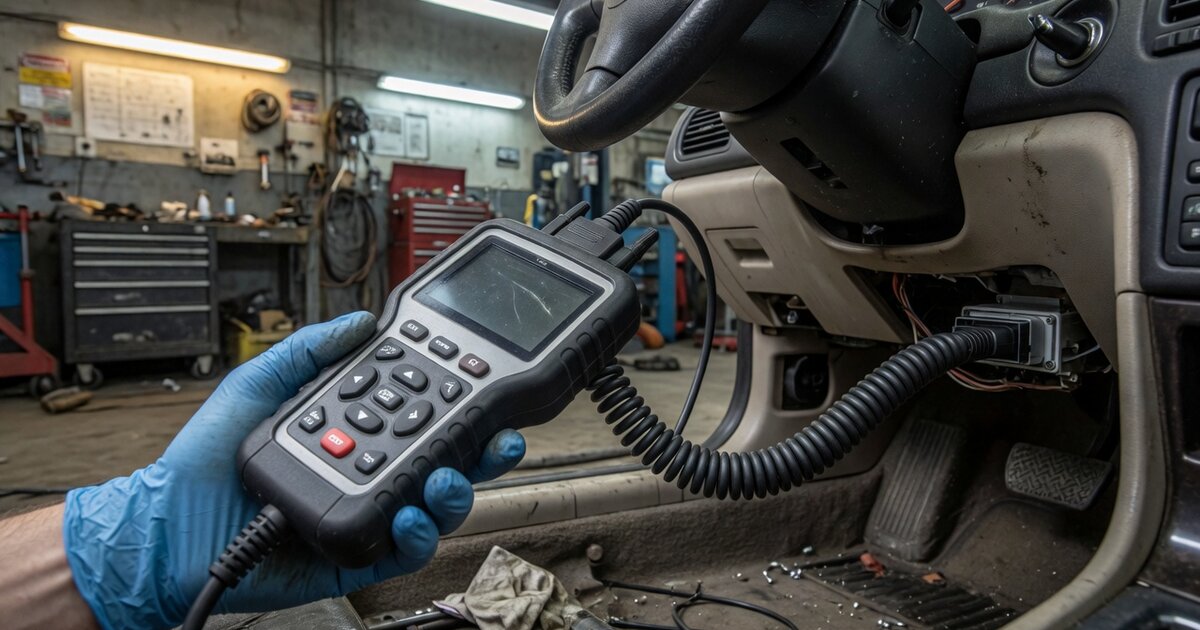
An automotive scan tool is a diagnostic device that plugs into a vehicle's onboard diagnostic port and talks directly to the car's electronic control units (ECUs). At its simplest, it reads and clears trouble codes stored by the engine computer. At its most advanced, it reaches every module on the vehicle's network, runs guided tests, and even sends commands back to components. That range is exactly why the term covers such different products, from an inexpensive code reader that plugs in and displays a single number, to a shop-grade tablet that a technician relies on for hours every day.
Scan tools matter because modern vehicles are managed by dozens of interconnected computers rather than a single engine control unit. A warning light on the dash rarely tells the whole story on its own; it is a signal that something in the underlying data needs to be read and interpreted. A scan tool is the interface that makes that data visible, whether the goal is a quick check before buying a used car, ongoing maintenance at home, or full diagnostic and repair work in a shop.
The category also overlaps with the locksmith and key programming world. Many diagnostic platforms now combine standard vehicle diagnostics with immobilizer and key-related functions in one device, which is why the line between a "scan tool" and a "key programmer" has become blurry on modern professional-grade equipment.
How it works
A scan tool connects to the vehicle through the OBD-II port, standard on virtually all cars and light trucks sold in the United States since the mid-1990s. Through that port, the tool communicates using one of several protocols, most commonly the Controller Area Network (CAN) bus on newer vehicles, along with older standards like ISO 9141 and J1850 on legacy systems. Once connected, the tool requests data from the vehicle's control modules and displays it in a form a technician or owner can interpret.
The most familiar function is reading diagnostic trouble codes from the powertrain control module. But a basic, consumer-grade tool is often limited to exactly that: engine and sometimes transmission codes. It typically cannot reach the anti-lock brake system, airbag/SRS module, electronic power steering, climate control, or body control modules. Reaching those systems requires a more capable tool with broader protocol support and manufacturer-specific coverage.
Beyond reading codes, capable scan tools offer live data streaming, showing real-time sensor values such as engine RPM, coolant temperature, or oxygen sensor readings as the vehicle runs. Higher-end professional tools add bi-directional control, sometimes called active test: instead of only reading information, the tool can send a command to a module, such as cycling a cooling fan, activating a fuel pump, or running an actuator test, which is essential for confirming a repair rather than just guessing at one from a code alone. This same bi-directional communication layer is also what lets many modern professional tools extend into immobilizer diagnostics and key-related functions, which is where scan tools and dedicated key programming equipment increasingly meet.
What to consider
Choosing a scan tool comes down to matching the tool's depth of access to what you actually need to do. A few practical points are worth weighing before buying:
- Whether you need basic code reading for personal use or full bi-directional diagnostics for professional repair work.
- System coverage: does the tool reach only the engine, or also ABS, airbag, transmission, and body modules?
- Protocol and vehicle-make support, since manufacturer-specific functions often require broader compatibility than generic OBD-II access alone.
- Whether software updates and coverage extensions are included, offered as a subscription, or a one-time purchase, since this affects long-term usefulness as new models are released.
- Screen quality and battery life if the tool will be used daily in a shop environment rather than occasionally at home.
- Whether bi-directional/active test functions are actually needed, since they add real diagnostic value but also complexity.
- If key programming or immobilizer work is part of the job, whether a combined tool makes sense versus a dedicated device — for example, when choosing the right tool to program a Nissan Versa smart key, coverage for that specific system matters more than general scan breadth.
- Build quality and connector durability, particularly for tools that will travel between vehicles or job sites regularly.
- Availability of guided diagnostics or repair information alongside raw code data, which can speed up troubleshooting for less experienced users.
Common mistakes to avoid
A scan tool is only as useful as the way it is used and maintained. Some recurring mistakes reduce that usefulness or lead to wrong conclusions:
- Treating a trouble code as the final diagnosis instead of a starting point for further testing.
- Clearing codes without addressing the underlying issue, which often lets the same fault return.
- Assuming a basic code reader can access ABS, airbag, or body modules when it is only rated for powertrain codes.
- Skipping software updates, which can leave newer vehicles or systems unrecognized.
- Using bi-directional commands without understanding what the component being activated actually does, which can risk unnecessary wear or a false test result.
- Buying based on price alone without checking whether the tool actually supports the vehicle makes and systems it will be used on.
Frequently asked questions
What is the difference between a code reader and a scan tool?
A code reader is generally a simpler device limited to reading and clearing basic engine trouble codes. A scan tool is a broader term that can include live data streaming, access to additional modules like ABS or airbag systems, and on professional models, bi-directional control that sends commands back to the vehicle rather than only reading from it.
Can a scan tool diagnose problems outside the engine?
It depends on the tool. Basic consumer scanners are usually limited to the powertrain system. More capable professional or manufacturer-specific tools can also communicate with the ABS, airbag, transmission, steering, and body control modules, since those systems run on the same vehicle communication network but require broader protocol and software support to access.
Do all scan tools work on all vehicles?
All vehicles sold in the US since the mid-1990s use a standardized OBD-II connector, but that does not guarantee full compatibility. Deeper, manufacturer-specific functions often require a tool with software coverage for that particular make, so it is worth checking a tool's supported vehicle list before relying on it for anything beyond basic codes.
What is bi-directional control and do I need it?
Bi-directional control lets a scan tool send commands to a vehicle's modules, such as activating a fuel pump or cycling a cooling fan, instead of only reading data. It is valuable for confirming that a repair actually fixed the problem, but it is mainly relevant for professional repair work rather than casual home use.
Are scan tools and key programmers the same thing?
Not traditionally, but many current professional-grade tools combine both functions in one device, adding immobilizer and key-related capabilities alongside standard diagnostics. Dedicated key programming tools, such as the VVDI2 key tool, remain common where key and immobilizer work is the primary task rather than general vehicle diagnostics.
Why does my scan tool show no communication with certain modules?
This can result from a genuine network fault on the vehicle, but it can also happen when the tool itself lacks support for that module or vehicle's communication protocol. Wiring issues on older or more complex platforms are another common cause, which is why documented reference material, like a VVDI MB tool wiring diagram, is often needed to distinguish a tool limitation from an actual vehicle problem.