Can an Immobiliser Be Bypassed?
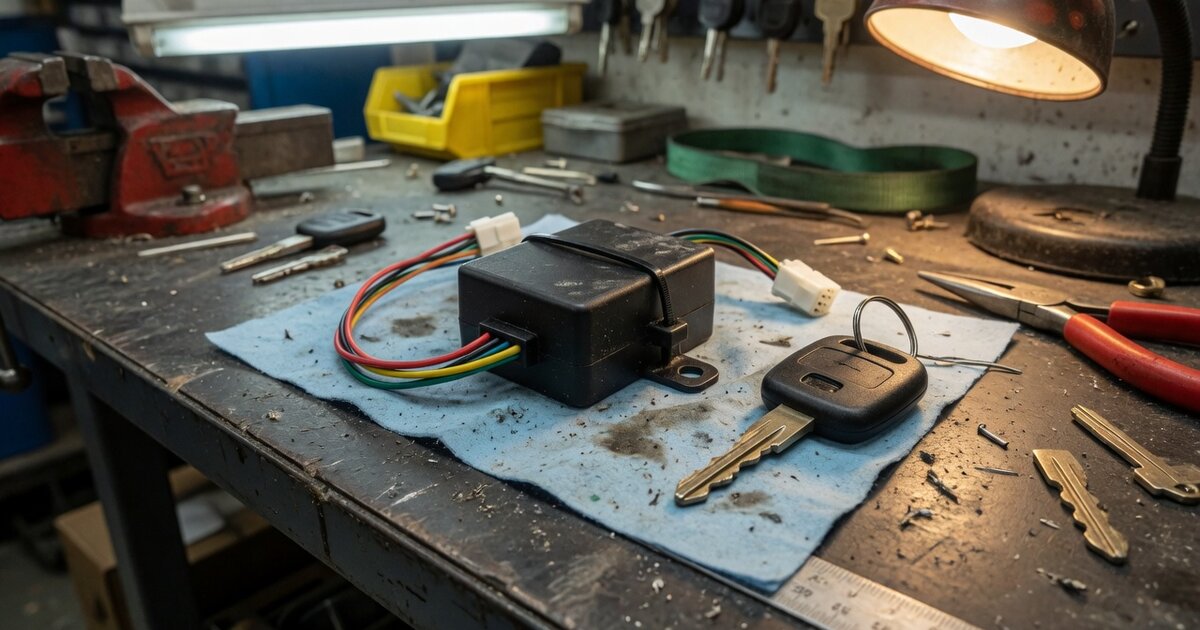
"Can an immobiliser be bypassed?" is one of those questions typed into search bars by two very different kinds of people: a technician staring at a stripped ECU on a bench, and someone who just watched a video about car theft and wants to know how worried to be. The honest answer sits between "yes" and "not the way you're probably imagining." Immobiliser bypass is a real, established part of vehicle service work, but it is not a single trick, a universal gadget, or a shortcut that works the same way on every car. This article covers where bypass is legitimate, why it resists being turned into a one-size-fits-all method, and where people go wrong trying to shortcut it.
The short answer
Yes, in specific and mostly professional circumstances. Technicians bypass or temporarily defeat immobiliser circuits routinely during bench work: reflashing or replacing an ECU, working on a donor engine swap, recovering a vehicle after a dead body control module, or diagnosing a no-start fault where the immobiliser handshake itself is the suspect component. Installers of aftermarket remote starters also use purpose-built bypass modules, sold by companies such as Fortin, iDatalink and Flashlogic, that plug into the OBD-II port and simulate the presence of a valid key so the engine can crank without a key physically in the ignition. That is a documented, mainstream part of the remote-start installation trade, not an underground hack.
On the other side, immobiliser bypass is also something thieves attempt, using relay attacks that exploit the wireless handshake between a keyless-entry fob and the car, or by tapping directly into the vehicle's CAN bus to inject fake key-present messages. These methods have been documented and studied by security researchers and motoring organisations, but they are not "bypassing an immobiliser" in the casual, flip-a-switch sense. They require specific equipment, vehicle-specific knowledge, and, in the CAN-injection case, physical access to wiring that most owners would never knowingly allow.
Why this isn't a simple universal trick
Immobiliser systems are not one product. They are dozens of different implementations spread across decades of manufacturers, each with its own transponder chip, encryption scheme, and communication protocol. A procedure that works on one platform, like our Mazda MX-5 NB immobiliser bypass guide, has essentially zero transferability to a different manufacturer's system and often none at all to a different model year of the same car. That is the core reason "how to bypass an immobiliser" can never honestly be answered with one universal procedure: the answer depends entirely on which immobiliser, on which vehicle, in which condition.
Two further factors compound this. First, the security research: academic teams have shown that some immobiliser transponders, including the widely used Megamos chip, contain cryptographic weaknesses that can in theory be exploited, but doing so requires specialised RF and cryptanalysis equipment, not a generic plug-in box. Second, automakers have steadily closed gaps that used to make bypass easier. Older systems sometimes had a documented quirk where the ECU would accept a non-transponder key once the original chip key had been removed from the ignition for a set period, a fallback apparently meant for garages without programming equipment, and one later systems deliberately removed once its abuse became known. Newer platforms increasingly encrypt CAN bus traffic end to end, and some manufacturers now add ultra-wideband (UWB) ranging on the keyless-entry side, measuring the actual time a signal takes to travel between key and car to defeat the relay-attack technique that plagued earlier systems. A 2024 German motoring-organisation test found 629 of 698 vehicles still vulnerable to relay-style attacks, while UWB-equipped cars consistently resisted them: a sign of where the industry is heading, not a solved problem.
Common mistakes to avoid
- Assuming one video applies to your car. A forum post or clip about "the universal immobiliser bypass" almost never transfers cleanly to your specific make, model, and year. Immobiliser logic varies enough between platforms that a mismatched procedure can brick an ECU or trigger a lockout that needs dealer-level recovery to undo.
- Buying a generic OBD "bypass dongle" without confirming the application. Bypass hardware is built for specific vehicles and specific purposes, such as remote start versus diagnostic work versus post-repair recovery. Mismatched hardware can leave a fault code active or fail silently, so the car seems fine until a warning light or limp mode shows up weeks later.
- Skipping the key-learning step because the engine started. A running engine after a bypass procedure is not the same as a properly re-paired immobiliser system. Skipping the pairing step often leaves a stored fault and a car that refuses to restart once the battery is disconnected.
- Treating bypass work as a casual DIY project. Professional bypass work relies on vehicle-specific diagnostic tools and, frequently, access to manufacturer or aftermarket security databases. Without that access, anyone attempting it is working blind on a system deliberately engineered to resist tampering.
- Ignoring the legal and insurance angle. Bypass work tied to legitimate repair or professional installation is routine; bypass equipment or requests disconnected from any legitimate purpose can affect insurance validity and, depending on jurisdiction, cross into activity treated as theft-related.
Frequently asked questions
Is bypassing an immobiliser illegal?
Not inherently. A technician bypassing an immobiliser to replace a failed ECU, recover a customer's own vehicle, or install a legitimate remote starter is doing ordinary repair work. What is illegal in most jurisdictions is possessing or using bypass equipment with intent to steal a vehicle, or supplying such tools with no legitimate trade purpose; several countries specifically regulate the sale of vehicle security bypass and key-cloning equipment for that reason. Context and intent separate a legal repair from a criminal one.
Can a locksmith bypass my immobiliser if I've lost all my keys?
Often, yes, though it depends on the vehicle. A qualified automotive locksmith can typically use professional key-programming equipment to communicate with the immobiliser ECU and register a new key, which is functionally a controlled, authorised version of "bypass" rather than a permanent defeat of the system. On some late-model vehicles this now requires proof of ownership and manufacturer or security-database authorisation before any new key can be programmed at all, because the industry has tightened access over time.
What does an immobiliser bypass module do in a remote-starter installation?
It sits between the vehicle's factory wiring and the aftermarket remote-start controller and answers the immobiliser's "is the correct key present" check on the controller's behalf, using data captured from the actual key during a one-time learning procedure. This lets the engine start remotely without a person in the seat, while the factory immobiliser stays fully functional for normal driving with the key present. It is a mainstream, widely sold category of hardware in the 12-volt installation trade, not a workaround of unclear legality.
Do the "universal" immobiliser bypass tools sold online actually work on every car?
No. Immobiliser protocols differ enough between manufacturers, and often between model years of the same manufacturer, that no single tool genuinely covers every vehicle despite marketing claims. Products described as universal are usually built around a large database of vehicle-specific routines rather than one method that defeats every system, and the operator still has to select the correct vehicle profile and follow that platform's specific steps for it to work at all.
Will bypassing the immobiliser affect my insurance or resale value?
It can. Insurers generally expect a vehicle's factory security systems to remain functional, and an undocumented, non-professionally installed bypass can complicate a theft claim if the immobiliser was not operating as designed at the time of a loss. For resale, a documented, professionally performed bypass tied to a legitimate purpose, such as a remote-start install or post-ECU-swap repair, is generally a non-issue, while an undocumented aftermarket modification is something a careful buyer's inspection may flag.
Are modern immobilisers actually resistant to theft-motivated bypass attempts?
More than earlier generations, yes, though not invulnerable. Research has repeatedly found weaknesses in specific transponder chips and in the wireless relay behaviour of keyless-entry systems, and thieves have adapted with relay attacks and CAN-bus injection techniques. Manufacturers have responded with encrypted CAN traffic, rolling-code cryptography, and, on newer keyless platforms, ultra-wideband ranging that defeats the classic relay attack by measuring genuine signal travel time. Independent 2024 testing found UWB-equipped vehicles consistently resisted attacks that succeeded against most other tested models, a measurable improvement even if it is not a universal fix yet.