Mazda MX-5 NB Immobiliser Bypass
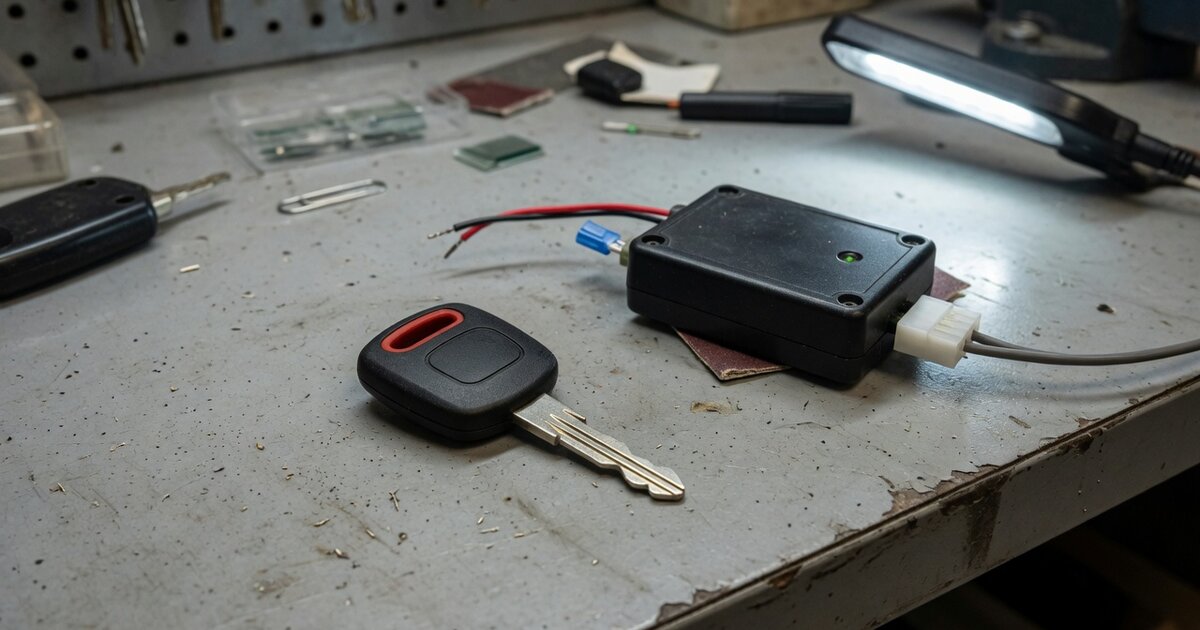
The Mazda MX-5 NB (1998–2005) is one of the most swapped, tracked, and bench-tested small cars on the road, so its factory immobiliser comes up constantly in shop conversations — not because anyone wants to steal one, but because a 20-plus-year-old anti-theft system doesn't always cooperate with a rebuilt engine bay, a spare ECU, or a lost set of keys. This article covers how the NB's immobiliser is built, the legitimate scenarios where a technician needs to bypass or work around it, and the mistakes that turn a routine job into a mess. It is not a guide for unauthorized access to someone else's car; every scenario below assumes documented proof of ownership or shop authorization as standard professional practice.
The MX-5 NB's immobiliser system
Mazda's own documentation puts it plainly: the immobiliser “allows the engine to start only with a key the system recognises,” and an unrecognised key simply won't fire the engine. It's a passive lockout sitting between the key and the engine controller, not a mechanical lock.
Where that lockout physically lives varies by market and model year, which trips up shops. Many NB cars have the immobiliser described by long-time owners and swap builders as built into the engine ECU, with no separate box to unplug. Other NB variants — notably later UK/European Mk2.5 cars — use a discrete immobiliser amplifier ring around the ignition barrel that reads the key's transponder and passes a yes/no signal to the ECU before it allows fuelling and spark. Either way, key, reader coil, immobiliser logic, and ECU form a matched set from the factory, and swapping one part in isolation from a random donor car won't be recognised.
Mazda's key-care guidance underlines this: keep the key away from magnets, heat, and water, since chip damage is treated the same as an unrecognised key. Historically a lost key meant a trip to an authorised repairer to reset the electronic codes; no owner-level reset existed. That dependency is why NB immobiliser work is now a niche: original modules are hard to source, and one UK enthusiast group documented building an emulator specifically because these units “are not available new and it is not possible to reprogram a used immobiliser.”
Legitimate reasons to bypass or work around it
Engine swaps are the biggest reason this comes up. The NB is one of the most common swap and track platforms around, and serious builds — turbo conversions, alternative Miata engines, full drivetrain swaps — usually move to standalone management such as MegaSquirt, Haltech, or Link. Shop experience on Miata tuning forums is consistent: once a car runs on a standalone ECU that never speaks Mazda's immobiliser protocol, it starts fine with or without the factory unit connected, since it was never part of that ECU's authorisation logic. The catch is cosmetic, not functional — a leftover dash light can flash if the old loom is left half-connected, and it needs fully disconnecting.
Bench testing is another routine case. A technician isolating a suspected immobiliser fault — dash light on, correct key, no start — needs to run the ECU off the car, the kind of controlled bench work covered generally in our piece on immobilizer bypass for automotive technicians. Some shops keep chip-key bypass hardware — in the same product category as the Banvie Immobilizer Transponder Bypass Module for Chip Key — on the bench for this kind of isolation work, though whether a given module fits a specific NB immobiliser generation has to be confirmed against the actual hardware, not assumed.
Spare and race-prep builds are a third, NB-specific case: Spec Miata and club-racing communities routinely need a spare, code-matched ECU ready to drop in without an immobiliser conflict on race weekend. The documented practice is pulling a matched ignition switch, immobiliser ring, and ECU from one donor car — enthusiast marketplaces list such sets around $125–225 — rather than mixing individually sourced used parts that won't authenticate against each other.
Finally, there's the aging-car reality: a mechanically sound, legitimately owned NB whose immobiliser module has simply failed after two decades, or whose original module is no longer available new. That's a genuine no-start complaint with an owner standing next to their own car, and it's the scenario the aftermarket emulator products above were built to solve.
Common mistakes to avoid
The most common mistake is assuming the stock system can be defeated by splicing or grounding a wire, the way some older, simpler immobilisers can. NB owners who've tried it report the opposite: the factory ECU and immobiliser interact over a protected signal, and it isn't a matter of jumping wires. Treat the stock loop as a protocol to be correctly satisfied or fully replaced, as a standalone ECU does — not a switch to defeat.
The second is buying a used ECU, ignition switch, or immobiliser box individually rather than as a matched set from one donor vehicle. Mismatched used parts sit there looking correct and simply won't run the car — a wasted order a five-minute provenance check would have avoided.
The third is writing to an ECU or immobiliser module without a verified backup of the original data first. Before reprogramming or re-pairing the immobiliser loop, follow the same discipline in why make a verified immobilizer-data backup before writing anything — a bad write on a 20-year-old module with no factory replacement can turn a routine job into a parts hunt.
The fourth is treating a lingering dash immobiliser light on a standalone-ECU swap as purely cosmetic. It usually means the factory loom is still half-wired in and should be fully disconnected, not left to mask an unrelated fault.
The fifth, and the one that matters most professionally, is skipping documentation. Proof of ownership — registration, title, or equivalent — should be on file before any immobiliser, key, or ECU work begins, whether it's a track-car swap, a bench test, or an all-keys-lost recovery.
Frequently asked questions
Is the NB Miata's immobiliser part of the ECU or a separate unit?
It depends on model year and market. Many NB cars have the immobiliser built into the engine ECU with no separate box, while other variants — commonly cited among later UK/European Mk2.5 cars — use a discrete immobiliser ring at the ignition barrel that authorises the ECU over a coded signal. Confirm the architecture on the car in front of you rather than assuming.
Can I bypass the immobiliser on a stock NB ECU by cutting or jumping a wire?
No. Technicians who've tried it report the factory ECU and immobiliser interact over a protected signal, not a simple switched wire. The realistic paths are a matched factory set from one donor car, professional reprogramming with correct tools, or replacing the ECU with standalone engine management that never checks for the immobiliser at all.
Will a standalone ECU like MegaSquirt still show an immobiliser warning light?
It can, if the factory immobiliser wiring is left partially connected — owners report the dash light flashing after a couple of minutes until the old unit is physically disconnected. Once it's fully removed from the loom, the light and the fault both disappear, since the standalone ECU was never communicating with it anyway.
What's the safest way to source a working immobiliser, key, and ECU for a swap or a spare race ECU?
Pull all three as a matched set from one donor vehicle rather than combining individually sourced used parts — the practice documented in Spec Miata and club-racing circles for building spare, race-ready ECUs. Mixed used components from different donor cars generally won't authenticate against each other.
How should a shop handle a legitimate all-keys-lost NB Miata?
Start with proof of ownership on file, then use professional key-programming tools and procedures rather than improvisation. Mazda's guidance has historically pointed lost-key owners to an authorised repairer to reset the electronic codes, reflecting how tightly the factory system binds key to vehicle; independent locksmiths handling this today should apply the same authorisation standard.
Why do so many NB immobiliser faults show up now, on cars this old?
Age. These are 20-plus-year-old modules, and enthusiast groups have documented cases where original immobiliser units are no longer available new and can't simply be reprogrammed once damaged — which is what drove the aftermarket emulator hardware for the platform. A no-start on an otherwise healthy NB increasingly traces back to a tired immobiliser component rather than anything mechanical.