Engine Control Module (ECU/ECM): What It Does, How It Works, and What to Consider
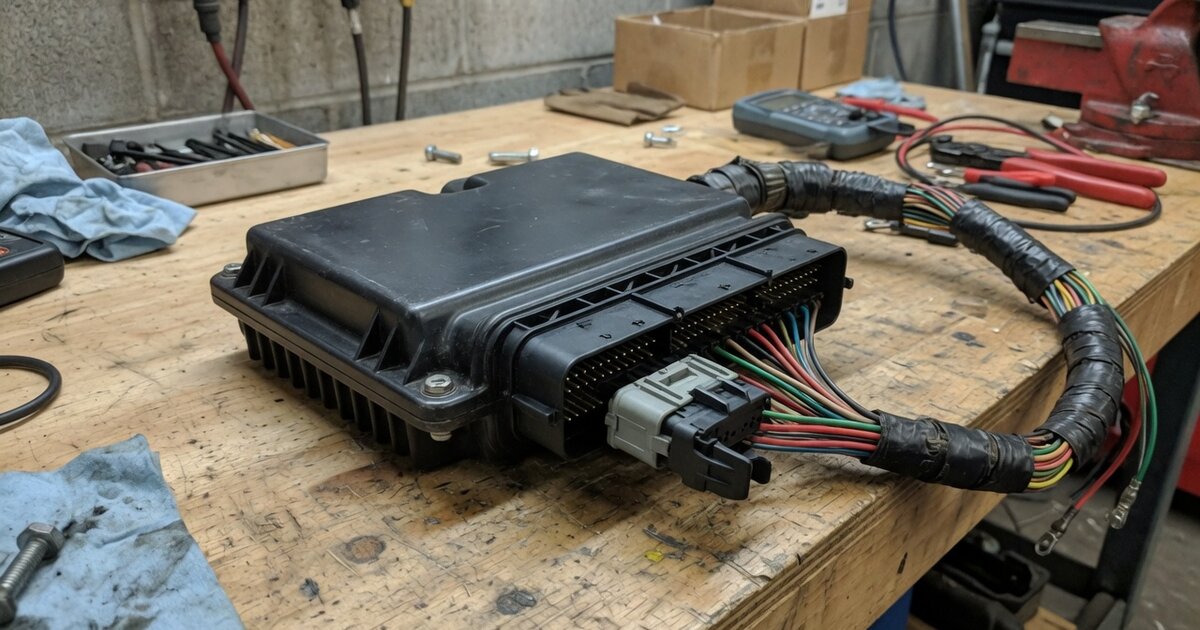
The engine control module, commonly called the ECU or ECM, is the onboard computer that manages how a vehicle's engine runs. It is one of dozens of control modules found in a modern car, but it is arguably the most important, since it directly governs fuel delivery, ignition timing, and emissions control in real time. Without a functioning engine control module, an engine will not start, will run poorly, or will shut down unexpectedly to protect itself from damage.
Every modern vehicle, whether gasoline or diesel, relies on an ECU to interpret dozens of sensor inputs every second and adjust engine behavior accordingly. This module has grown far beyond simple fuel and spark control since it first appeared in production vehicles decades ago. Today's engine control modules also communicate with transmission control modules, anti-lock braking systems, and, critically for locksmiths and key programmers, the vehicle's immobilizer and key authentication system.
For anyone working in automotive key programming or diagnostics, understanding the ECU is essential, because a failing or improperly replaced module can mimic a security or key-related fault, and a genuine immobilizer issue can sometimes look like an ECU problem. Distinguishing between the two is one of the more common diagnostic challenges technicians face.
How it works
The engine control module constantly reads input from sensors positioned throughout the engine bay: the crankshaft and camshaft position sensors, the mass airflow or manifold pressure sensor, the oxygen sensors, the coolant temperature sensor, and the throttle position sensor, among others. Using this data, the ECU calculates the correct fuel injector pulse width, ignition timing, and idle air control needed at that exact moment, then sends commands to actuators dozens of times per second. This closed-loop process is what allows a modern engine to balance power, fuel economy, and emissions compliance across a wide range of driving conditions.
Beyond core engine management, the ECU also monitors itself and the systems around it. It stores diagnostic trouble codes when a sensor reading falls outside the expected range, and it communicates with other control modules, including the transmission control module, the body control module, and the instrument cluster, over the vehicle's CAN bus network.
This network connection is also where the engine control module intersects with key programming. On most vehicles built since the mid-1990s, the ECU will not allow the engine to start unless it receives a valid authorization signal from the immobilizer system, which in turn confirms that the key or fob presented has the correct cryptographic credentials. In many architectures the immobilizer function lives inside a separate body control module or key module rather than the ECU itself, but the two are paired so that a mismatched module, even a perfectly functional one, will prevent the engine from running. This is why a genuine ECU fault and a broken security pairing can present with nearly identical symptoms: a car that cranks but does not start.
What to consider
Before condemning an engine control module, it helps to recognize the patterns that typically point to it rather than to a sensor, wiring fault, or immobilizer issue. Because ECU symptoms overlap heavily with other electrical problems, a careful diagnostic pass, reading stored codes, checking grounds and power feeds, and confirming communication on the CAN bus, should always come before ordering a replacement part.
- Check Engine Light stays on, flickers intermittently, or will not clear after repairs
- Engine cranks normally but fails to start, with no fuel or spark delivered
- Noticeable loss of power, hesitation, or rough idle with no obvious mechanical cause
- Poor fuel economy paired with a rich-running smell or dark exhaust
- Multiple unrelated trouble codes stored at once, or codes that reappear immediately after clearing
- Random stalling, especially at idle or under light load
- Failed communication when a scan tool tries to connect to the ECU
- A used or salvage ECU carries the donor vehicle's VIN, mileage, and immobilizer data and needs re-flashing before it will pair with the replacement vehicle
- Replacement modules often require calibration matched to the specific engine, transmission, and emissions configuration, not just the vehicle model
Common mistakes to avoid
Misdiagnosing the engine control module is one of the costliest mistakes in automotive electrical work, since a replacement ECU is expensive and often non-returnable once it has been programmed to a vehicle. Technicians and locksmiths who skip basic verification steps end up replacing a good module while the actual fault sits elsewhere in the wiring or immobilizer chain.
- Replacing the ECU before checking for corroded grounds, blown fuses, or damaged wiring harness connectors
- Assuming every no-start is an ECU fault without first confirming immobilizer or key authentication status
- Installing a used or salvage module without accounting for its existing VIN and immobilizer pairing
- Skipping a full scan for stored and pending codes before drawing conclusions from a single symptom
- Overlooking software or calibration mismatches between the replacement module and the vehicle's exact configuration
- Disconnecting the battery or interrupting power mid-programming, which can corrupt the module and require specialist recovery, similar to the kind of failed programming recovery described in guides on repairing a BMW FEM/BDC module after a failed programming attempt
Frequently asked questions
What is the difference between an ECU and an ECM?
In practice the terms are used interchangeably by most technicians and parts suppliers. ECM (engine control module) is the more precise term for the computer that manages engine operation, while ECU (electronic control unit) is broader and can refer to any control module in a vehicle, including the transmission or body controller. On a parts listing or repair order, both terms almost always mean the same engine computer.
Can a bad engine control module cause key or immobilizer problems?
Yes, indirectly. The ECU is often part of the chain that validates a key before allowing the engine to start, even when immobilizer logic lives in a separate module. A failing ECU can refuse to acknowledge a valid start signal, which looks identical to a key or immobilizer fault from the driver's seat. Proper diagnosis means checking whether the vehicle recognizes the key at all before assuming the control module has failed.
Does a replacement engine control module need to be programmed?
In almost all cases, yes. A new or used ECU generally arrives blank or configured for a different vehicle and must be programmed with the correct VIN, calibration file, mileage, and immobilizer pairing before the engine will run. This step is what security-conscious systems rely on to prevent an unauthorized module from bypassing anti-theft protection, so it typically requires dealer-level or specialist diagnostic equipment rather than a plug-and-play swap.
Can a used or salvage-yard ECU be reused on another vehicle?
Sometimes, but it is rarely a simple bolt-in swap. A used module still carries the donor vehicle's VIN, mileage, and immobilizer data, so it usually needs re-flashing or re-pairing before the engine will start. Compatibility also depends on matching the exact engine, transmission, and emissions calibration, not just the vehicle year and model. Guides such as the Yanhua Mini ACDP module replacement guide illustrate how detailed this process can get.
What are the most common early warning signs of ECU failure?
Early signs tend to be intermittent rather than constant: a Check Engine Light that comes and goes, occasional rough idle, brief hesitation on acceleration, or a slight dip in fuel economy. As the fault progresses, symptoms usually become more consistent, harder starting, codes that reappear after clearing, or stalling under specific conditions like idle or light load. Catching these signs early makes diagnosis easier and avoids a roadside no-start.
Should engine control module diagnosis be left to a professional?
For anything beyond reading basic trouble codes, yes. Confirming an ECU fault requires checking power and ground circuits, verifying CAN bus communication, and ruling out the immobilizer and key system before condemning the module. Because replacement modules are expensive and often require dealer-level or specialist programming to pair with the vehicle's immobilizer, an incorrect diagnosis can be a costly mistake that a qualified technician or locksmith is better equipped to avoid.