Xhorse J2534
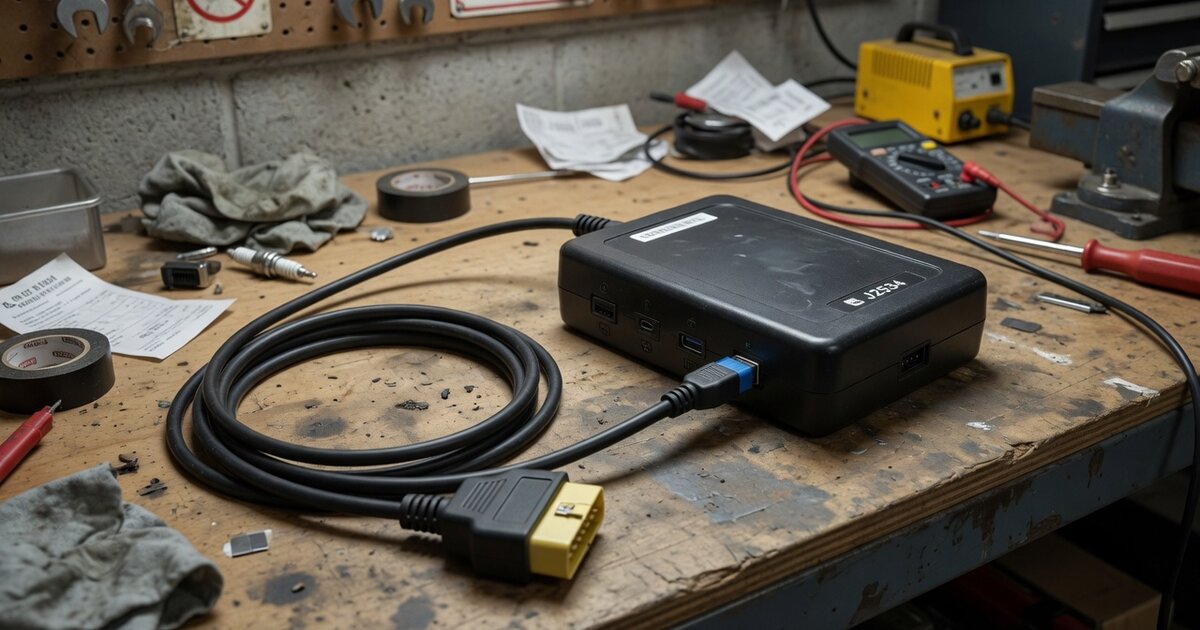
Search "Xhorse J2534" and you're likely trying to settle one question before you spend any money: does Xhorse actually build a genuine J2534 pass-thru interface, or is this just two unrelated keywords colliding in a listing title? Xhorse is a brand most locksmiths know for immobilizer work and key programming — the VVDI2, the VVDI Key Tool line, VVDI Prog, and the wider hardware catalog covered in our overview of the Xhorse brand and its key programming tools. None of those core products are marketed as J2534 pass-thru boxes. But that doesn't mean the search term is a dead end. Xhorse does sell a separate, lesser-known accessory that is explicitly labeled J2534, and it's worth understanding exactly what it is, what it isn't, and how it differs from the dedicated J2534 interfaces this site has already covered.
What's actually confirmable about Xhorse and J2534
Checking Xhorse's own authorized retail channel turns up a real, currently listed product: the Xhorse XDMVJPGL MVCI PRO+ J2534 Cable (also shown under the shorter code XDMVJP). It's sold under the Xhorse brand, priced in the roughly $100–120 range at the time of checking, and described as a device that "can perfectly replace the original inspection devices to complete vehicle diagnosis and programming functions," supporting both D-PDU and J2534 diagnostic standards. The listing names Mercedes-Benz, Toyota, Honda, Ford, and Volkswagen as supported manufacturers, with a note that "more protocols and brands are continuously updated."
That's the confirmable part: Xhorse does make and sell a cable/interface that is marketed as J2534-compatible, and it is a distinct product from the immobilizer and key-cutting tools the brand is best known for. What's not confirmable from the same listing is any formal SAE J2534 registry certification — the page describes the device as "supporting" the J2534 standard, but it doesn't cite a registration number or certification body, and independent confirmation on the official SAE tool registry wasn't found during research for this article. That distinction matters more than it sounds. Plenty of pass-thru interfaces on the market work fine for day-to-day programming without ever appearing on the formal registry; the gap only becomes a real problem if your shop specifically needs certified, auditable hardware for warranty reimbursement or right-to-repair compliance work.
It's also worth being precise about naming. "MVCI" (Multiple Vehicle Communication Interface) is not an Xhorse-exclusive term — it's used across the aftermarket by several manufacturers and by a long tail of generic clone hardware that has nothing to do with Xhorse. If you search loosely for "MVCI J2534," you will find listings from other brands mixed in with Xhorse's own. Buying through an authorized Xhorse dealer, and matching the exact product code (XDMVJPGL / XDMVJP), is the only reliable way to know you're getting Xhorse's actual hardware rather than an unrelated clone riding the same acronym.
What to consider
Treat this like any other J2534 device, not like a standalone Xhorse key tool. The cable connects your vehicle's OBD port to a laptop; it isn't a self-contained handheld like the Xhorse Key Tool Lite. That means the interface itself is only half the equation — you still need the manufacturer-specific diagnostic software running on the PC side (Toyota Techstream, Honda HDS, Ford FDRS/FJDS, Mercedes Xentry/DAS, VW/Audi ODIS, and so on, depending on what you're working on), and those software packages are licensed and sold separately from the cable. The J2534 interface just gives that OEM software a certified-style communication path to the vehicle; it doesn't bundle programming rights or subscriptions for any brand.
Coverage claims deserve a skeptical read too. "Supports Mercedes-Benz, Toyota, Honda, Ford, and more" is a broad marketing statement, not a guarantee that every module, every model year, or every programming function on those platforms is reachable. Before committing budget to any J2534 hardware — Xhorse's cable included — it's worth verifying against the specific OEM software's compatibility list for the exact vehicle and procedure you need, not just the interface vendor's product page.
It also helps to keep Xhorse's actual product breadth in mind so you don't assume capabilities that aren't there. The brand's center of gravity is immobilizer and key hardware — remotes, key cutting, and even CNC-based key work like what's explained in what "Xhorse 3D" actually means for key-cutting machines. The MVCI PRO+ J2534 cable sits off to the side of that core lineup as a diagnostic accessory, not a flagship product, and it's priced and marketed accordingly — budget-tier compared with established J2534 boxes that have a longer track record in professional shops.
Common mistakes to avoid
The most common error is assuming that because a shop already owns Xhorse immobilizer hardware, it automatically has J2534 pass-thru capability. It doesn't. VVDI2, VVDI Key Tool Plus, and VVDI Prog operate on Xhorse's own proprietary communication methods for key and immobilizer work; they are not interchangeable with a J2534 diagnostic pass-thru session, and none of the research for this article found evidence that J2534 support has been folded into those tools.
A second mistake is treating "MVCI" as synonymous with "genuine Xhorse." Because the acronym is used industry-wide, it's easy to end up with a generic clone cable while believing you bought Xhorse hardware, especially on third-party marketplaces with inconsistent listings. Buy from a recognized Xhorse dealer and confirm the exact model code.
Third, don't expect standalone operation. Like the J2534 interfaces already covered on this site, Xhorse's cable needs a laptop and OEM software running alongside it — it is not a plug-and-go handheld.
Finally, don't assume a single low-cost cable replaces a full diagnostic toolkit. A J2534 interface unlocks the door to OEM software; it doesn't replace the subscriptions, security-gateway access, or dealer-level credentials that some manufacturers still require for specific programming procedures regardless of which certified interface you're using.
Frequently asked questions
Does Xhorse actually make a J2534 pass-thru device?
Yes, based on current listings from Xhorse's authorized retail channel. It's sold as the XDMVJPGL (or XDMVJP) MVCI PRO+ J2534 Cable, a separate accessory from Xhorse's immobilizer and key-programming product lines, described as supporting D-PDU and J2534 diagnostic standards for brands including Mercedes-Benz, Toyota, Honda, Ford, and Volkswagen.
Is the Xhorse MVCI PRO+ the same thing as the VVDI2 or VVDI Key Tool?
No. The VVDI2 and VVDI Key Tool family are immobilizer and key-programming tools that use Xhorse's own proprietary methods, not J2534 pass-thru. The MVCI PRO+ is a distinct diagnostic cable aimed at OEM pass-thru programming and diagnosis, sold separately.
What vehicles does the Xhorse J2534 cable support?
The product listing names Mercedes-Benz, Toyota, Honda, Ford, and Volkswagen, with more protocols and brands said to be added over time. There's no verified, granular model-by-model coverage list, so confirm compatibility against the specific OEM software's requirements for your target vehicle before relying on it for a job.
Do I need extra software to use it?
Yes. Like any J2534 pass-thru interface, the cable is only the communication link between the vehicle and a laptop. You still need the relevant manufacturer diagnostic software (Techstream, HDS, FDRS/FJDS, Xentry/DAS, ODIS, etc.), which is licensed and obtained separately.
Is it SAE J2534 certified?
The retail listing describes it as supporting the J2534 standard but doesn't cite a formal SAE registry certification, and independent confirmation wasn't found during research. If certified, auditable hardware matters for your shop's warranty-reimbursement or right-to-repair compliance work, verify certification status directly with the seller before buying.
How does it compare to dedicated J2534 tools like Launch's or DiaLink's boxes?
It occupies a lower price point than established, purpose-built J2534 interfaces from brands with a longer diagnostic-tool track record. That can make it attractive for occasional or budget-conscious use, but it also means less of a proven history in professional shops. If broad, well-documented multi-brand diagnostic coverage is the priority, it's worth weighing it directly against the dedicated J2534 hardware already reviewed on this site before deciding.