10187 Airbag Tool: What the Part Number Actually Means
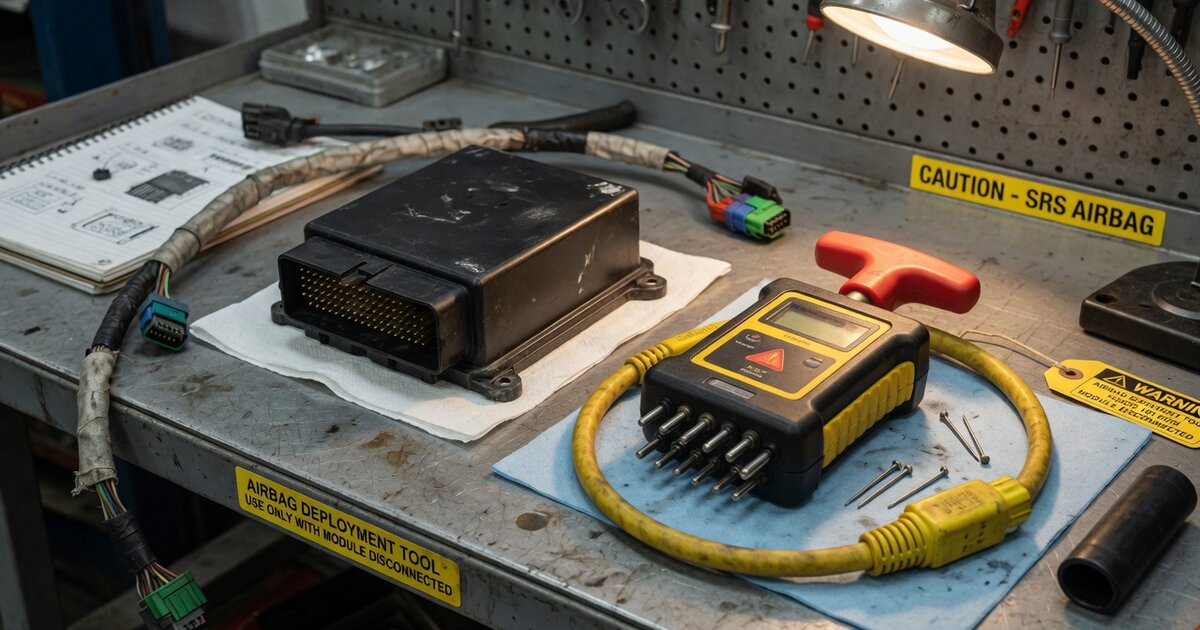
If you landed here after typing "10187 airbag tool" into a search bar, you probably saw the number on a marketplace listing, a used tool box lot, or a supplier catalog page and wanted to know exactly what it is before spending money on it. That's a reasonable instinct, and it's also where this article has to be upfront with you: a specific, verifiable product that the automotive tooling industry universally recognizes as "10187" in an airbag or SRS context could not be confirmed through available sourcing. Rather than hand you a confident-sounding but made-up answer, this piece explains why bare numeric part codes like this are so hard to pin down, what categories of airbag-related tools a listing like that is plausibly describing, and — more usefully — how to actually verify what you're looking at before you buy it or rely on it in a bay.
This matters more in SRS work than almost anywhere else in the shop. Airbag systems are safety-critical, and using the wrong accessory, the wrong resistor value, or a tool built for a different platform can leave a module thinking a component is present when it isn't, or throw persistent fault codes that mask a real wiring problem. Getting the identification step right is not a formality here.
What This Part Number Refers To
The core problem with a query like "10187 airbag tool" is that four- and five-digit numbers are not a standardized identification system across the airbag tooling market. Major tool brands — OTC/SPX, Matco, Snap-on, AES Wave, Solus, and dozens of smaller resellers — each run their own internal catalog numbering, and none of them coordinate with each other. A number like 10187 in one company's system might be a torque adapter; in another it could be an unrelated non-automotive SKU; in a third it might not exist at all and instead be a reseller's own internal stock-keeping number that has nothing to do with the manufacturer's original part code. Marketplace listings compound this further, since sellers on sites like eBay and Amazon frequently reuse or invent listing IDs that have no relationship to any official parts catalog.
Given that, the honest answer is that no single, confirmable product tied to this exact number turned up during research for this article. What can be said is that airbag/SRS tooling in this general price and complexity range typically falls into a small number of well-understood categories, and a listing using a number like this is most plausibly one of them:
- Airbag simulator or resistor load tools — small inline devices that present the correct electrical resistance of a squib (igniter) to the SRS module, used so a module can be bench-tested or a harness can be worked on without the system reading an open-circuit fault.
- SRS wiring and connector service kits — the correct pigtails, terminals, and connector housings for repairing damaged airbag harnesses, sold as a numbered kit rather than loose parts.
- Deployment or continuity test tools — devices used to check squib circuit integrity without risking accidental deployment.
If the listing you found includes a product photo, a manual PDF, or a manufacturer name printed on the tool itself, that information will identify it far more reliably than the number alone. It's also worth checking whether the seller actually means one of the two better-documented tool categories that come up constantly in this niche: if the description mentions disabling the SRS light or working around a missing airbag module during bench work, see our piece on the airbag lockout tool and when technicians actually reach for one; if it instead mentions clearing deployment history or crash data after a repair, that's a different function covered in our guide to the airbag crash data reset tool and where its limits are.
What to Consider
Before buying or using any tool identified only by a bare number, work through a short checklist rather than trusting the listing title:
- Match it to your SRS generation and connector type. Airbag simulators and harness kits are frequently platform- or connector-specific. A tool built for one manufacturer's squib resistance values and pin-out will not necessarily read correctly, or be safe to use, on a different platform.
- Confirm whether it's passive or active. A passive resistor simulator does nothing beyond presenting a fixed load; it won't communicate with the module or clear anything. An active tool with its own software, by contrast, behaves more like dedicated programming hardware — comparable in spirit to how a dedicated unit such as the MPPS V21 ECU programming tool is built specifically for flashing rather than general diagnostics. Know which category you're actually buying before you commit.
- Check the seller and source. Obscure numeric listings with no manufacturer branding, no manual, and no support contact are common on resale marketplaces and carry more risk of being mislabeled, counterfeit, or simply the wrong item photographed incorrectly.
- Ask for documentation before paying. A legitimate supplier of SRS tooling should be able to tell you the exact resistance value, connector type, or supported vehicle list for what they're selling. If they can't, that's a signal to keep looking rather than assume compatibility.
- Weigh warranty and return terms. Low-volume, hard-to-identify SKUs are exactly the kind of purchase where a no-returns policy turns a mistake into a total loss.
Common Mistakes to Avoid
A few patterns show up repeatedly when technicians chase down an unclear part number like this one:
- Buying on the number alone. Treating a catalog or listing number as if it were a universal, cross-brand identifier is the single biggest source of wasted purchases in this space. Always verify against a photo, manual, or description of function.
- Confusing a simulator with a lockout tool. These solve different problems — a simulator replaces a missing electrical load, while a lockout tool suppresses the SRS warning light during bench or diagnostic work without deploying anything. Mixing them up leads to using the wrong device for the job.
- Confusing a wiring or simulator tool with a crash data tool. Resetting deployment/crash data after a legitimate repair is a distinct function from simulating a squib circuit, and the two are not interchangeable even though both come up in post-collision SRS work.
- Assuming a reseller's SKU is the manufacturer's official part number. Many online listings generate their own internal numbering for inventory purposes; that number frequently has no relationship to how the original manufacturer identifies the part.
- Improvising a resistor value. Using a generic or guessed resistance instead of the value specified for the actual squib circuit can produce a false-pass reading or, worse, mask a real fault that later causes a no-deploy condition.
Frequently Asked Questions
Is "10187" a confirmed OTC, Snap-on, or Matco part number for an airbag tool?
No specific, verifiable product tied to that exact number could be confirmed for this article. If you have a listing or catalog page showing it, treat that source's own description and photos as the authority, not the number by itself.
What does an airbag simulator or resistor tool actually do?
It presents the SRS module with the same electrical resistance a real squib (igniter) would show, so the module doesn't register an open-circuit fault while a technician works on a harness, tests a module on a bench, or diagnoses an unrelated issue without a live airbag connected.
How is a simulator tool different from an airbag lockout tool?
A lockout tool is used to suppress the SRS warning light and prevent fault codes during work that would otherwise trip the system, without deploying anything. It solves a different problem than an electrical simulator; the mechanics of each are covered in the airbag lockout tool guide.
How is this different from a crash data reset tool?
A crash data reset tool clears the deployment and crash-event history stored in the SRS module after a legitimate collision repair, which is a separate operation from simulating or testing a squib circuit. Its scope and limitations are detailed in the crash data reset tool article.
Can I substitute a generic resistor for a dedicated airbag simulator?
Only if you know the exact resistance value the SRS module expects for that circuit, and even then it's a stopgap rather than a proper tool — a mismatched value can produce a false reading or mask a real fault. For anything beyond a one-off bench test, a purpose-built simulator matched to the platform is the safer choice.
What's the best way to verify an unfamiliar tool part number before buying?
Ask the seller for a manual, spec sheet, or manufacturer name rather than relying on the listing title; cross-check any claimed compatibility against your specific SRS generation and connector type; and if the tool is closer to dedicated programming hardware than a passive accessory, compare its documented capabilities the way you would for a purpose-specific unit like the MPPS V21 rather than assuming general diagnostic scan tool behavior.