Airbag Lockout Tool: What It Does and When Technicians Use One
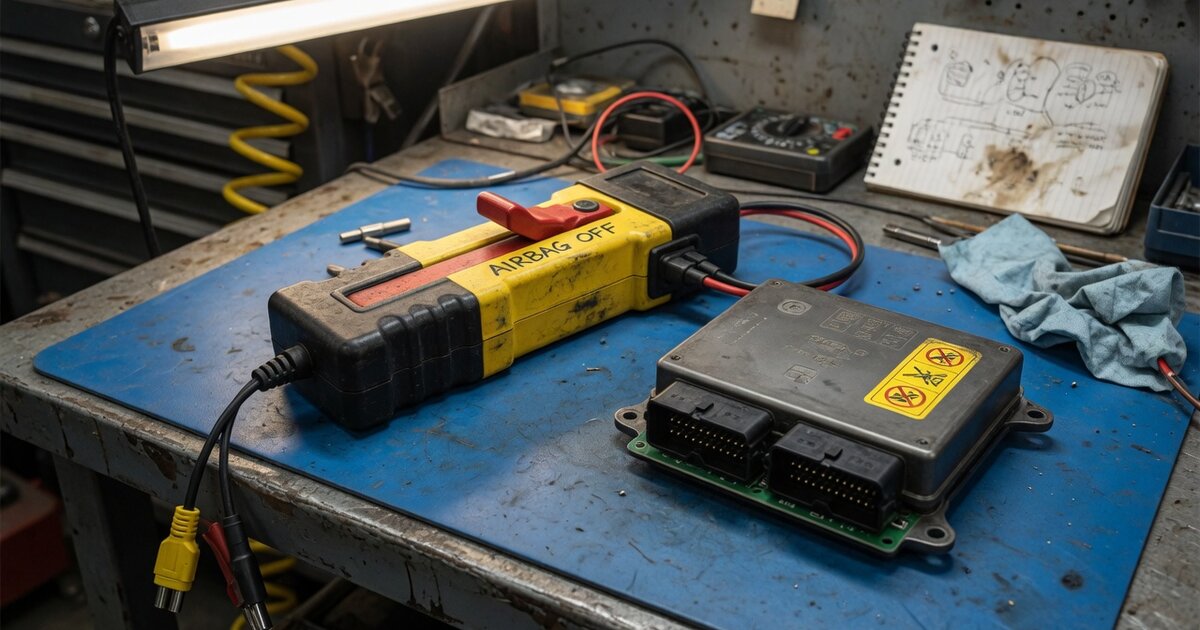
Search demand for "airbag lockout tool" is modest but real, and it usually comes from technicians, not car owners. That's a useful signal, because the phrase gets confused online with reset services that clear an airbag warning light after a crash or a wiring repair. An airbag lockout tool — more accurately called an airbag simulator or emulator — is a completely different piece of kit. It's a small connector, usually built around a resistor sized to a specific circuit, that plugs into the supplemental restraint system (SRS) harness in place of a component that has been temporarily removed. Its only job is to keep the SRS control module from seeing an open circuit and throwing a fault while that seat, module, or wiring section is out of the vehicle for service.
What an airbag lockout tool does
Every airbag, side curtain, knee airbag, and seat belt pretensioner in a modern car is wired into the SRS module as a fixed-resistance circuit. The module constantly monitors that resistance; if it drops to zero (a short) or opens up completely (a disconnect), it logs a fault and lights the airbag warning lamp. That's exactly what happens the moment a technician unplugs a side airbag connector to pull a seat, disconnects a driver's airbag to swap a steering wheel, or unbolts a knee bolster with an airbag behind it.
A lockout/simulator tool solves that by presenting the module with the resistance value it expects, even though the real component is sitting on the bench. Suppliers describe them plainly as diagnostic and service aids: one vendor's Toyota/Lexus-specific connector matches roughly the same resistance as the factory airbag it replaces, specifically to stop the false warning that appears "when seats containing airbags are removed or replaced." A universal kit aimed at general shop use covers driver and passenger airbags, side and curtain airbags, knee airbags, and both seat belt and buckle pretensioners — with the disclaimer every reputable seller repeats: for diagnostic and service purposes only, not a substitute for a functioning airbag.
One thing a lockout tool can't do is fake an occupant classification or seat-weight sensor. Those circuits send a variable signal rather than a fixed resistance, so a simple resistor plug doesn't reproduce them — if that's the actual fault, the module needs the real sensor back in the loop before it will clear.
When it's used and how
The most common job is seat removal. Pulling a seat for upholstery repair, a seat heater fix, a track or motor replacement, or an aftermarket seat swap disconnects the side airbag and pretensioner connectors under the cushion. Without a simulator in place, the SRS light comes on the moment the key turns and can stay on until the seat goes back in and the module re-verifies the circuit. Plugging a simulator into the harness in the seat's place lets the rest of the SRS system stay fully monitored while that one circuit is temporarily out of service.
The same logic applies to airbag module replacement while a new part is on order, dash or knee-bolster teardown for wiring and infotainment work, and diagnostic isolation. That last use is worth calling out: a shop that suspects a bad airbag module rather than a wiring fault can connect a simulator in its place and clear the code. If the warning stays off with the simulator installed, the wiring is fine and the airbag itself is the likely culprit; if the fault comes right back, the problem is upstream in the harness or module — a distinction that can save an unnecessary parts swap.
The procedure follows standard SRS-safe practice: ignition off, battery disconnected, and enough wait time for the backup capacitor in the SRS module to discharge before touching any restraint connector — most manufacturers specify a window in the service manual, and it's not something to shortcut. The technician unplugs the real component, seats the simulator connector into the vehicle-side harness until it clicks, reconnects the battery, and confirms the warning lamp does its normal bulb-check flash and goes out before the actual repair proceeds.
Verifying the result properly means going beyond the dash light. A scan tool capable of reaching the SRS module — the kind covered in our guide to choosing an automotive scan tool, or a bidirectional unit like the Launch CRP919E — should confirm there are no stored codes before the simulator goes in, and again after the real component is reinstalled.
Common mistakes to avoid
The single biggest mistake is the obvious one: sending the vehicle back to the customer with the simulator still installed and the real airbag or pretensioner sitting in a box. The dash light looks fine and the SRS module reports no fault, but that seat position will not deploy in a crash. A lockout tool should never leave the shop connected; it exists only for the duration of the service job.
Other frequent errors: using a generic simulator on a circuit that needs a specific resistance or connector shape, which either leaves the light on or masks a real problem instead of a missing one; assuming the tool will clear a fault caused by an occupant weight sensor, damaged wiring, or a genuinely faulty module, none of which a resistor plug fixes; skipping the discharge wait time before disconnecting SRS connectors; and relying on the warning lamp alone instead of pulling stored codes with a scan tool, which can miss history codes the lamp never displays. On vehicles with dual-stage front airbags, some shops also forget that each seat position may need two simulators for the two separate inflator circuits.
If the vehicle already has a real, confirmed SRS fault — a crash-deployed airbag, a genuine wiring fault, or a code left over from a previous repair — a lockout tool is the wrong tool entirely. That's a job for a proper airbag reset service, which diagnoses and clears the actual fault rather than temporarily standing in for a removed part.
Frequently asked questions
Is it safe and legal to use an airbag lockout tool?
Used correctly, yes — it's standard shop practice for temporarily bypassing a disconnected SRS circuit during service. The safety line is what happens afterward: the simulator has to come out and the real airbag or pretensioner has to go back in before the vehicle returns to the road. Used as a way to permanently avoid replacing a damaged airbag, it isn't a legitimate use of the tool and leaves that occupant position without real protection.
Does an airbag lockout tool turn off the airbag warning light for good?
No. It only stops the module from flagging the specific circuit it's bridging, and only for as long as it stays connected. Any other stored fault, or a fault that returns once the simulator is removed, needs an actual repair and a proper code clear — that's the job of an airbag reset service, not a lockout tool.
Can one simulator work for every seat position or vehicle?
Not reliably. Resistance values and connector shapes differ between manufacturers, and dual-inflator front airbags often need two simulators per seat. Vehicle-specific kits exist for this reason; a mismatched generic plug can leave the warning light on or fail to seat properly.
Can a lockout tool bypass a seat occupancy or weight sensor?
No. Those sensors send a variable signal rather than a fixed resistance, so a resistor-based simulator can't reproduce them. If the fault is coming from an occupant classification sensor, the module needs that actual sensor back in the circuit before it clears.
Do I need a scan tool as well as a lockout tool?
In practice, yes. The simulator handles the wiring side; a scan tool confirms there's no stored SRS code before, during, and after — see our guide to choosing an automotive scan tool for what to look for in one that reaches the SRS module.
What happens if I forget to remove the lockout tool?
The dash won't show a warning and the SRS module won't log a fault, which is exactly the risk — nothing alerts the driver that a real airbag or pretensioner isn't actually connected at that position. Removing the simulator and confirming the genuine component is reinstalled and verified should be a standing checklist item on every job that used one, not an afterthought.