2001 Mazda Miata Immobilizer Bypass: A Technician's Service Guide
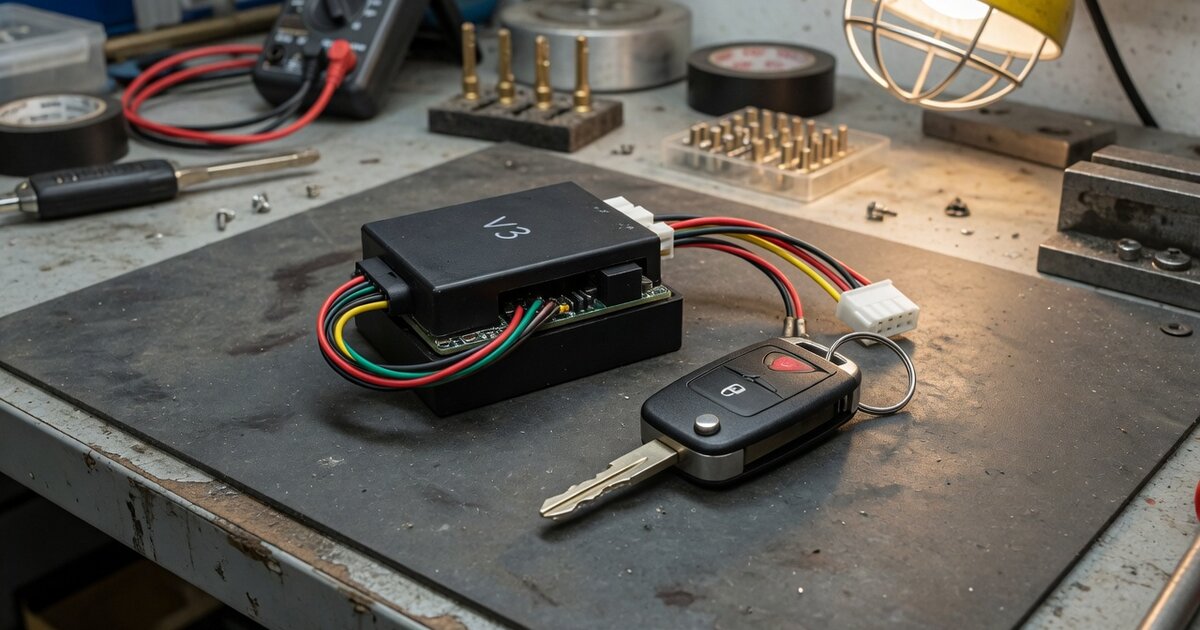
The 2001 Mazda Miata sits at an odd intersection for locksmiths and independent technicians: old enough that factory immobilizer parts are getting hard to find, but popular enough as an engine-swap and track-day platform that shops still see it several times a year. Search interest around "2001 Mazda Miata immobilizer bypass" reflects that reality, not a request for a way around someone else's lock. This is written for licensed locksmiths and shop technicians working on a car they own, are contracted to service, or have documented owner authorization for — the same standard covered in our broader immobilizer bypass explainer for automotive technicians. It is not a guide to gaining unauthorized access to a vehicle.
The 2001 Miata's immobilizer system
2001 isn't an arbitrary year to search for. It's the first year of the NB2 facelift: Mazda gave the 1.8-liter engine variable valve timing, revised the intake and exhaust, redesigned the console and instrument cluster, and stiffened the chassis. That refresh brought a revised engine computer to manage the new valve timing — which matters to anyone sourcing a used PCM, ignition switch, or immobilizer component, since a part pulled from a 1999–2000 NB1 car isn't guaranteed to be a drop-in match for a 2001-and-later NB2 car, and vice versa. Matching model-year ranges is the first thing to check before assuming any bypass or replacement procedure will work.
Architecturally, the NB Miata's factory immobilizer is comparatively simple next to the module-based systems on many other cars of the era. On a large share of these cars the immobilizer logic lives inside the engine ECU itself rather than a standalone box that can be unplugged and swapped independently; the ignition-side reader coil, the immobilizer logic, and the ECU are effectively a matched set from the factory. Some later Mk2.5-era cars sold outside North America use a separate amplifier ring around the ignition barrel instead. Because the exact implementation can vary by market and production run, the first real diagnostic step on any 2001 car is confirming which architecture is actually present rather than assuming one.
Legitimate bypass and service scenarios
The most common reason a professional touches the immobilizer on a car like this is an engine swap. The NB Miata is one of the most swapped small chassis on the road — turbo builds, V8 conversions, and stock-for-stock replacements are routine in the aftermarket. Cars that move to standalone engine management (MegaSquirt, Haltech, Link, and similar systems) sidestep the factory immobilizer question entirely, because the aftermarket ECU never speaks the factory security protocol; there's nothing to defeat because the original locked pairing is no longer in the signal path. Cars that keep the factory ECU but swap in a different engine still need a correctly matched ignition switch, immobilizer reader, and ECU — and that's where a professional bypass or re-pairing service, done with documentation on a car the customer owns, is legitimate diagnostic work, not anything resembling theft.
Track and race prep is the second common scenario. The Miata is a mainstay of Spec Miata racing, where 1999–2005 1.8-liter cars are eligible and the 2001-and-later NB2 cars run their own minimum-weight class within the rules. Teams running spare or backup ECUs for race weekends routinely need a second matched set of ignition switch, immobilizer components, and ECU sourced from one donor car — not parts individually cherry-picked from different vehicles — to keep a backup ready without chasing an intermittent security fault mid-event.
The third scenario is simple age. A 25-year-old car accumulates corroded connectors, worn ignition barrels, and immobilizer modules Mazda no longer sells new. When a customer's system throws an intermittent no-start with a flashing security light and the cause is a failing factory component rather than a lost key, a documented bench bypass or component replacement — after confirming ownership — is standard diagnostic practice. All-keys-lost jobs on a car this old fall into the same category: verify paperwork first, then work the diagnosis like any other immobilizer job, expecting that some factory parts availability has simply dried up over two and a half decades.
Common mistakes to avoid
The most frequent error is assuming the immobilizer architecture without confirming it on the actual car. Treating an ECU-integrated system like the module-based setups elsewhere — the separate module logic on a 2006 Chrysler 300's SKIM system, say, or the computer-linked setup on a 1999 Nissan Maxima's NATS system — wastes diagnostic time and, worst case, bricks the ECU. Every manufacturer's protocol is different, and the NB Miata's approach doesn't map cleanly onto either of those.
The second is mixing individually sourced used parts instead of a matched set. Buying a used ECU from one car and an ignition switch or immobilizer ring from another rarely works, because the factory pairing between them is what makes the system function; parts need to come from one donor vehicle whenever possible. Don't assume wire-splicing or grounding a signal wire will defeat the system, either — that path is protected against a simple defeat, and attempting it usually just leaves a no-start or a permanently lit security light.
Beyond that: back up the original module or ECU data before writing anything, since some of it can't be recovered once overwritten; don't leave factory wiring half-connected during a swap, since a partially wired circuit is a common cause of a dash light that never goes out even after the car runs fine; and never start the job without proof of ownership. Reputable shops ask for a registration, title, or equivalent documentation before doing any immobilizer, key programming, or bypass work — on a 25-year-old convertible with an uncertain title history as much as on anything newer.
Frequently asked questions
Is it legal to bypass the immobilizer on a 2001 Mazda Miata?
It's legal when done by, or under the direction of, someone with the legal right to the vehicle — the owner, or a shop with documented owner authorization. In the US, professionals doing this work are generally expected to hold Vehicle Security Professional (VSP) credentials through NASTF, and many states or municipalities add their own locksmith licensing requirements. Doing the same work on a car you don't own and don't have authorization for isn't a gray area — it's unauthorized access.
Do I need to bypass the immobilizer for a Miata engine swap?
Depends what you're swapping to. Moving to standalone aftermarket engine management takes the factory immobilizer out of the equation entirely, since the new ECU doesn't run Mazda's security protocol. Keeping the factory ECU with a different but compatible engine generally means you need a matched ignition switch, immobilizer component, and ECU set — ideally from one donor vehicle of the correct model-year range — rather than a true "bypass" of the original setup.
Why does the 2001 model year specifically matter here?
2001 is the first year of the NB2 facelift, which brought variable valve timing to the 1.8-liter engine along with a revised engine computer to manage it. Parts interchange between a pre-2001 NB1 car and a 2001-or-newer NB2 car isn't automatically safe to assume for the ECU, ignition switch, or immobilizer components — confirm the donor and target are from a compatible range before sourcing parts.
Can I use a used ECU from another Miata to fix a bad immobilizer?
Only if it comes as part of a matched set — ignition switch, immobilizer reader/logic, and ECU from the same donor car — rather than paired with parts sourced separately. The factory pairing is what lets the car start, so mixing individually sourced used parts is one of the most common reasons this repair fails on the bench.
What tools do professionals use for Mazda immobilizer work?
Coverage and supported functions vary by tool, vendor, and firmware version, and change over time as manufacturers update protocols — check current vehicle coverage lists from established key-programming tool makers before committing to a job rather than assuming a device supports this specific model and year, not just "Mazda" in general.
What's the process for an all-keys-lost 2001 Miata?
Start with the step every legitimate immobilizer job starts with: verifying ownership documentation. From there it's a standard diagnostic sequence — confirming which architecture the car has, checking factory parts availability given its age, and backing up existing module data before writing anything new. Some original components may no longer be available new; that's a normal part of servicing a 25-year-old vehicle, not a sign anything unusual is going on.