2006 Chrysler 300 Immobilizer Bypass: A SKIM Service Guide
A search for “2006 Chrysler 300 immobilizer bypass” pulls in two very different audiences: people trying to get around another person's factory security system, and working technicians who need to service, diagnose, or replace an immobilizer-related component on a vehicle they're legitimately authorized to work on. This article is written for the second group. It does not describe defeating the security system on a vehicle you don't own or have written authorization to service — the same line drawn in our broader immobilizer bypass explained for automotive technicians guide. What follows covers how the 2006 Chrysler 300's factory immobilizer actually works, and the legitimate bench, OBD, and installation scenarios where a technician interacts with it.
The 2006 Chrysler 300's SKIM immobilizer system
The 2006 Chrysler 300 was built on Chrysler's LX platform, the rear-wheel-drive architecture introduced for the 2005 model year during the DaimlerChrysler era — the same platform underpinning the contemporary Dodge Magnum and Dodge Charger. Its factory anti-theft system is SKIM, the Sentry Key Immobilizer Module. SKIM isn't a standalone black box; it works as a gatekeeper paired directly with the Powertrain Control Module. Chrysler PCMs from this generation are SKIM-capable by design, meaning the firmware carries the logic to check for a valid immobilizer signal even on a build that didn't originally ship with the feature active. On a 300 where SKIM is active, the PCM continuously looks for confirmation from the module before it allows the engine to run. A SKIM fault or a key/PCM mismatch tends to show a symptom useful for diagnosis: the engine cranks and may even catch briefly, then stalls almost immediately once the PCM fails to see the expected signal.
One detail matters for anyone pulling up service information on this generation: 2006 falls squarely in the SKIM era, not the WIN era. Chrysler moved to WIN — the Wireless Ignition Node, a wireless variant of the same immobilizer architecture — starting with 2007-model-year vehicles. A 2006 and a 2007 Chrysler 300 can look identical while using different immobilizer hardware and tool coverage, so confirming the exact model year before ordering a PCM or selecting a tool profile is worth the extra minute.
Legitimate bypass and service scenarios
Three scenarios cover most legitimate reasons a technician works with a 2006 300's SKIM system.
All-keys-lost key programming. When a customer arrives with no working transponder key at all, there's no signal for the PCM to compare against, so the vehicle can't be started with any key that hasn't been formally registered to that SKIM/PCM pairing. The professional path is key programming, not signal defeat: using an OBD-capable tool, or bench access when OBD programming isn't available, to add a new key the immobilizer will actually recognize. That's different from what “bypass” implies in the theft-adjacent search results — a properly programmed key satisfies the security check rather than disabling it.
PCM replacement and remanufactured cores. A used, remanufactured, or salvage-yard PCM won't carry the SKIM secret key that matches a given customer's vehicle, so a straight swap leaves the car immobilized even with a good key in hand. Shops handle this by sourcing a PCM already security-cleared for the application, or by performing a bench-level relearn/pairing procedure so the replacement module accepts the vehicle's existing SKIM and keys. This is bench diagnostic work, the same category covered in the immobilizer bypass explained guide, and it requires verifying the VIN and customer authorization before touching any security data.
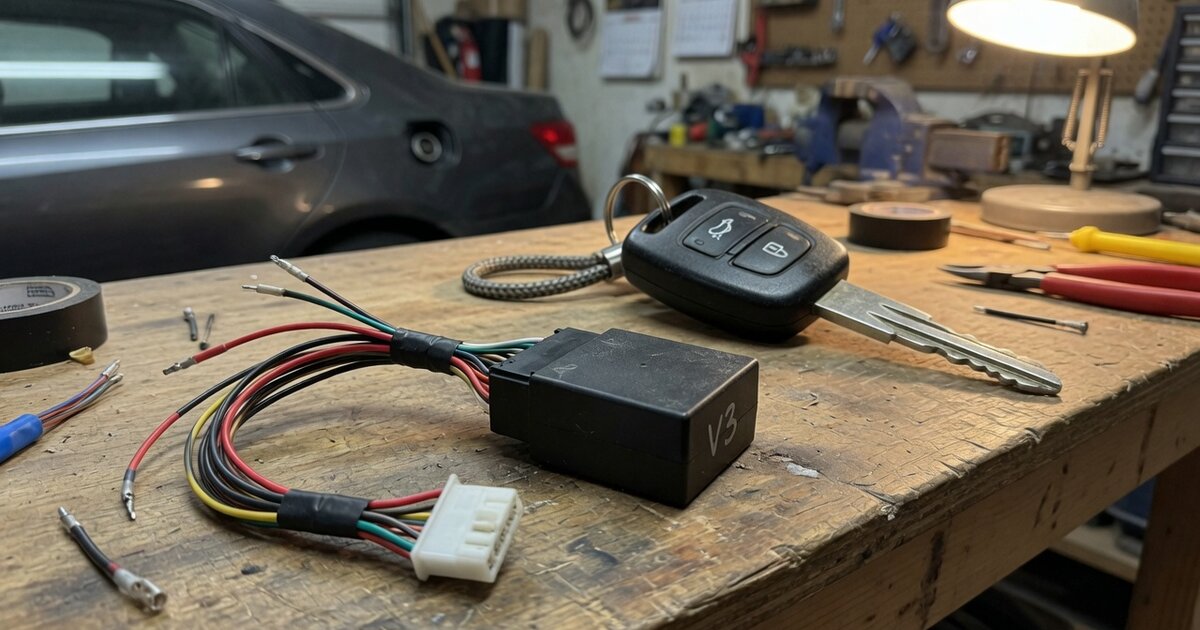
Remote start and aftermarket module installs. Adding a remote starter to a SKIM-equipped 300 without disabling factory security is a routine, non-destructive install — but it requires simulating the transponder's presence so the PCM sees a valid key signal when the engine starts with no one in the driver's seat. That's the job of purpose-built hardware like a Banvie immobilizer transponder bypass module, which learns the vehicle's chip key data, or a remote-start control module of the kind described in how Fortin EVO-series modules work for remote starts. These modules coexist with SKIM rather than removing it; the factory immobilizer stays fully functional for normal driving.
For bench and OBD work, shops typically reach for general-purpose diagnostic and key-programming platforms with Chrysler PCM/SKIM coverage — tools such as the Autel IM508/IM608 family, OBDSTAR's DC706 for bench ECM/TCM/body-module cloning, or XTOOL's D9-series units. None are single-button “bypass” devices; they're OEM-specific platforms that require model-specific software, and often an active subscription, to handle a given PCM or SKIM variant correctly.
Common mistakes to avoid
Recurring errors in shop write-ups and forum threads about this generation of 300:
- Mixing up SKIM and WIN procedures. Because the body style carried over unchanged, it's easy to pull a 2007+ WIN-generation procedure or part number for a 2006 SKIM-generation car. Confirm the model year and immobilizer generation before ordering a PCM or selecting a tool profile.
- Trying an on-board add-key procedure with a cloned transponder. Several bench programmers and OBD tools require a genuine, uncloned chip for the on-board learn sequence to complete, so a clone that works fine elsewhere can still fail mid-procedure.
- Skipping an EEPROM/PCM data backup before flashing. Standard bench practice applies here as on any other ECU work; it's the difference between a recoverable mistake and a bricked module.
- Reaching for a permanent “SKIM delete” as a shortcut. Some aftermarket services permanently disable the immobilizer instead of performing a proper key or PCM relearn. That's a materially different outcome, since it removes a factory security feature outright, and it should only be offered, with documentation, for the narrow cases where that's genuinely the customer's intent — not as a workaround for a procedure a shop lacks the tool coverage to perform correctly.
- Skipping ownership and VIN verification. Recording the VIN, matching it to the paperwork presented, and keeping a record of authorization isn't paperwork for its own sake; it's the standard that keeps this kind of service legitimate and defensible.
Frequently asked questions
What is SKIM and how is it different from the WIN system on later Chrysler 300 models?
SKIM (Sentry Key Immobilizer Module) is the immobilizer architecture Chrysler used through 2006 on the 300; it pairs a physical module with the PCM to confirm a valid key before the engine is allowed to run. Starting with the 2007 model year, Chrysler moved to WIN (Wireless Ignition Node), a wireless evolution of the same concept. The two generations aren't interchangeable, so procedures, part numbers, and tool profiles need to match the correct one.
Can a 2006 Chrysler 300's immobilizer be bypassed without any key at all?
There's no legitimate shortcut that defeats the immobilizer as a substitute for authorization to work on the vehicle. What professionals do in an all-keys-lost situation is program a new key the SKIM/PCM pairing recognizes as valid, using OBD or bench access — that satisfies the security system rather than getting around it, and it still requires proof of ownership as standard practice.
What's involved in replacing a PCM on this generation without a security conflict?
A replacement PCM needs to either already be security-cleared for the application or go through a bench-level pairing so it accepts the existing SKIM module and the customer's registered keys. Shops doing this work typically use OEM-capable programming platforms rather than a generic scan tool, and back up the original module data before writing anything.
Do technicians need special credentials to get Chrysler security or PIN data?
Access to OEM security data is normally handled through NASTF's Secure Data Release Model, the industry-standard credentialing process verifying a locksmith's or shop's legitimacy before releasing security-related information — the same authorization layer behind proof-of-ownership requirements at the counter.
What tools do shops typically use for Chrysler SKIM diagnostic and programming work?
General-purpose diagnostic and key-programming platforms with Chrysler coverage — the Autel IM508/IM608 line, OBDSTAR's DC706 for bench ECM/TCM/body-module work, and XTOOL's D9-series tools among them — are common choices. Coverage for a given PCM or SKIM variant usually depends on current, often subscription-based, software for that platform.
Does installing a remote starter count as bypassing the immobilizer?
Not in the sense the search term implies. A correctly installed remote start on a SKIM-equipped 300 keeps the factory immobilizer fully active; it uses a dedicated bypass or transponder-simulation module, such as a Banvie transponder bypass unit or a Fortin EVO-series controller, so the PCM sees a valid key signal during a remote-started cycle. The security system isn't disabled — it's satisfied by hardware built for that purpose.