2005 Nissan Altima Immobilizer Bypass: A NATS Service Guide
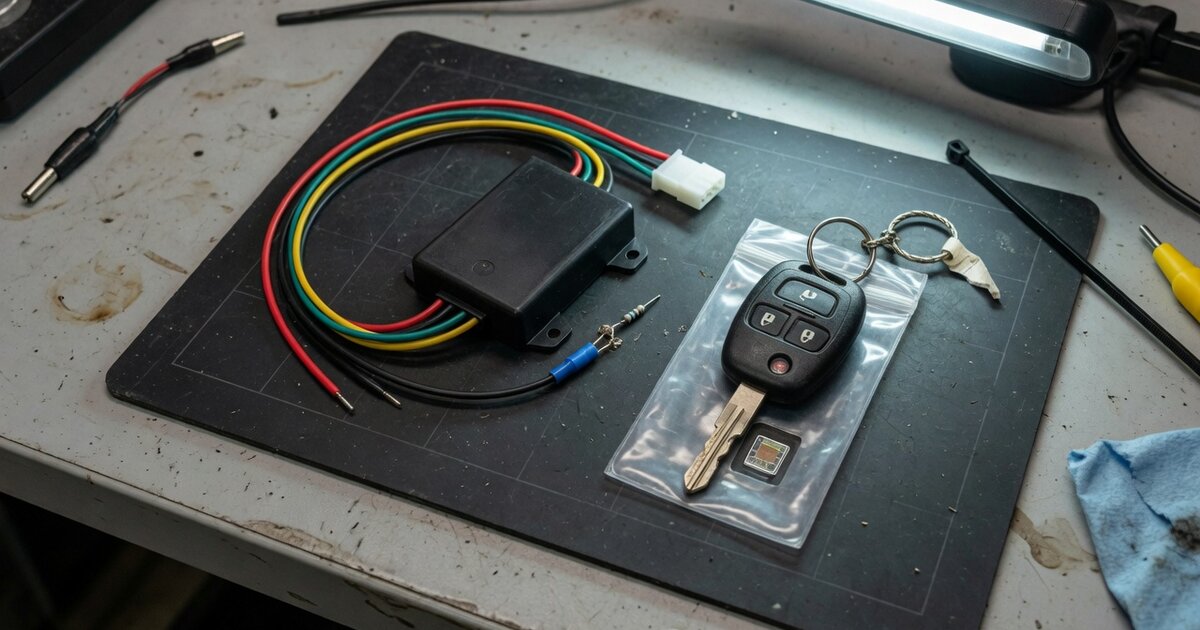
"2005 Nissan Altima immobilizer bypass" is a phrase that shows up regularly in locksmith and mobile-diagnostics search logs, and it almost never means what it sounds like on the surface. Technicians searching this term are typically looking at a no-start Altima with a security-light fault code, a replacement engine control module on the bench, or a remote-start install that won't fire the ignition circuit — not planning unauthorized access to someone else's car. This guide is written for licensed locksmiths, dealership and independent technicians, and mobile diagnostic professionals who service the second-generation (L31) Altima's NATS-based immobilizer as part of legitimate repair work, following the same framing laid out in our broader piece on immobilizer bypass for automotive technicians: verified proof of ownership or a documented repair order before any immobilizer work begins, and the job limited to techs with the training and equipment it actually requires. Nothing here is a walkthrough for defeating security on a vehicle you are not authorized to service.
The 2005 Altima's immobilizer system
Nissan's Anti-Theft System (NATS) is the security platform underlying immobilizers across the brand's early-to-mid-2000s sedan lineup: a transponder chip in the key exchanges a code with the vehicle's security electronics, and the engine won't start unless that exchange checks out. We covered the older, first-generation version of this architecture in our 1999 Nissan Maxima NATS service guide, and the general behavior — a vehicle that cranks but won't run when the immobilizer doesn't recognize the key, and a system re-taught after certain component swaps — is the same family of problem on the Altima. What's different is the hardware generation.
The redesigned second-generation Altima ran on the fixed-code 4D60 transponder chip through the 2002–2004 model years. By 2005, Nissan had moved beyond that chip toward newer NATS hardware; consistent with this shift, professional diagnostic and key-programming platforms that support Nissan's NATS PIN-code retrieval and key-registration functions commonly list their Nissan coverage as starting with 2005 model-year vehicles rather than the earlier fixed-code cars. That puts a 2005 Altima right at a hardware transition point, so tooling, chips, or shortcuts that worked on a 2002–2004 Altima are not a safe assumption here. Exact transponder family and programming requirements can also vary by production date and trim, so the responsible starting point is pulling the VIN and confirming coverage in your tool's vehicle list first.
Functionally, the immobilizer isn't a standalone box a technician can simply unplug: it's a conversation between the key transponder, the ignition/security electronics, and the engine control module, and all three have to agree before the car will run. That's why a straightforward part swap on the security or engine control hardware doesn't quietly resolve itself — the system has to be told about the new component, not just wired up to it.
Legitimate bypass and service scenarios
The scenarios where a professional legitimately works with a 2005 Altima's immobilizer fall into a handful of recognizable categories, and none of them involve defeating security on someone else's vehicle without authorization.
ECU/ECM replacement. When the engine control module fails, gets damaged by water intrusion, or is swapped as part of a larger repair, the replacement module doesn't automatically know the vehicle's immobilizer keys. Until the immobilizer and the new module are synchronized through the proper relearn process, the car will crank but refuse to start — this is standard, expected behavior on NATS-equipped Nissans, not a defect, and it's the same pattern documented on the older Maxima platform.
All-keys-lost diagnostics. When a customer has lost every working key or bought the car without one, there's no shortcut key to teach the system from. The professional path is retrieving the vehicle's immobilizer PIN or security data through a capable diagnostic tool and generating a fresh key set from there, after confirming ownership and matching the VIN against the tool's supported vehicle list. This is inherently slower than reprogramming a spare key against an existing working one, and any procedure that promises to skip PIN/security verification entirely should be treated as a red flag, not a time-saver.
Aging-immobilizer faults. Corroded ignition antenna rings, chafed harness wiring near the column, and marginal transponder chips can produce intermittent no-start complaints that look like a security lockout but are really a hardware fault. The fix is diagnosis and repair of the failing component — not "bypassing" the immobilizer, but restoring the connection it depends on.
Remote-start installs. Installers adding remote-start to a NATS-equipped Altima typically use a documented bypass or data interface module built for the platform, allowing the remote-start system to start the engine without exposing or duplicating the customer's key data. This happens at the vehicle owner's request, wired per the module manufacturer's documentation, and it's a mainstream, routine install category rather than a security workaround.
Common mistakes to avoid
The most common technician error on this platform is treating "Nissan NATS" as one uniform system and reusing a procedure, chip, or tool profile that was correct for an older 4D60-era Altima on a 2005 car without re-checking coverage. Given that 2005 sits at a hardware transition year, that assumption can burn a chip, waste a programming attempt, or leave the vehicle worse off than when it arrived — the same lesson we laid out in our Chevy Cobalt Passlock service guide: every immobilizer platform ages and evolves differently, and a fix pattern reliable on one system doesn't transfer to another just because both are called an "immobilizer."
Second, skipping PIN or security-code retrieval in favor of a repeated ignition-cycling shortcut can trigger the system's own anti-tamper lockout, adding a wait period before further programming attempts — turning a same-day job into a multi-day one. Third, replacing an ECM without completing the full relearn against all customer keys is a frequent comeback generator; a key not present during the relearn can simply get dropped from the system without an obvious error. Finally, skipping documentation — proof of ownership, a signed repair order, ID matching the registration — is the record that protects the technician if the work is ever questioned later.
Frequently asked questions
Does the 2005 Altima need a special bypass module, or can it be reprogrammed directly?
Most legitimate service work — key programming, all-keys-lost recovery, ECM relearn — is done directly through the vehicle's NATS system with a capable diagnostic tool, not a bypass module. Bypass or interface modules come into play specifically for aftermarket remote-start installs, standing in for a valid start signal to the existing, still-functional immobilizer rather than defeating it.
What do I need on hand before starting all-keys-lost work on a 2005 Altima?
Proof of ownership or a documented repair order, the VIN to confirm your tool's coverage for that specific build, and time budgeted for PIN/security retrieval rather than a fast turnaround. Because 2005 sits at a hardware transition year, confirming exact coverage before you start prevents wasted programming attempts.
Can a duplicate or cloned key start the car if it isn't matched to the NATS system?
No. The key has to carry the correct transponder data recognized by the immobilizer, not just the correct physical cut. A cut that fits the ignition lock but wasn't programmed into NATS will turn the lock but won't allow the engine to run.
Is the 2005 Altima's immobilizer the same system as the older Maxima's NATS?
Same family of Nissan security architecture, sharing the general behavior described in our Maxima NATS service guide, but the underlying transponder hardware differs. The 2005 Altima came after Nissan's shift away from the fixed-code chip used on 2002–2004 Altimas, so tools and procedures should be verified against the 2005 model specifically, not assumed from the older platform.
What's the difference between an immobilizer "bypass" and a "relearn"?
A relearn is the standard, manufacturer-intended process of teaching the immobilizer about a new key or a replaced control module after a legitimate repair — it's routine service. "Bypass" in a security-defeat sense means circumventing that verification entirely, which is not something a legitimate service procedure needs to do and isn't covered here.
Can a remote-start bypass module cause immobilizer problems later?
A module installed and wired per its documentation for this specific platform generally shouldn't interfere with the factory immobilizer. Problems tend to trace back to a module or wiring diagram meant for a different model year, or a rushed install that damages harness connections the immobilizer relies on — another reason to confirm platform-specific compatibility before installation rather than after a no-start comeback.