Banvie Immobilizer Transponder Bypass Module for Chip Key
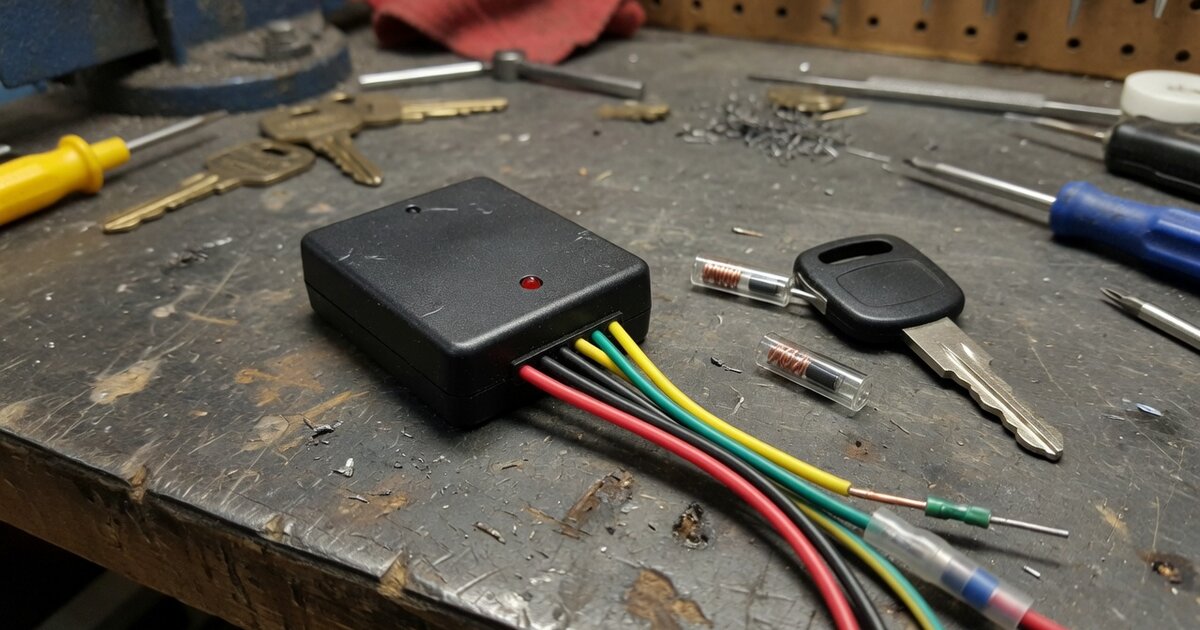
Search volume for "Banvie car immobilizer transponder bypass module for chip key" is small but steady, and it tends to come from people who already know what they're looking for: technicians who've run into a specific brand name while sourcing parts for a remote-start install, an alarm job, or a key-copying task and want to know what the box actually does before they wire it in. Banvie is one of several manufacturers selling this class of universal transponder bypass module, and the listings are consistent about one thing the vendor states plainly: "this one is not a remote starter." It's a support component that sits alongside other equipment, not a standalone tool.
What This Type of Bypass Module Does
A chip-key immobilizer works by having the ignition key's transponder chip exchange a signal with an antenna ring around the ignition cylinder. If the immobilizer's transceiver doesn't see the expected chip response, it won't enable the fuel or ignition circuits, no matter how well the mechanical key cuts. A transponder bypass module solves the "is a valid chip present" problem by permanently housing a working chip — typically a spare key or just the key's PCB removed from its shell — inside a small control box wired into the vehicle's ignition circuit with a sensing loop wrapped around the original antenna ring. As far as the immobilizer is concerned, a valid transponder is always present, so the vehicle will start even when the physical key in the driver's hand doesn't carry a chip the immobilizer recognizes on its own.
That's the mechanism the Banvie unit uses: a two-wire connection, a box that opens to accept a spare chip key or key circuit board, and a sensing wire fastened around the car's key socket and secured with adhesive once a test start confirms the engine runs. It's built for the same general use case as the bypass modules remote-start installers have used for years — products like Fortin's KEY-OVERRIDE-ALL work on a similar principle, though those units read and store the vehicle's actual transponder data across a large pre-programmed database rather than physically caging a spare key. Banvie's version is the low-cost, manual alternative: instead of the module learning the car's encrypted key data electronically, you supply it with a real working chip and it keeps that chip permanently "seen" by the immobilizer.
For locksmiths, the practical use cases line up with what the retail listings describe: supporting a remote starter or push-button start conversion on a vehicle that still has a factory chip-key immobilizer, and easing key-copying work where the shop doesn't want the customer's only working transponder key living permanently in the ignition. It's worth being direct about what it isn't: it doesn't write, clone, or generate transponder data, and it isn't a substitute for a proper key programmer when the actual job is producing a working replacement key. Search results on how these immobilizer systems behave also confirm a limit worth knowing before you buy: many modern immobilizers use rolling or encrypted codes specifically so that a simple hard-wired presence trick can't fool them, which is why this class of module is described as compatible only with "most" chip-key vehicles rather than universally.
What to Consider Before Buying
A few practical points come straight from the manufacturer's own installation notes and product warnings, and they matter more than the low price tag suggests:
- You need a spare working chip key first. The module ships without one — you supply a spare that already pairs with the vehicle, or just its circuit board if the fob is too big for the box. That makes it a poor fit for jobs where no working key exists at all.
- Installation is semi-permanent. The sensing wire is wrapped around the ignition's key socket and glued in place after a successful test start — a real install, not a bench accessory swapped between cars.
- Steering column locks aren't handled. On vehicles with a mechanical steering wheel lock, the module only addresses the transponder check; the lock still needs to be released separately.
- Coverage is limited to chip-key immobilizer systems. The vendor is explicit it "will not fit for other immobilizer way," so it doesn't apply to proximity/smart-key or newer encrypted architectures — how getting a proper replacement key works for the specific make is a better starting point when a bypass module clearly isn't the right tool.
- It's a budget, universal accessory, not an OEM-programmed unit. It sits well below the cost of professional multi-vehicle bypass kits with maintained compatibility databases, a trade-off worth weighing against how often the shop actually needs this function.
Common Mistakes to Avoid
The most common misstep is treating the module as a generic fix for "the immobilizer won't let the car start," without first confirming the fault is really a missing or unread transponder signal rather than a damaged chip. Cracked circuit boards, corroded battery contacts, or a chip separated from its shell can all mimic an immobilizer fault, and the fix there is repair or a new key, not a bypass box — it's worth checking a resource like what to inspect on a key fob after physical damage before assuming the vehicle needs a bypass at all.
A second frequent error is skipping the test-start step before permanently gluing the sensing wire in place: if the loop isn't positioned correctly around the antenna ring, the module won't read reliably, and undoing a glued installation to reposition it is far more work than getting it right the first time.
Third, some installers forget the module doesn't replace the steering lock release step on vehicles that have one. Fourth, buyers sometimes assume "universal" means "works on every immobilizer," when the product is scoped specifically to chip-key systems and explicitly excludes other types. And finally, treating an inexpensive universal accessory as equivalent to a professional-grade, vehicle-database-backed bypass kit sets the wrong expectations for reliability across a wide range of makes and model years — it's a tool for a specific, narrow job, not a general-purpose immobilizer defeat device.
Frequently Asked Questions
Is a Banvie bypass module the same thing as a key programmer?
No. A key programmer writes or authorizes new key data directly to a vehicle's immobilizer or key fob. A transponder bypass module doesn't program anything — it physically houses a spare working chip so the immobilizer always detects a valid transponder, which is a different job entirely and is typically used to support remote starters, alarm installs, or push-button start conversions.
Does it work on any car with a chip-key immobilizer?
The manufacturer describes compatibility as "most" chip-key vehicles, not all of them, and is explicit that it won't work with other immobilizer types. Some modern immobilizers use rolling or encrypted authentication that a simple hard-wired presence signal can't satisfy, so compatibility should be confirmed for the specific vehicle before relying on it.
Can this be used for all-keys-lost jobs?
Not on its own. The module requires a spare working chip key (or its circuit board) to install inside the box in the first place, so there has to be at least one valid transponder already in hand. All-keys-lost work, where no working key or chip exists at all, still requires an actual key programmer capable of writing new transponder data to the vehicle.
Do I still need to release the steering wheel lock separately?
Yes, on vehicles equipped with one. The bypass module only addresses the immobilizer's transponder check; it doesn't interact with a mechanical steering column lock, which needs to be dealt with through whatever method the vehicle normally requires.
How does it compare to professional bypass kits like Fortin's?
Professional multi-vehicle kits typically read and retain the vehicle's actual encrypted transponder data across a maintained compatibility database covering hundreds of models. A universal module like Banvie's is a lower-cost, manual alternative built around housing a real spare chip rather than learning the vehicle's key data electronically — simpler, but narrower in scope.
Is the spare key still usable elsewhere once it's installed?
Once the key or its PCB is mounted inside the module and the sensing wire is glued around the ignition socket, the installation is meant to be permanent for that vehicle. If the shell is opened to remove just the chip board, the physical key blade and shell are no longer part of a usable key, so the spare should be treated as consumed by the installation rather than something to reuse.