Remote Control Car Key Replacement: How It Actually Works
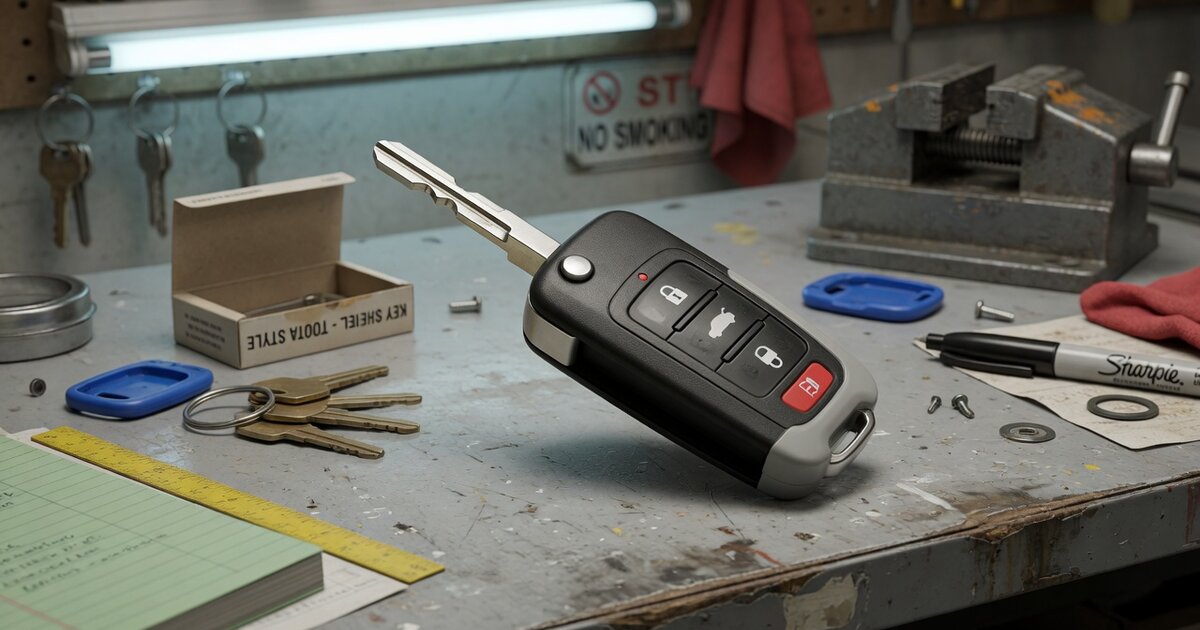
A remote control car key — the fob that unlocks your doors, pops the trunk, or in newer cars starts the engine without a physical turn — is easy to take for granted until it's lost, cracked, dropped in a lake, or simply stops responding. Unlike a basic mechanical key, a remote isn't something you can duplicate at a hardware store kiosk. It has to be sourced correctly and then programmed so your specific vehicle recognizes it. That combination is what makes replacement its own decision, separate from a dead battery or a worn-out shell, and it's why the two main routes — dealership and independent locksmith — work differently in practice.
This guide walks through what actually happens during replacement, what to weigh before you commit to a route, and where people commonly go wrong.
How replacement works
Replacing a remote key involves two distinct steps that are easy to conflate: obtaining the correct physical key or fob, and programming it to communicate with your vehicle's onboard systems. Cutting the mechanical blade (if your key has one) shapes the metal to match your door and ignition locks. Programming is a separate electronic step that registers the fob's transponder chip or remote frequency with your car's immobilizer and body control module, so the vehicle accepts it as an authorized key and, on keyless-entry or push-button-start models, recognizes its presence.
At a dealership, this typically means an appointment at the parts and service department. If you don't already have a working spare, the dealer usually orders the correct key from the manufacturer and programs it using manufacturer-specific equipment once it arrives — a process that can take anywhere from same-day to several days depending on parts availability, and that generally requires leaving the car with them.
Independent automotive locksmiths, including mobile ones who come to you, use handheld programming tools that interface with the car's diagnostic port to register a new key, often on the spot. This is the same general category of equipment covered in more depth in this overview of car diagnostic tools — not every unit in that category supports key programming, but the underlying idea of a tool that talks directly to the vehicle's computer is the same. A locksmith with the right equipment for your make and model can frequently cut and program a replacement in one visit, without the car ever leaving your driveway.
There's also the OEM versus aftermarket question. An OEM (original equipment manufacturer) fob comes from the dealer's parts network and is built to match your vehicle's original specification exactly. Aftermarket fobs, sold by third-party manufacturers and often installed by locksmiths, are built to replicate the same chip type and frequency at a lower price point. For many mainstream vehicles a quality aftermarket fob works just as reliably as an OEM one, but compatibility isn't universal — it depends on your specific make, model, and key system, so it's worth confirming compatibility and a return policy before buying one unprogrammed online rather than assuming it will work.
What to consider before you choose a route
Before deciding between a dealer and a locksmith, a few practical questions are worth settling first.
Do you have proof of ownership ready? Both dealers and reputable locksmiths will ask for something that confirms the car is yours — typically your registration, driver's license, and the vehicle's VIN — before cutting or programming a key. This isn't paperwork for its own sake; it's a security measure that keeps a lost or stolen VIN from being enough on its own to get a working key made. Having these documents ready before you call saves a wasted trip.
What kind of key does your car actually use? A simple remote-only fob that just locks and unlocks doors is a different job than an integrated smart key with proximity sensing and push-button start. The more advanced systems narrow which locksmiths, if any, have the right equipment, and sometimes point you back toward the dealer regardless of price. If you're unsure what you're dealing with, the comparison in where to get car keys copied — hardware store, locksmith, or dealer is a useful starting point for understanding which venues can even handle your key type before you start calling around for quotes.
Have you gotten more than one quote? Programming costs and turnaround vary noticeably between shops for the same job, so a second call is rarely wasted effort — especially since locksmith pricing for the same fob type can differ by a wide margin from one shop to the next.
Does your insurance cover it? Some comprehensive auto policies include coverage for lost or stolen key replacement, and it costs nothing to check before you pay out of pocket.
What's the warranty situation? Dealer-sourced OEM fobs are usually covered for manufacturing defects for a limited period, while aftermarket options from established sellers often carry a longer warranty on the fob itself — worth comparing rather than assuming one is automatically better than the other.
Common mistakes to avoid
A few missteps come up repeatedly with remote key replacement, and most are avoidable with a little homework.
Assuming any locksmith can program any key. Automotive key programming requires specific, often expensive equipment, and not every general locksmith carries it for every make and model. Confirm they specifically handle automotive transponder and remote programming — and ideally check reviews or certification — before you drive over.
Buying an unprogrammed fob online without checking compatibility. A fob that looks identical to your original isn't guaranteed to work with your vehicle's specific chip and frequency. Order from a seller with a clear compatibility guarantee and return policy, or have your locksmith source the part.
Skipping the cheap fix first. A fob that's intermittently unresponsive is often just a dying coin-cell battery, not a failed unit — worth ruling out before paying for a full replacement.
Treating "lost my only key" the same as "want a spare." If every key to the car is gone, the shop has to rekey or reprogram the system to invalidate the old key entirely, which is a more involved security process than adding a spare and typically costs more and takes longer.
Not asking how the immobilizer factors in. On most vehicles built in the last two decades, key programming has to communicate correctly with the car's engine management electronics for the immobilizer to release — related in a general sense to how other onboard control modules, like the one described in this explainer on the powertrain control module, handle communication with the vehicle's other computers. If a shop can't explain how their tool talks to your car's system, that's worth a follow-up question before you commit.
Frequently asked questions
How long does replacing a remote car key usually take?
If you still have one working key and the shop has the part in stock, cutting and programming a new remote is often a same-visit job, sometimes done in under an hour by a mobile locksmith. If the correct fob has to be ordered, or if every key has been lost, expect it to stretch to a few days.
Can I program a new key fob myself?
On some older vehicles, a manual sequence — cycling the ignition and pressing fob buttons in a specific order — can add a key without special tools, and instructions are sometimes available for your specific model. Newer smart-key and proximity systems generally require dedicated programming equipment that isn't something you can substitute at home.
Is it cheaper to go to a locksmith than a dealer?
Independent locksmiths are commonly less expensive than dealership service departments for the same programming job, partly because dealers carry more overhead and often source parts directly from the manufacturer at a markup. Actual pricing varies enough by region, key type, and vehicle that it's worth getting quotes from both before deciding.
Do I need to bring the car in, or can the fob be programmed separately?
Programming has to happen with the vehicle present, since the process registers the new key directly with that car's onboard systems — it isn't something that can be done to the fob in isolation.
What's different if I've lost all my keys, not just one?
Losing every key to the car means there's no working key left to authorize adding a new one through the standard method, so the shop typically has to use a more involved procedure to access and reset the vehicle's key system, along with stricter proof-of-ownership checks. This job generally costs more and takes longer than replacing one key out of a working set.
Is an aftermarket remote as reliable as an OEM one?
For many common vehicles, a well-made aftermarket fob performs comparably to an OEM one day-to-day, since it's built around the same chip and frequency standards. The tradeoffs tend to show up in compatibility with certain models, build quality between brands, and how the warranty is handled — details worth confirming with whoever sells or installs it rather than assuming they're identical.