Car Alarm Systems with Remote Start and Keyless Entry: How They Work
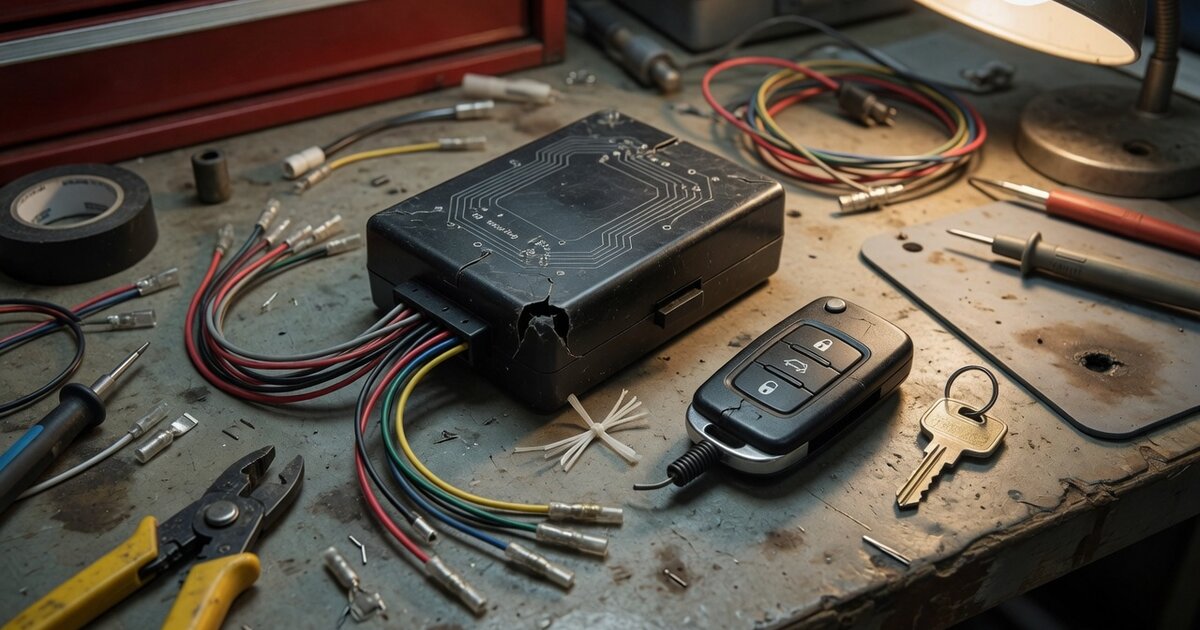
Walk into any car audio or mobile electronics shop today and the product on the counter is rarely just an "alarm." It is a single control unit that arms and disarms the vehicle, starts the engine from a distance, and lets the owner walk up and unlock the doors without touching a key. Buyers are no longer shopping for three separate boxes — they are shopping for one integrated system. This overview explains how these combined systems actually function, what installers and owners need to weigh before fitting one, and where most installations go wrong.
How these systems actually work
A modern combined system is built around a central control module that talks to several other pieces of hardware at once. On the security side, it reads inputs from shock sensors, tilt or motion sensors, and pin switches on the doors, hood, and trunk, then triggers a siren and disables the starter circuit if one trips. On the convenience side, the same module drives the remote-start sequence and, in most current kits, a keyless-entry function that unlocks the doors from a button press or, on higher-end two-way fobs, automatically as the owner approaches. Compustar's installer materials describe this proximity unlock as sensing the fob within roughly three to six feet and releasing the locks without the driver pressing anything, while a paired app or two-way remote confirms back that the engine actually started.
The hard technical problem is not the alarm or the locks — it is getting the engine to start at all on a car that already has a factory immobilizer watching for its own key. Every modern vehicle expects to see a transponder chip's signal or, on CAN-bus vehicles, the correct handshake over the internal data network before it lets the starter engage. An aftermarket remote-start module cannot fake that on its own, so installers add an interface that answers on the immobilizer's behalf — the same category of hardware covered in this site's guide to bypass modules for remote starters, which explains how these units read or emulate the key signal instead of bypassing security altogether. Older vehicles with simple ignition wiring often just need a relay-based bypass harness; newer vehicles need a module that taps into the CAN or LIN bus and exchanges digital messages with the body control module, which is why data-interface products from companies like Fortin are sold by exact make, model, and model-year rather than as a single universal part.
Keyless entry adds a second layer on top. Some installations extend the factory key fob's lock/unlock signal into the new alarm brain; others pair an aftermarket RF or Bluetooth fob matched to the vehicle's receiver the same way a replacement factory key would be. Anyone sourcing a spare or upgraded fob for this kind of setup is effectively shopping for the hardware covered in the site's key fob programmer buyer's guide, since a fob that has not been correctly programmed to the vehicle's receiver will not reliably unlock the doors or authorize a remote start, no matter how well the alarm wiring is done.
What to consider before installing one
Compatibility is the first real decision point, and it is model-specific, not brand-specific. The bypass or data-interface module has to match the exact immobilizer and bus architecture of the vehicle; a part that works on one model year can be wrong for the next if the manufacturer changed its security protocol. Reputable shops verify the vehicle's year, trim, and factory security type against the module's compatibility list before ordering parts, rather than assuming a "universal" bypass will cover everything.
Warranty exposure is a real but narrower concern than many owners assume. Under the Magnuson-Moss Warranty Act, a dealer cannot void an entire factory warranty simply because aftermarket equipment was added; it has to show the part or its installation actually caused the specific failure claimed. A professionally installed system is unlikely to jeopardize coverage on unrelated systems, but a sloppy install — a wire spliced into the body control module, a door-lock motor wired to ground — can get a claim denied on the affected component, because there is a direct causal link the dealer can point to. That is the strongest practical argument for professional installation on any vehicle still under warranty.
Idling and remote-start laws vary by state and municipality and are worth checking locally before heavy daily use. In most places remote start itself is not illegal; what can be regulated is leaving a vehicle idling and unattended, with limits ranging from a few minutes to no restriction depending on the jurisdiction. A handful of states carve out explicit exceptions for vehicles with a remote starter, provided it stays locked while running unattended — one more reason the security half of a combined system, not just the starter, matters for owners who use remote start regularly in a public lot or on the street.
Common mistakes to avoid
The most expensive mistakes cluster around wiring shortcuts, not the alarm logic itself. Splicing directly into factory harnesses instead of using the correct T-harness or data interface is the single most common cause of comeback repairs — it leads to fried door-lock motors, dead body control modules, and dashboard warnings that will not clear. A related mistake is treating the immobilizer bypass as generic: a bypass module not rated for the vehicle's specific transponder or CAN protocol can leave remote start working intermittently, or leave the factory immobilizer partially disabled, undercutting the theft protection the alarm was meant to add.
On the keyless-entry side, the recurring error is skipping proper fob programming and assuming a new fob will "just work" once physically added to the system. It needs to be enrolled to the vehicle's receiver correctly, and mismatched or poorly cloned fobs are a frequent source of intermittent lock and remote-start failures that get misdiagnosed as alarm-module problems. Finally, installers sometimes skip verifying local idling laws, or skip testing that the vehicle actually stays locked and armed during a remote-started idle cycle — both of which defeat the point of pairing security with convenience.
Frequently asked questions
Does adding remote start and keyless entry void my factory warranty?
Not automatically. Federal law prevents a manufacturer from denying warranty coverage just because aftermarket equipment is present; it has to prove the part or its installation caused the specific failure. The practical risk comes from poor installation — bad splices or damaged factory wiring — not from the system's mere presence, which is why professional installation matters most on vehicles still under warranty.
Can any car have a combined alarm, remote-start, and keyless-entry system installed?
Most vehicles can, but the hardware has to match the car's specific immobilizer and data-bus setup. Older vehicles with simple ignition wiring are generally straightforward; newer CAN-bus vehicles need a data interface built and coded for that exact make, model, and model year, so "universal" claims should be checked against the vehicle before buying anything.
Is it legal to remote-start my car and leave it running?
Remote start itself is not illegal, but leaving a vehicle idling unattended is regulated in many states and cities, usually with a time limit. A few states specifically exempt vehicles with a remote starter as long as it stays locked. It is worth checking local rules rather than assuming they match a neighboring state.
Do I still need a separate immobilizer bypass module, or does the alarm include one?
Most alarm and remote-start control modules do not include the vehicle-specific bypass hardware; it is a separate component chosen to match the car's immobilizer type, whether transponder-based or CAN-bus. See this site's dedicated guide to bypass modules for how that piece works and how to choose one for a specific vehicle.
Will my factory key fob still work after an aftermarket system is installed?
In most installations, yes — the factory fob typically keeps locking, unlocking, and in some cases arming the factory alarm as before, while the new system adds remote start and extended-range keyless entry on top. Any replacement or additional fob added for the new system has to be properly programmed to the vehicle to function reliably.
What is the practical difference between a one-way and a two-way remote-start system?
A one-way system sends a command to the vehicle with no confirmation back, so the owner cannot be certain the engine actually started or the doors actually locked. A two-way system sends a signal back to the remote or a paired app confirming the action succeeded — useful for verifying that a remote-started vehicle is running and secured before walking away from it.