Cars Without an Immobilizer: What Owners and Locksmiths Should Know
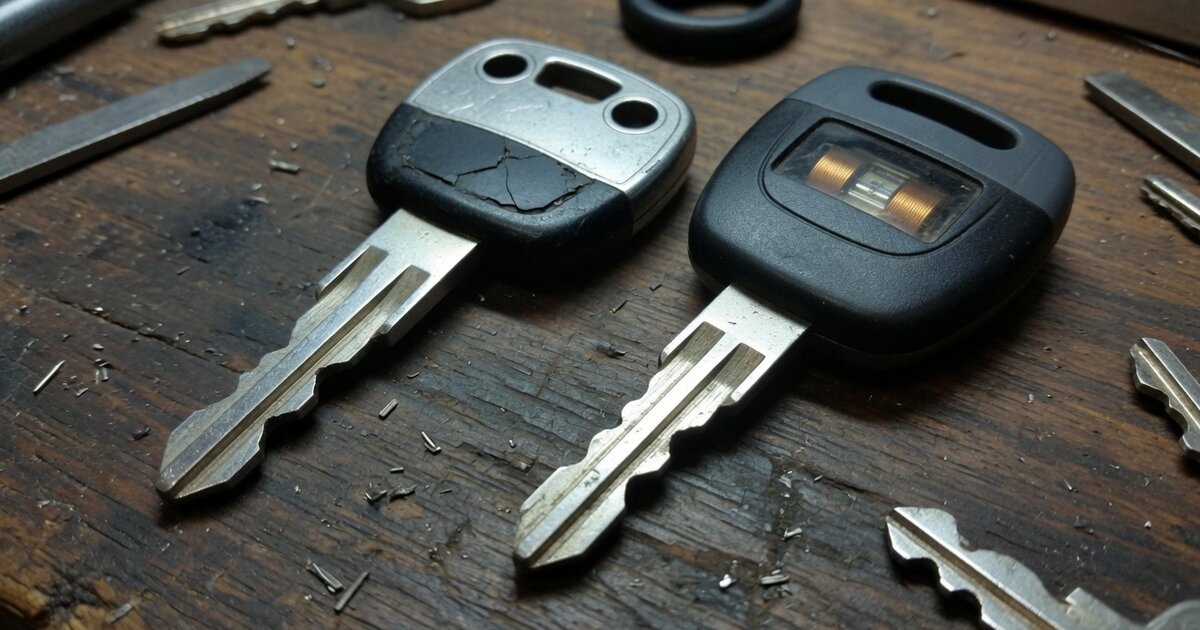
Not every vehicle on the road relies on an electronic chip to authorize starting the engine. Walk through a classic car show, look at an older work truck still doing daily duty, or price out a lost-key replacement for a neighbor's 1990s sedan, and you'll run into cars that start with nothing more than a correctly cut mechanical key. Knowing which vehicles fall into that category, and why, matters to owners who want an accurate idea of what a key replacement will cost, and to locksmiths who need to size up a job before deciding whether a simple cut-and-go blank will work or whether chip programming and a scan tool are required. This guide covers when immobilizers actually became standard equipment, what their absence means in practice, and the mistakes people make when they assume a vehicle's model year tells the whole story.
When Immobilizers Became Standard
The basic idea of an electric immobilizer is old — a patent for an electric anti-theft switching system was granted back in 1919 — but that early concept has little to do with the transponder-based immobilizers found in modern cars. The technology owners and locksmiths think of today, where a chip embedded in the key sends a coded signal to the engine control unit before the engine is allowed to start, only became widespread starting in the 1990s, and the timeline differs sharply by country.
Europe moved first, largely driven by insurance industry pressure and rising theft rates. Germany required electronic immobilizers on new vehicles starting January 1, 1998, and the United Kingdom followed with its own mandate on October 1, 1998; Finland adopted a similar requirement the same year. Other markets came later: Australia phased in a mandatory immobilizer standard in 2001, and Canada's Transport Canada regulation for new light-duty vehicles and trucks did not take effect until September 2007.
The United States is the outlier. There has never been a federal mandate requiring immobilizers on cars sold in America. Adoption happened voluntarily, driven by manufacturers competing on anti-theft features and insurers offering discounts, unevenly across brands and model years through the 1990s and 2000s. That patchwork explains why "cars without an immobilizer" isn't purely an antique-car topic — it also explains a modern example: certain Kia and Hyundai models sold in the US lacked engine immobilizers as late as model year 2021, a gap that became infamous when a wave of thefts, amplified by social media, targeted exactly those unprotected vehicles.
The regulatory push in Europe wasn't cosmetic. A widely cited 2016 study published in The Economic Journal found that immobilizers reduced overall car theft rates by roughly 40 percent between 1995 and 2008, with the crime-prevention benefit estimated at several times the cost of installing the hardware — a large part of why regulators treated immobilizers as worth mandating, and a useful data point for why theft risk profiles differ so much between immobilizer-equipped and immobilizer-free vehicles.
What This Means in Practice
For a locksmith, the practical difference is significant. A car without an immobilizer only needs a correctly cut mechanical key to start; there's no chip to program, no code to write to a module, and no need to communicate with the vehicle's electronics at all. Duplicating a key for that kind of car is fast, cheap, and doesn't require specialized programming hardware.
Contrast that with an immobilizer-equipped vehicle, where every key has to be recognized electronically before the engine will run. Different manufacturers built very different systems, and the differences matter for anyone doing the work. Nissan's NATS system, found on cars like certain early-2000s Altima models, ties the key transponder to the body control module in a way that often calls for a dedicated 2005 Nissan Altima Immobilizer Bypass: A NATS Service Guide. GM took a different approach with Passlock, used on vehicles including the Chevy Cobalt, where the ignition cylinder contains a resistor pellet that has to match what the body control module expects, which is why a step-by-step Chevy Cobalt Immobilizer Bypass: A Passlock Service Guide matters for avoiding the system's built-in lockout timer. Neither procedure has any equivalent on a car built without an immobilizer — there's simply nothing to authenticate.
That simplicity cuts both ways. It's convenient and inexpensive for an owner who just needs a spare cut, but it also means no electronic barrier stands between a would-be thief and the ignition, a large part of why theft rates and insurance treatment differ so much between older, immobilizer-free vehicles and the cars that came after the mandates. For anyone unsure whether a specific vehicle has an immobilizer — not always obvious from year or trim alone, given how uneven US adoption was — the reliable way to check is with proper shop equipment rather than guesswork; a diagnostic test machine for cars can read the relevant modules and confirm what's actually present before any work starts.
Common Mistakes to Avoid
The most common mistake is assuming a single global cutoff year applies everywhere. A 1997 car sold in Germany and a 1997 car sold in the United States are not the same case — one entered a market that mandated immobilizers the following year, the other wasn't required to have one at all. Model year alone is not a reliable test.
A related mistake is assuming a "modern-looking" car must have an immobilizer, or that an OBD-II diagnostic port proves it. OBD-II became mandatory for emissions purposes in the US in 1996, an entirely separate requirement from anti-theft electronics, so a standard diagnostic port says nothing about whether immobilizer hardware is present.
It's also a mistake to quote a key replacement job before confirming what's installed. A locksmith who assumes an older-looking vehicle needs only a cut key risks showing up unable to start the car; one who assumes every recent-model vehicle needs full chip programming risks overcharging or bringing the wrong equipment. A quick check against the vehicle's actual system avoids both outcomes.
Finally, don't treat regional cutoff dates as interchangeable. Australia's 2001 mandate, Canada's 2007 regulation, and the 1998 European mandates describe different markets with different enforcement, and none of them describe the US, where there was never a blanket requirement. Applying a European rule of thumb to an American vehicle, or vice versa, is a frequent and avoidable error.
Frequently Asked Questions
How can I tell if my car actually has an immobilizer?
Look for a small blinking light near the dashboard or steering column when the car is off and locked — many systems use it to show they're armed. That's a useful first clue but not foolproof, so the reliable confirmation is a shop checking the vehicle's modules with proper diagnostic equipment rather than relying on the light alone.
Do all cars built after 1998 have immobilizers?
No. 1998 is the year Germany and the UK required immobilizers on new vehicles, but that mandate applied to those specific markets, not globally. In the United States there was never a federal requirement, so adoption varied by manufacturer and trim level well into the 2000s and, in some documented cases, past 2020.
Is it cheaper to get a replacement key for a car without an immobilizer?
Generally yes. Cutting a mechanical key doesn't require programming equipment or the extra shop time chip-based systems need, so labor and parts cost is typically lower than for an immobilizer-equipped vehicle of similar age.
Are cars without immobilizers more likely to be stolen?
Research backs up that intuition. A widely cited study found immobilizers cut theft rates by around 40 percent in the years after they became common, and the recent wave of thefts targeting Kia and Hyundai models that lacked immobilizers illustrates the same pattern: without an electronic check on the key, a vehicle is mechanically easier to start without the owner's key.
Can an aftermarket immobilizer be added to an older car?
Yes. Aftermarket immobilizer and alarm systems can be professionally installed on vehicles that didn't come with one from the factory. They won't be identical to a factory system tied into the engine control unit, but a properly installed unit still adds a barrier a purely mechanical ignition doesn't have.
What's the actual difference between an immobilizer and a car alarm?
An alarm draws attention — sirens, flashing lights — if someone tampers with the vehicle, but it doesn't stop the engine from running once started. An immobilizer prevents the engine from starting at all unless it receives the correct coded signal from the key. The two are often bundled together in modern vehicles, but they solve different problems.