ECU Programming Explained: How It Works and What to Know
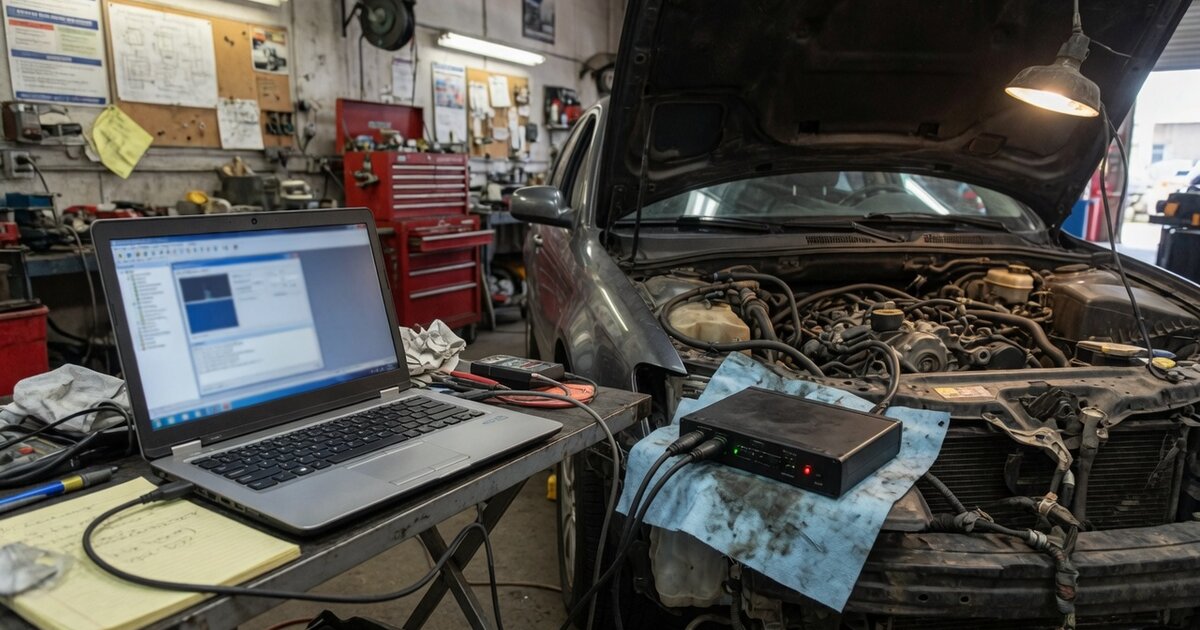
ECU programming is the process of writing, updating, or replacing the software that runs inside a vehicle's electronic control unit — the module most drivers know as the engine computer, engine control module, or ECM. This unit manages fuel injection timing, ignition, and emissions control, and on modern vehicles it also exchanges secure data with the transmission control module, body control module, and immobilizer system. When someone searches for "ECU programming," they usually mean one of three related jobs: restoring the factory calibration after a failed update or module fault, installing a replacement ECU (new or used) so the car will actually start and run, or reflashing the existing software with a revised calibration for performance or fuel-economy tuning.
The term covers a wide range of work, from a routine software update performed at a dealership to a full bench-mode rewrite of a used module pulled from a salvage yard. What all of it has in common is that the ECU's flash memory is read, checked, modified or replaced, and written back — and on most vehicles built in the last two decades, that process is tied directly to the vehicle's security system. A replacement or reflashed ECU generally will not run the engine until it has been synchronized with the correct keys, VIN, and immobilizer data, which is why ECU programming sits so close to key programming and locksmith work rather than being a purely mechanical task.
How it works
Most ECU programming happens through one of three connection methods. OBD flashing is the most common: a programming tool connects to the vehicle's 16-pin diagnostic port and talks to the ECU using standardized protocols such as UDS or KWP2000, sending read and write commands while the module stays installed in the car. Bench programming bypasses the vehicle altogether — the ECU is removed and wired directly to a bench harness that connects to specific pins on its circuit board, which is the fallback when a module blocks OBD write access, has corrupted firmware, or needs to be prepared before it is even installed. Boot-mode programming goes a step further, forcing the ECU's processor into a low-level recovery state so the tool can write directly to memory when normal communication isn't possible at all.
Inside the ECU, a small piece of software called the bootloader manages this process. The main application software controls the engine during normal driving, but the bootloader handles firmware updates, memory operations, and recovery if a flash is interrupted. A typical OBD flashing session follows a similar pattern regardless of brand: the tool identifies the vehicle and module, pulls or loads the correct calibration file, writes it to the ECU, and then the technician clears fault codes and lets the module relearn adaptive values. Sessions can run anywhere from a few minutes for a small update to well over half an hour for a full calibration on a larger file.
Because many vehicles link engine security to the key system, ECU work often overlaps with immobilizer and key programming. Tools built for this kind of combined diagnostic and locksmith work, such as the VVDI Prog working with BMW ECU, are designed specifically to read and write security-related data alongside the calibration itself, rather than handling engine tuning alone.
What to consider
Before programming or replacing an ECU, it helps to understand what can go wrong and when the job is actually necessary. Bench and boot-mode work in particular leave little room for error, and a failed write can turn a running car into one that needs a new module.
- A used ECU pulled from another vehicle usually needs to be matched to the donor car's immobilizer data, or reset and re-paired to the new vehicle's keys, before the engine will start.
- Interrupting a flash — through a power drop, a bad connection, or disconnecting the tool mid-write — can leave the ECU with corrupted firmware that no longer responds to normal OBD commands.
- Some vehicles require the battery to be on a stable charger during programming, since low or fluctuating voltage is a common cause of failed or incomplete flashes.
- Replacing a PCM or BCM together can trigger immobilizer faults across other modules, including the ABS, instrument cluster, or airbag system, if the security data isn't synchronized properly.
- Performance reflashing changes the factory calibration, which can affect emissions compliance and, on vehicles still under warranty, may affect coverage for related components.
- Not every no-start or check-engine problem is an ECU issue — a proper diagnostic scan should confirm the module itself is at fault before programming is attempted.
- Locked or encrypted ECUs on newer vehicles often require OEM-level access or specialized tools rather than generic OBD hardware.
- DIY reflashing with the wrong calibration file, or a file meant for a different trim or region, can cause drivability problems that are hard to trace back to the flash itself.
- For security-critical work like replacing a BMW CAS3 N20 ECU with CGDI Prog, following the documented procedure for that specific module matters more than general ECU knowledge.
Common mistakes to avoid
Most ECU programming problems come from skipping preparation steps rather than from the tools themselves. A little care before starting the flash prevents most of the failures technicians run into.
- Starting a flash without a stable power source, which risks a mid-write voltage drop and a bricked module.
- Assuming a used ECU will simply "plug and play" without addressing immobilizer pairing or a VIN mismatch.
- Skipping a full diagnostic scan first and programming a module that wasn't actually the source of the problem.
- Using an unverified or mismatched calibration file instead of one confirmed for the exact vehicle, trim, and region.
- Disconnecting the tool or interrupting the process before it confirms the write is complete.
- Treating DIY reflashing on security-locked, late-model vehicles as equivalent to older, unlocked ECUs, when it usually requires different tools entirely.
Frequently asked questions
What is the difference between ECU programming and ECU tuning?
ECU programming is the broader process of writing software to the module, which includes restoring factory settings, initializing a replacement unit, or updating firmware. ECU tuning is a specific type of programming where the calibration itself is deliberately modified — usually through OBD or bench flashing — to change how the engine behaves, such as adjusting fuel and timing maps for more power or better efficiency. Tuning is one purpose of programming, not a separate process.
Do I need a new key after ECU programming?
Not always. A routine software update on the original ECU usually doesn't affect your existing keys. But if the ECU is replaced, or if programming resets the immobilizer's security data, the keys may need to be re-learned or, in some cases, replaced entirely so the module recognizes them again. Whether new keys are needed depends heavily on the specific vehicle and immobilizer system involved.
Can ECU programming be done at home?
Simple software updates on older, unlocked ECUs can sometimes be done with consumer-level OBD tools. Late-model vehicles with encrypted security access, however, generally require professional-grade tools, licensed calibration files, and knowledge of the vehicle's specific immobilizer procedure. Attempting bench or boot-mode work without the right equipment carries a real risk of corrupting the module beyond OBD-level recovery.
How long does an ECU flash usually take?
It varies by vehicle and file size. A straightforward OBD flash with a small calibration file can take just a few minutes, while a full write on a larger, modern ECU can run 15 to 45 minutes. Bench or boot-mode programming, which often includes additional preparation and verification steps, can take longer. Rushing or interrupting the process is the most common cause of a failed flash.
What happens if a flash fails halfway through?
An interrupted flash can leave the ECU's firmware incomplete or corrupted, sometimes to the point where it no longer responds over OBD at all. In that case, recovery usually requires bench or boot-mode programming to rewrite the module directly through its circuit board pins, since standard diagnostic communication may no longer work. This is why stable power and an uninterrupted connection matter during any flash.
Is a used ECU a reliable replacement option?
A used ECU can work well once it's properly matched to the vehicle, but it isn't a simple swap. It typically needs to be programmed or reset to clear the donor vehicle's immobilizer data, then paired with the new vehicle's keys and VIN. Skipping that step is one of the most common reasons a used-ECU installation results in a no-start condition after the swap.