Launch J2534: What It Is and What to Know Before You Buy
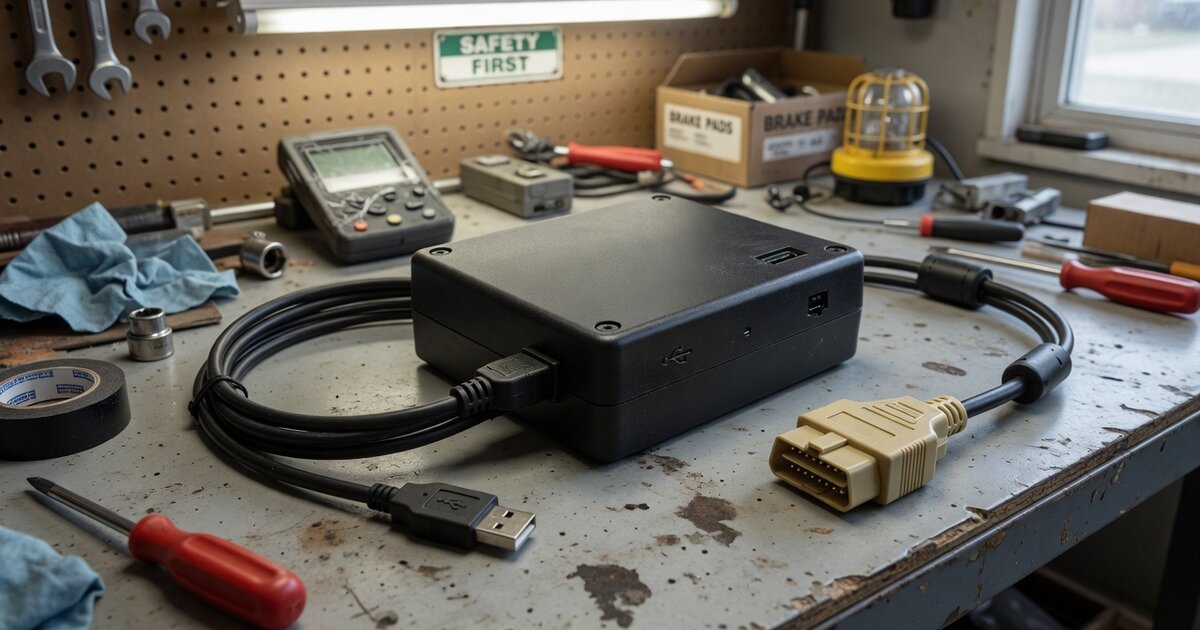
Search for "Launch J2534" and you'll find a cluster of Launch Tech products rather than one single box. Launch sells its pass-thru hardware in two forms: a standalone unit sold under the J-Box name, and a vehicle communication interface (VCI) called SmartLink C that pairs with Launch's X431 tablets. Both exist to do the same job — let a technician's PC run a vehicle manufacturer's own diagnostic software to reprogram control modules, the same way a dealership would. This article focuses on what Launch's hardware actually does and how to evaluate it; for the broader category of pass-thru boxes and how they compare across brands, see ECU Reprogramming Tools: Types and How to Choose One.
What Launch's J2534 device is and does
SAE J2534 is an industry standard that defines how a pass-thru interface talks to a vehicle's data bus so that OEM software — not the tool maker's own app — can flash a module. Launch's J-Box was built specifically around that standard, supporting both the original J2534-1 spec and the expanded J2534-2 spec, which added coverage for more manufacturer-specific protocols. Public product listings describe the J-Box handling CAN/ISO 15765, Ford SCP, GM Class 2, Chrysler SCI, and KWP2000 traffic, connecting to a shop PC over USB or a LAN cable, and running its own embedded Linux firmware rather than depending on a host tablet. It also ships with a proprietary BMW 20-pin adapter, since BMW's older diagnostic connector isn't a standard OBD-II plug.
Launch's newer approach folds J2534 support into SmartLink C, the VCI that comes bundled with current X431 tablets such as the PRO5 and PAD V. Rather than being a dedicated flash box, SmartLink C is a general-purpose communication module that speaks CAN, CAN FD, and DoIP alongside J2534, D-PDU, and RP1210 protocols — the last two being separate pass-thru-style standards used by some OEMs and heavy-duty truck platforms. Because CAN FD and DoIP support is built in, Launch markets SmartLink C as not requiring a separate DoIP cable, which matters for newer vehicles that have moved off classic CAN. In practice this means a shop already running an X431 PRO5 or similar tablet can do OEM-level flashing through the same VCI it uses for everyday diagnostic scan tool work, instead of buying a second dedicated J2534 box.
It's worth flagging a naming trap specific to this niche: Launch also sells a product called X-PROG3, which shows up in searches near "Launch J2534" but is a different category of tool entirely — an immobilizer and key-chip programmer for reading and writing EEPROM data, BMW CAS/FEM modules, and clearing anti-theft data on used ECUs. It works alongside Launch's X431 platform but is not itself a J2534 pass-thru interface, and it won't run OEM reprogramming software. Locksmiths researching "Launch J2534" for key-related work should keep that distinction in mind before buying the wrong device.
What to consider before buying
The first decision is standalone versus bundled. A dedicated box like the J-Box makes sense if you already have a shop PC and just need a certified interface to run OEM software on it. SmartLink C makes more sense if you're buying or already own a current X431 tablet and want one VCI that covers both daily diagnostics and occasional OEM flashing, rather than running two separate tools side by side.
Second, check what the interface actually plugs into. Most OEM reprogramming software still runs on a Windows PC, not on a tablet's own OS, so confirm whether the device you're buying connects to that PC over USB, over a network cable, or both, and whether your shop's setup can accommodate that. J-Box listings describe both USB and LAN connectivity; confirm the same for whichever SmartLink C revision you're looking at, since Launch has released more than one generation (C, C 2.0, C 3.0) with different hardware inside.
Third, don't assume broad protocol support means broad manufacturer support. J2534 hardware handles the communication layer; actually flashing a given brand's modules still requires that manufacturer's own software subscription, and each OEM maintains its own list of interfaces it has validated against its programming portal. Before buying, check the specific OEM software you plan to use against its published list of supported or registered pass-thru devices — don't rely on a retailer's protocol checklist alone.
Finally, weigh support and warranty terms. Launch's J-Box listings mention a two-year warranty and phone support from J2534 specialists plus manufacturer-specific "how to flash" guidance, which matters more than it sounds — pass-thru flashing sessions that get interrupted mid-write can brick a module, and having someone to call in that moment has real value.
Common mistakes to avoid
The most common mistake is assuming any Launch X431 scanner does J2534 out of the box. Base tablets typically need the SmartLink VCI or a J-Box paired with them; the diagnostic-only version of a given model may not include pass-thru capability at all.
A second mistake is buying the hardware and only then discovering the target OEM's software isn't validated against that specific device revision. Registered device lists change, and older J-Box units may not appear on a newer OEM portal's current list even if the protocols nominally match.
A third mistake, specific to this audience, is confusing J2534 pass-thru hardware with immobilizer/key programming tools like X-PROG3. J2534 devices reprogram modules through the manufacturer's own software; they are not designed to add, delete, or clone transponder keys. Buying a J2534 box expecting it to do key work — or vice versa — wastes money on the wrong category of device.
Fourth, shops sometimes skip firmware and driver updates on the pass-thru interface itself. OEM software often checks the interface's driver version before allowing a session to start, and an outdated driver is a frequent cause of a flash session refusing to connect even though the hardware is otherwise fine.
Frequently asked questions
What's the difference between Launch's J-Box and SmartLink C?
The J-Box is a standalone J2534 interface built to connect directly to a shop PC over USB or LAN. SmartLink C is a VCI bundled with current Launch X431 tablets that combines everyday diagnostics with J2534, CAN FD, and DoIP pass-thru support in one module, so it serves double duty rather than being a dedicated flash box.
Do I need a separate PC to use a Launch J2534 device?
Generally yes. Most vehicle manufacturers distribute their reprogramming software as a Windows PC application, so a J2534 interface — whether it's Launch's J-Box or SmartLink C — is typically used to bridge that PC's software to the vehicle, rather than running the OEM flash session entirely on a tablet.
Is Launch's J2534 device the same as X-PROG3?
No. X-PROG3 is an immobilizer/key-chip programming add-on for reading and writing EEPROM and anti-theft data, sold alongside Launch's X431 line. It is a different product category from J-Box or SmartLink C and is not itself a J2534 pass-thru interface.
Does a Launch J2534 device support CAN FD and DoIP?
Launch's current SmartLink C generation is marketed with built-in CAN FD and DoIP support, which matters for newer vehicles that have moved beyond classic CAN. Whether an older J-Box unit supports these depends on its specific hardware and firmware revision, so check the listing or documentation for the exact unit before buying if this matters for your target vehicles.
Can I use a J2534 device for aftermarket key programming?
J2534 pass-thru hardware is built to run OEM reprogramming software for flashing control modules, not to program transponder or smart keys. Key and immobilizer work generally requires a dedicated tool in that category, such as Launch's X-PROG3, rather than a J2534 interface.
How do I know if a Launch device will work with a specific OEM's software?
Check that OEM's own published list of validated or registered pass-thru devices for its reprogramming portal before buying, since protocol support alone doesn't guarantee a given interface and firmware version is accepted by every manufacturer's software.