2001 Nissan Pathfinder Immobilizer Bypass: A NATS Service Guide
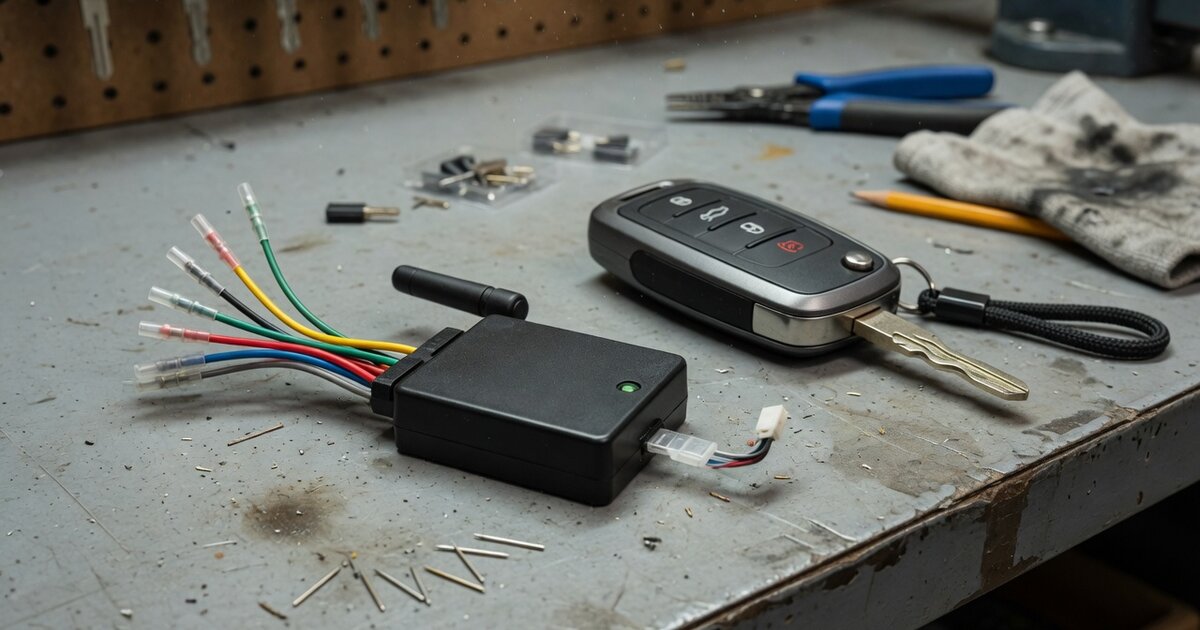
Searches for "2001 Nissan Pathfinder immobilizer bypass" almost never come from someone trying to steal the truck in the driveway next door. They come from shop technicians and mobile locksmiths staring at a Pathfinder that cranks but won't start, or one that just received a used engine control module and now needs its Nissan Anti-Theft System (NATS) rewritten to match. This article is written for that audience: licensed and credentialed automotive professionals doing legitimate diagnostic, repair, and key-service work. It is not a guide for gaining unauthorized access to a vehicle, and nothing here substitutes for verifying ownership before touching a customer's security system.
The second-generation Pathfinder (R50 platform, 1996-2004) shares its NATS foundation with the rest of Nissan's late-1990s and early-2000s lineup, including the ECM-integrated system covered in our guide to the 1999 Nissan Maxima immobilizer bypass and NATS service, so technicians who have worked on that generation of Maxima already recognize the basic logic. What differs on the Pathfinder is the platform, a mid-cycle drivetrain change, and how the immobilizer components are distributed across the truck's modules.
The 2001 Pathfinder's NATS immobilizer system
NATS is Nissan's factory anti-theft system, built around a key with an embedded transponder microcircuit, an antenna amplifier ring built into the ignition key cylinder, a body control module (BCM) that reads the key's ID signal, and the engine control module (ECM) that ultimately allows fuel and ignition to run. Where the 1999 Maxima folds the anti-theft logic directly into the ECM with no separate module, the Pathfinder's system ties the BCM and ECM together: the antenna ring reads the key, the BCM checks it against stored key data, and the ECM has to receive a valid authorization signal before the engine will keep running — the truck can crank on a bad key, but it won't stay running.
2001 is also a meaningful year mechanically, not just electronically. It's the model year Nissan swapped the Pathfinder's old 3.3-liter VG33E V6 for the new 3.5-liter VQ35DE V6, a significantly different engine and engine control setup. That matters for technicians sourcing a used or remanufactured ECM: a control module pulled from a 1999 or 2000 Pathfinder is not a plug-and-play match for a 2001-and-later VQ35DE truck, regardless of whether the NATS pairing procedure would otherwise work. Matching model year and engine code is the first checkpoint, before any immobilizer rewrite is even attempted.
When the system flags a problem, it typically sets a NATS-related code such as P1614, described in Nissan/Infiniti diagnostic references as an immobilizer control module or key-signal communication fault. That code can mean an unregistered key, a damaged transponder, a wiring or connector problem between the antenna ring and BCM, or a genuine ECM/BCM mismatch — a diagnostic starting point, not an automatic verdict that a module is bad or that a "bypass" is needed.
Legitimate bypass and service scenarios
Three scenarios account for almost all professional work involving Pathfinder NATS. The first is ECM replacement. When a shop installs a used, remanufactured, or new engine control module, it has to be paired to the truck's existing BCM and its registered keys. On Nissan's OEM path this pairing is done with the CONSULT diagnostic tester and the correct NATS program card, and the rewrite requires the truck itself and all of the customer's working keys present at the time — any key left out of the session becomes non-functional afterward, which is why gathering every key before starting is non-negotiable.
The second is aging-system diagnostics. A 2001 Pathfinder is now roughly a quarter-century old, and its NATS hardware ages with it. The antenna ring around the ignition cylinder can develop cracked windings or corroded connections, and BCM connectors and wiring degrade with time. Any of these can cause a good, correctly-registered key to be rejected intermittently, which reads to an owner exactly like a broken immobilizer even though nothing needs reprogramming — it needs a wiring and connector repair. Treating every no-start as a programming problem, instead of ruling out these faults first, is a common way a simple repair turns into an unnecessary key or module replacement.
The third is all-keys-lost service, where a customer has no working transponder key at all and needs the shop to cut a new one and get NATS to accept it. This carries the most security weight, and professional practice — the same standard covered in our broader guide to immobilizer bypass explained for automotive technicians — is to require documented proof of ownership before any all-keys-lost programming begins, regardless of how routine the technical steps are.
"Bypass" in a bench or diagnostic context has a narrower meaning distinct from all of this: temporarily satisfying an ECM's expected immobilizer signal so the module can be flashed, tested, or diagnosed off the vehicle. That's a bench technique for module work, not a way to start or drive a vehicle without proper key authorization.
Common mistakes to avoid
Installing a used ECM and skipping the CONSULT-based NATS rewrite is the single most common error — the truck cranks because starter and fuel systems are otherwise intact, but it will never sustain a start until the module is properly paired. Running the rewrite without every one of the customer's working keys physically present causes the reverse failure: keys left behind get silently dropped from the system. Jumping straight to "the immobilizer needs to be bypassed," without first checking the antenna ring, ignition wiring, and BCM connector for age-related corrosion, leads to parts being replaced that didn't need to be. All-keys-lost jobs done without collecting ownership documentation expose a shop to liability regardless of intent. And because aftermarket key-programming tools vary in which NATS generations they actually cover, using one without confirming verified support for an early-2000s Pathfinder risks a failed write. It's also worth remembering that immobilizer architecture isn't interchangeable across manufacturers — Chrysler's contemporaneous SKIM-based system, covered in our 2006 Chrysler 300 immobilizer bypass guide, runs on entirely different logic, so a procedure built for Nissan NATS has no bearing on a Chrysler vehicle.
Frequently asked questions
Is NATS bypass or reprogramming legal on a 2001 Pathfinder I own or service?
Yes, for the vehicle's owner or a shop working with the owner's authorization and proof of ownership. The programming itself is standard dealer and locksmith service work; what makes it legitimate is documentation, not the technical procedure.
How is the Pathfinder's NATS different from the 1999 Maxima's system?
The Maxima of that era keeps its anti-theft logic inside the ECM itself, with no separate immobilizer module. The Pathfinder's NATS splits that logic between the BCM, which authenticates the key, and the ECM, which withholds engine operation until it receives BCM authorization — two modules cooperating instead of one doing everything.
Can I install a used ECM from another Pathfinder?
Only if the donor module matches the year and engine. 2001 was the year Nissan switched the Pathfinder from the 3.3-liter VG33E to the 3.5-liter VQ35DE, so a module from a 1999 or 2000 truck isn't interchangeable with a 2001-or-later one. Once you have a compatible module, it still has to be paired to the existing BCM and all working keys through the standard rewrite procedure.
Why does my Pathfinder throw a security light or P1614 code with a key that has always worked?
On a vehicle this age, the most likely causes are a degraded antenna amplifier ring, corrosion at the BCM connector, or damaged wiring — not a bad key or a need for reprogramming. Diagnose the physical connection before assuming the immobilizer data itself is at fault.
What happens after several failed key attempts?
NATS includes a deliberate lockout after repeated invalid key signals, meant to slow down tampering attempts. It's a normal protective behavior, not damage, and it typically clears after a wait period — worth explaining to a customer so they don't assume the truck itself has failed.
What should a shop document before doing all-keys-lost work on this model?
Proof of ownership such as registration and matching photo ID, a signed work order describing the job, and — where the shop's state or manufacturer program requires it — a valid Vehicle Security Professional credential. Keeping that paperwork on file protects the shop and keeps the work clearly on the legitimate side of a security-sensitive service.