2008 Dodge Avenger Immobilizer Bypass: A WIN-Era Service Guide
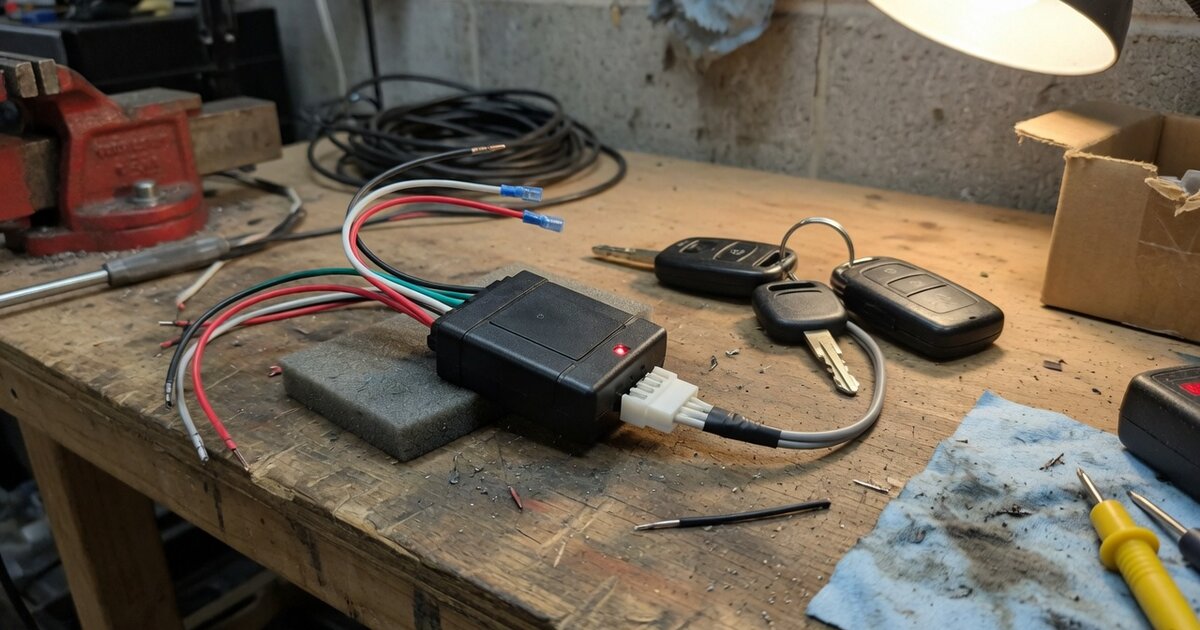
A 2008 Dodge Avenger showing up on the shop floor with a security-light no-start, a dead PCM, or a lost-key job is common enough that "2008 Dodge Avenger immobilizer bypass" shows up regularly in technician search traffic. Before that phrase gets typed into a search bar, it's worth being precise about what it actually means in a professional shop: not defeating a car's security so it can be driven away without a key, but restoring or servicing the factory anti-theft system so a legitimately owned vehicle runs again after a PCM swap, a failed module, or an all-keys-lost situation. This article, like our broader explainer on immobilizer bypass work for automotive technicians, is written for locksmiths, dealer technicians, and independent shops working with proper authorization — not as a guide for anyone trying to start or move a vehicle they don't have clear rights to.
The 2008 Avenger's immobilizer system
Chrysler's immobilizer architecture changed generationally around the 2007 model year. Earlier vehicles used a standalone SKIM (Sentry Key Immobilizer Module) that talked to the PCM over the vehicle's data bus and verified the transponder chip in a cut key before allowing the engine to start. Starting with 2007-model-year vehicles, Chrysler moved toward the WIN (Wireless Ignition Node) architecture, which folds the immobilizer "base station" function into a module that also handles wireless key or fob communication. The 2008 Dodge Avenger falls into this newer WIN generation, not the SKIM generation — the same distinction our 2006 Chrysler 300 SKIM service guide draws for that earlier platform. Treating a 2008 Avenger like a pre-2007 SKIM vehicle is a fast way to grab the wrong part number, the wrong tool profile, or the wrong procedure.
On the Avenger and Sebring JS platform specifically, shop and parts documentation frequently refers to the relevant security/RKE hardware as a WCM or SKREEM module rather than a bare SKIM box — reflecting the same WIN-generation logic packaged for this platform's wiring and receiver setup. Functionally, it still acts as the immobilizer base station on the CAN bus: it challenges the transponder in the key, and only when that exchange checks out does it tell the PCM to allow fuel delivery and ignition. Depending on trim and options, the key hardware itself can differ — some 2008 Avengers used a conventional cut key with an embedded Sentry Key transponder turning in a column lock cylinder, while other trims and later model years in this generation used an insert-style FOBIK fob read by the module rather than a bladed key. That hardware difference matters before you order parts or select a tool profile, because a procedure written for one key type won't apply cleanly to the other.
Legitimate bypass and service scenarios
A handful of real-world situations bring "bypass" language into a WIN-era Avenger job, and none of them involve defeating security to gain unauthorized access:
PCM replacement or reflash. A dead or damaged PCM is one of the more common reasons a WIN-equipped Avenger lands on a lift. A replacement PCM — new, remanufactured, or salvage — doesn't automatically know the vehicle's existing keys. Getting the car running again means matching the replacement control module to the vehicle's VIN and its immobilizer secret/PIN data so it accepts the customer's existing keys, then relearning that pairing through a professional scan tool or programmer. Skipping that matching step, or assuming a used PCM will simply plug in and run, is the fastest way to turn a straightforward repair into a no-start comeback.
All-keys-lost diagnostics. When an owner shows up with zero working keys, there's no transponder for the module to challenge. A locksmith or dealer technician verifies ownership first, then uses professional key-programming equipment capable of communicating with the WIN/WCM module to generate the data needed to cut and learn a new key — the legitimate endpoint of what a lot of "bypass" search traffic is actually looking for.
Aging or failing security module. WIN-era ignition/security hardware on Chrysler, Dodge, Jeep, and Ram vehicles from this general era has a documented failure pattern — intermittent no-starts, false security-light triggers, or stalling that traces back to a flaky module rather than an actual theft-prevention event. Once that fault is properly diagnosed (not assumed), some shops service it by reprogramming or effectively disabling the immobilizer function in the PCM so a verified-defective security system stops causing drivability problems. That's a repair for a broken component, done on a documented, owned vehicle — not a workaround for security that's functioning correctly.
Remote start installations. A proper remote start install on an Avenger is wired to work with the WIN/WCM system, not around it. The installer simulates the key-present signal the module expects so the immobilizer stays fully active on every other start; the factory anti-theft function isn't removed or weakened by the install.
Common mistakes to avoid
The most frequent error is treating this Avenger as if it shares a system generation with pre-2007 Chrysler vehicles — ordering SKIM-era parts or running a SKIM-era procedure against WIN-generation hardware wastes time and can leave a module mismatched to the VIN. A related mistake is assuming every trim and model year in this generation uses identical key hardware; confirm whether you're dealing with a cut Sentry Key or a FOBIK-style fob before committing to a tool profile or ordering a blank. Technicians new to security work sometimes also assume a bypass technique that works on a different manufacturer's system will translate directly — it won't. GM's Passlock-based systems, covered in our Chevy Cobalt Passlock service guide, use an entirely different resistance-based logic than Chrysler's WIN challenge-response architecture, and cross-applying a procedure between the two doesn't work and can damage a module. Finally, skipping VIN verification and proof-of-ownership documentation before starting any immobilizer, key, or PCM work isn't a shortcut — it's the step that keeps the job legitimate and defensible if it's ever questioned.
Frequently asked questions
Does the 2008 Dodge Avenger use SKIM or WIN?
WIN. Chrysler's shift from standalone SKIM modules to the WIN (Wireless Ignition Node) architecture began with 2007-model-year vehicles, and the 2008 Avenger falls inside that newer generation. On this JS platform, the module is often labeled WCM or SKREEM in service literature, but it performs the same immobilizer base-station role as WIN hardware elsewhere in Chrysler's lineup that year.
Why would a shop need to "bypass" the immobilizer on a car that isn't stolen?
Because "bypass" in a professional context usually means restoring normal operation after a PCM failure, an all-keys-lost situation, or a confirmed-defective security module — not defeating a working system. All of those require verified ownership and proper diagnostic work first.
Can I install a used PCM from a salvage yard and expect it to start the car?
Not without matching it to the vehicle. A salvage PCM carries its own immobilizer data until it's synced to the Avenger's VIN and secret/PIN information and relearned with the existing keys through a professional tool. Installed as-is, it typically won't allow the engine to start.
What tools do professionals use for WIN-era Chrysler immobilizer work?
Shops doing this work generally rely on professional automotive diagnostic and key-programming platforms with dedicated Chrysler WIN/immobilizer-module functions — capable of module-to-VIN matching, PIN/secret code retrieval through authorized channels, and key learning — rather than generic code readers. Access to Chrysler's security data itself is gated behind an industry credentialing process, typically administered through NASTF, the same standard referenced across our immobilizer coverage.
Do I need proof of ownership to get immobilizer or key work done?
Yes. Reputable shops require registration, title, or equivalent documentation, and record the VIN against that paperwork, before doing any immobilizer, key-programming, or PCM-relearn work. That standard protects the shop and the owner and is what separates this kind of service from unauthorized access.
Is bypassing a Dodge Avenger's WIN system the same as bypassing a GM Passlock system?
No. They're different architectures built on different logic — Passlock relies on resistance values in the ignition lock, while Chrysler's WIN system is a wireless challenge-response exchange between the module, the key, and the PCM. Procedures, tools, and part numbers for one don't transfer to the other.