Airbag Reset Software: The Tools Technicians Actually Use
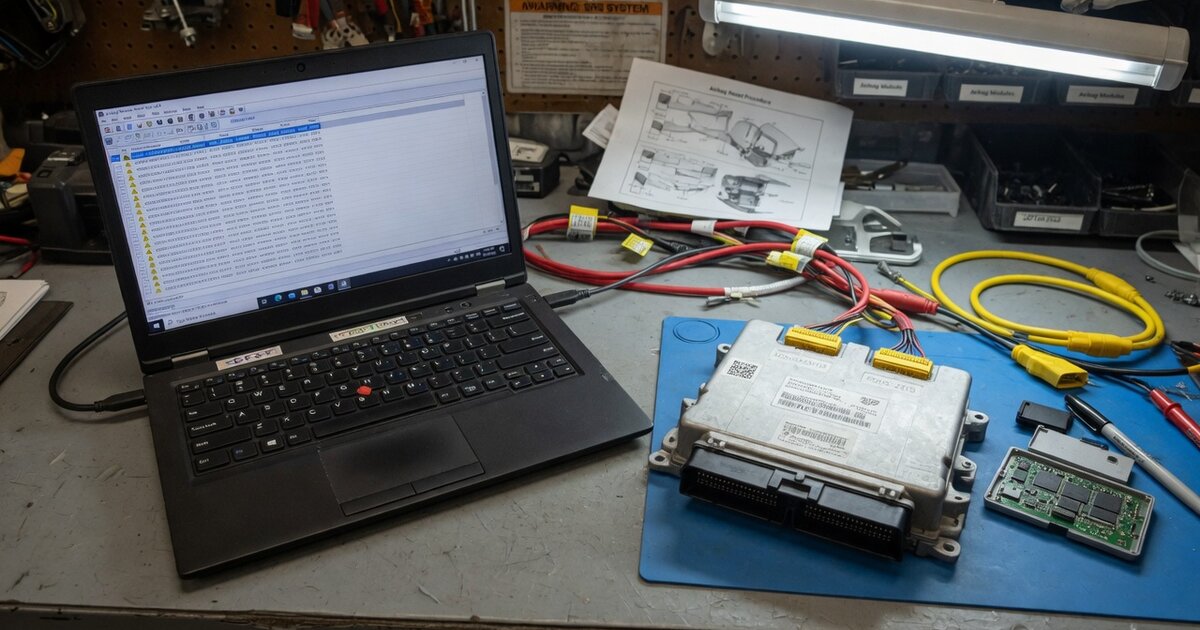
Airbag reset software is a phrase technicians usually type after they already know what they're dealing with: a stored crash code, a locked SRS module, or a warning light that won't clear no matter how many times the battery gets disconnected. That's a different question from what an airbag reset service actually does and when you need one, which covers the repair from a shop or vehicle-owner perspective. This piece is aimed at the technician side: what the actual software and hardware involved do, where basic scanners stop being useful, and why this corner of automotive diagnostics carries more risk than most.
What airbag reset software actually does
A generic OBD2 code reader can pull SRS fault codes and clear soft codes, but it generally cannot touch the EEPROM memory where crash data actually lives once a module has recorded a deployment or a severe-enough impact event. That distinction matters because clearing a code and clearing crash data are not the same operation, even though the terms get used interchangeably. Once a module has logged a crash event, most manufacturers design it to lock permanently — stored crash data is meant to be tamper-resistant by design.
Getting past that lock is where dedicated software and hardware come in. Professional scan tools such as Autel's IM608 and IM508, paired with the XP400 programmer, can read and write the module's EEPROM contents, but the read/write function and the crash-data-clearing function are separate steps. In practice, techs working this way read the EEPROM dump off the physical module, then use separate crash-data-reset software or an online processing service to strip the crash flags and locked-code data out of that dump file before writing the cleaned file back onto the chip. Dedicated resetting programs, such as TachoSoft Airbag Resetter, are built specifically around that middle step, working against ECU dump files across a wide range of supported module types rather than talking to the vehicle directly. Some shops instead use online crash-data-reset systems: the technician extracts the EEPROM file, uploads it, and receives a corrected file back to reprogram the module with, plus a report on what stored data was found.
For techs who don't want to pull the module for bench programming at all, some airbag-specific tools are built to work through the vehicle's OBD port on supported models, combining the read, clear, and code-off steps into one workflow. Either way, the underlying task is the same: get real read/write access to the module's non-volatile memory, tell stored crash data apart from an active fault, and rewrite the memory correctly instead of just chasing the warning light off the dash.
What to consider, including the safety stakes
This is safety-critical work in a literal sense, not a figure of speech. A module reset incorrectly, flashed with the wrong configuration data, or paired with a mismatched pretensioner or sensor setup can fail to deploy in a real collision, or deploy incorrectly. That's a different risk category than most diagnostic work on a vehicle, and it's why this software and hardware is marketed toward licensed shops and mobile techs rather than casual DIYers.
Two related issues show up in this exact market. First, NHTSA has issued alerts about counterfeit airbag modules and components circulating through aftermarket and salvage channels, some of which have shown inconsistent behavior ranging from non-deployment to metal fragments being expelled during deployment. Second, a meaningful share of used or salvage modules pulled from other vehicles arrive already locked with someone else's crash data, so installing one without verifying and resetting it first can leave a customer with a module that looks fine on a warning-light check but won't function correctly. Sourcing modules from traceable suppliers and confirming reset/verification documentation before installation isn't paperwork for its own sake; it's part of the actual safety chain on this repair.
Because crash data exists specifically so insurers, investigators, and future owners can tell whether a module has been through a deployment event, clearing it isn't something to treat casually. Reputable tool and service providers generally expect it to be used on modules the technician has physically verified are undamaged and eligible for reset — not as a way to make a salvage-title or flood vehicle's airbag light disappear without addressing the underlying hardware.
Common mistakes to avoid
The most common shortcut that goes wrong is chasing "free" airbag reset software downloads instead of a paid tool or service from a known vendor. Some free packages circulating on forums and file-sharing sites bundle in unrelated executables or come from sites with no verifiable ownership, and running unknown software against a module's memory dump — or against the diagnostic laptop that also touches other vehicles — isn't a risk worth taking to save a service fee. If a source won't identify itself or explain how its clearing process works, that's reason enough to use something else.
A second mistake is treating a cleared code as proof the job is done. A fault code tied to a locked SRS module is a starting point, not a full diagnosis; the same warning light can come from different root causes, the way it does on the 2005 Cadillac CTS service airbag light, where the trigger isn't always the airbag module itself. Clearing crash data without confirming the module, wiring, connectors, and any deployed components — pretensioners, clock springs, impact sensors — are physically sound just relocates the failure to a worse moment.
Third, techs sometimes assume any handheld tool that mentions "airbag" covers crash-data clearing, when many only handle code reading and light resets. Understanding what a specific tool or part is actually built to do — the same reasoning that applies to sorting out what a specific part number like the one covered in the 10187 airbag tool breakdown is actually for — avoids buying hardware that can't do the job it was needed for.
Finally, skipping documentation is a mistake that shows up later, in a liability dispute or a resale question. Keeping a record of which module was reset, what crash data was found, and what verification was performed protects the shop as much as the customer.
Frequently asked questions
Can a regular OBD2 scanner clear airbag crash data?
No, in most cases. Generic and even many professional-grade OBD2 scanners can read SRS fault codes and clear soft, non-crash-related codes, but crash data is stored in the module's EEPROM and is typically locked once written. Clearing it requires a tool with direct EEPROM read/write access or removing the module for bench programming.
What's the difference between airbag reset software and an airbag reset tool?
"Airbag reset tool" usually refers to hardware — a scan tool, bench programmer, or OBD-connected device that talks to the module. "Airbag reset software" more often refers to the program that processes the module's memory dump to strip out crash flags before it's written back. Many workflows use both together.
Is it legal to reset airbag crash data?
Resetting a module's crash data isn't illegal on its own, but what a technician does with that reset matters. Installing a reset module without disclosing prior crash history, or using a reset to mask damage on a salvage or flood vehicle instead of properly repairing it, can create liability and, in some cases, fraud exposure. Legitimate services expect the underlying hardware to be inspected and confirmed safe before or after the reset.
Why do some airbag modules stay locked even after a reset attempt?
A module can stay locked if the crash-data file wasn't fully cleared, if the wrong tool or vehicle profile was used, if the module itself is physically damaged, or if the reset didn't account for linked components like pretensioners or impact sensors also reporting a fault. In those cases the module usually needs to be re-diagnosed rather than reset again the same way.
Are used or salvage airbag modules safe to install after a reset?
Only if the module comes from a verifiable supplier and is confirmed through a proper reset-and-verification process. A meaningful number of used modules arrive already carrying crash data from a different vehicle, and NHTSA has flagged counterfeit and mismatched aftermarket airbag components as an active safety concern, so sourcing matters as much as the reset itself.
Do I need a bench programmer, or can crash data be cleared through the OBD port?
It depends on the vehicle and module. Some supported models can have crash data addressed through the OBD port with the right tool, while others require the module to be removed and connected to a bench programmer to access the EEPROM directly. Techs working across multiple makes typically end up using both approaches.