Auto Lock Picker: Tools and Techniques Professional Locksmiths Use
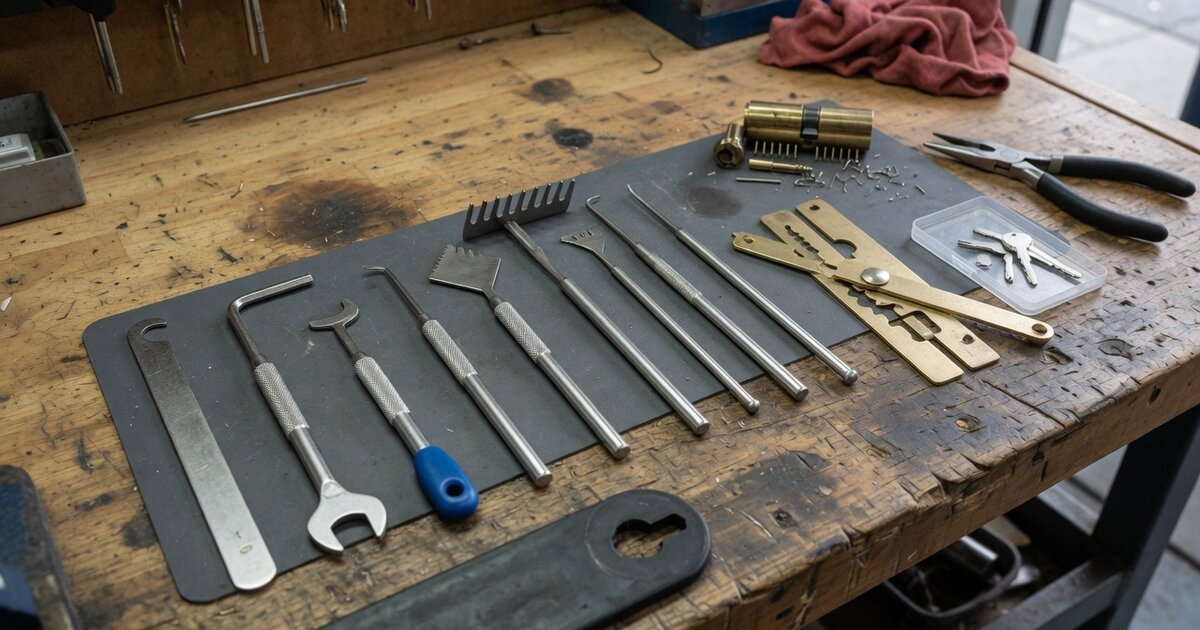
When someone searches for an "auto lock picker," they are usually picturing a single tool that pops a car door open in seconds. In reality, professional automotive lockout work is a toolkit and a skill set, not one gadget, and it is bound by legal and ethical rules that separate a licensed locksmith from someone attempting unauthorized entry. This article looks at what tools and techniques licensed professionals actually use to help locked-out drivers, why modern vehicles are making old-school lock picking far less reliable, and the verification steps a legitimate locksmith is expected to follow before touching your car.
It is worth being upfront about the limits here: this is an explanation of the trade, not a how-to guide for opening a car you do not own or have authorization to access. Attempting to defeat a vehicle's locks without the owner's consent can constitute a crime regardless of how the entry is achieved, and the tools discussed below are dual-use items whose legality depends entirely on the intent and authorization behind their use.
Tools and techniques professionals use
A working automotive locksmith typically carries a mixed kit rather than relying on one universal opener, because vehicle age, lock type, and door design all change which tool actually works.
Slim jims are thin, flat strips of spring steel, historically around two feet long, with a hooked end. The hook is slid between the window glass and the weatherstripping to catch the linkage rods that connect the exterior handle or lock cylinder to the latch mechanism. This method only works on older vehicles with mechanical linkage-based locks, and on newer cars it can damage window seals, wiring harnesses, or airbag sensors run through the door cavity, which is one reason many shops have moved away from it for late-model vehicles.
Air wedges are small inflatable bladders inserted at the top corner of the door frame and pumped up to create a narrow gap between the door and the body without prying metal against metal. That gap gives a technician room to insert a long-reach tool, a thin rod with a hook or loop end, to manually trip the interior lock button or lift the handle from inside. Air wedges are generally considered a gentler alternative to rigid pry tools because they distribute pressure and reduce the risk of denting the door or cracking trim.
Tension tools and pick sets, the same core concept used on household pin-tumbler locks, are used on the mechanical lock cylinders that many vehicles still retain even after switching to keyless entry for daily use. A tension wrench applies light rotational pressure on the cylinder while a pick manipulates individual pins to their shear line. This requires real manual skill and practice, and it is one of the areas covered in general terms in guides on automotive locksmithing tools, programmers, cutters, and decoders, since picking is usually just one stage before a key is cut or a replacement is programmed.
Pick guns use a spring-loaded striking mechanism to rap the bottom of the pins in rapid succession, momentarily bouncing the top pins clear of the shear line so the cylinder can be rotated. They can speed up manual picking on simpler cylinder designs but are far less effective against the sidebar and wafer-tumbler cylinders common in many automotive locks, and against high-security cylinders they often do not work at all.
Pneumatic and electronic entry tools are increasingly what professional roadside and mobile locksmiths reach for first on newer vehicles, since many current models rely far less on a mechanical route to the latch. These purpose-built tools are designed to minimize cosmetic damage compared to improvised prying, though outcomes still depend heavily on the vehicle's specific hardware.
None of these tools operate in isolation from the rest of a locksmith's equipment. A lockout call often ends with re-keying, cutting a replacement key, or programming a transponder, which is why a well-equipped mobile unit looks more like the kind of setup described in a starter automotive locksmith kit than a single specialized pick.
Legal and ethical considerations
Owning lock picks or lockout tools is legal in most of the United States, but the legality hinges on intent, not just possession. Several states treat possession of picking tools alongside evidence of intent to commit a crime as grounds for prosecution, and a handful of states go further by treating tool possession itself as presumptive evidence in certain circumstances. Some states also license or restrict locksmithing as a regulated trade, meaning a person cannot legally charge money to open someone else's car without holding the appropriate license, separate from whether owning the tools is legal at all.
Because of this, reputable locksmiths verify who they are helping before doing any work. Common practice is to require proof of ownership before touching the vehicle: a government-issued photo ID checked against the vehicle registration, and in some cases the VIN, to confirm the person requesting entry actually owns or is authorized to access the car. If a customer cannot produce matching identification and registration, a professional locksmith is trained to decline the job or re-secure the vehicle rather than proceed, and to document the interaction. This is not bureaucratic friction for its own sake; it protects the locksmith from unknowingly assisting a theft and protects vehicle owners from fraudulent claims to their property.
Ethically, this is also why legitimate discussion of these tools stays at the level of what professionals use and why, rather than a walkthrough for defeating a specific lock uninvited. Anyone genuinely locked out of their own vehicle is generally better served calling a licensed locksmith or roadside assistance than attempting DIY entry with tools bought online, both because of the real risk of damaging the vehicle and because the legal exposure for getting it wrong falls on the person holding the tool.
Common mistakes to avoid
The most common and expensive mistake is forcing a rigid tool, like a coat hanger or an old-style slim jim, into a modern door cavity. Newer vehicles route wiring, side-impact sensors, and sometimes airbag components through the door panel, and blind probing can trigger expensive repairs that dwarf the cost of a locksmith call. A second mistake is assuming a technique that worked on one car will work on another; lock hardware varies enormously by manufacturer and model year, and what opens a decade-old sedan may do nothing on a car with capacitive door handles and layered alarm sensors. A third mistake, particularly for anyone building out their own kit, is buying a single "do it all" pick tool instead of understanding that most real jobs pair a lock manipulation step with a cutting or programming step, which is where tools like portable key cutters come into the workflow. Finally, skipping ownership verification, even when a job seems obviously legitimate, is a mistake that can create legal liability regardless of how the entry itself was performed.
Frequently asked questions
Can a locksmith open any car with a pick gun?
No. Pick guns work best on simpler pin-tumbler cylinders and are much less effective, or entirely ineffective, against sidebar cylinders, wafer locks, and the high-security cylinders used on many vehicles. Many current-generation cars also rely primarily on electronic and keyless systems rather than a mechanical cylinder a pick gun could act on at all.
Why don't old lock-picking tricks work on newer cars?
Newer vehicles increasingly use capacitive touch sensors, encrypted keyless entry, and layered alarm systems including sensors that can detect glass tapping or interior probing, rather than relying solely on a mechanical linkage a slim jim or long-reach tool can manipulate. Manual lock-picking techniques were designed around mechanical hardware that many modern models have partly or fully replaced.
What identification does a locksmith need before unlocking my car?
Standard practice is a government-issued photo ID matched against the vehicle's registration, and some locksmiths request the VIN as an additional check. If the name on the ID does not match the registration, a professional locksmith should decline the job until ownership or authorization can be confirmed.
Is it legal to own automotive lock-picking tools?
In most states, simply owning the tools is legal; the issue is intent and, for paid work, licensing. Using or possessing them with intent to enter a vehicle without authorization is illegal everywhere, and several states treat tool possession combined with other evidence of intent as grounds for prosecution. Charging for locksmith services generally requires a state license separate from tool ownership.
Can I use an air wedge or slim jim myself if I'm locked out of my own car?
You can, but it carries real risk: forcing tools into a door frame or window seal can damage weatherstripping, trim, wiring, or sensors, and the repair bill can exceed the cost of calling a locksmith. On newer vehicles in particular, a professional with the right purpose-built tool is usually the safer and cheaper option.
Do professional locksmiths still use slim jims?
Less than they used to. Slim jims remain useful on older vehicles with mechanical linkage locks, but many shops have shifted toward air wedges paired with long-reach tools, or purpose-built pneumatic and electronic entry tools, because they reduce the risk of damaging the wiring and sensors run through modern door panels.