B3055:00 Transponder Key Problem: What the Code Really Means
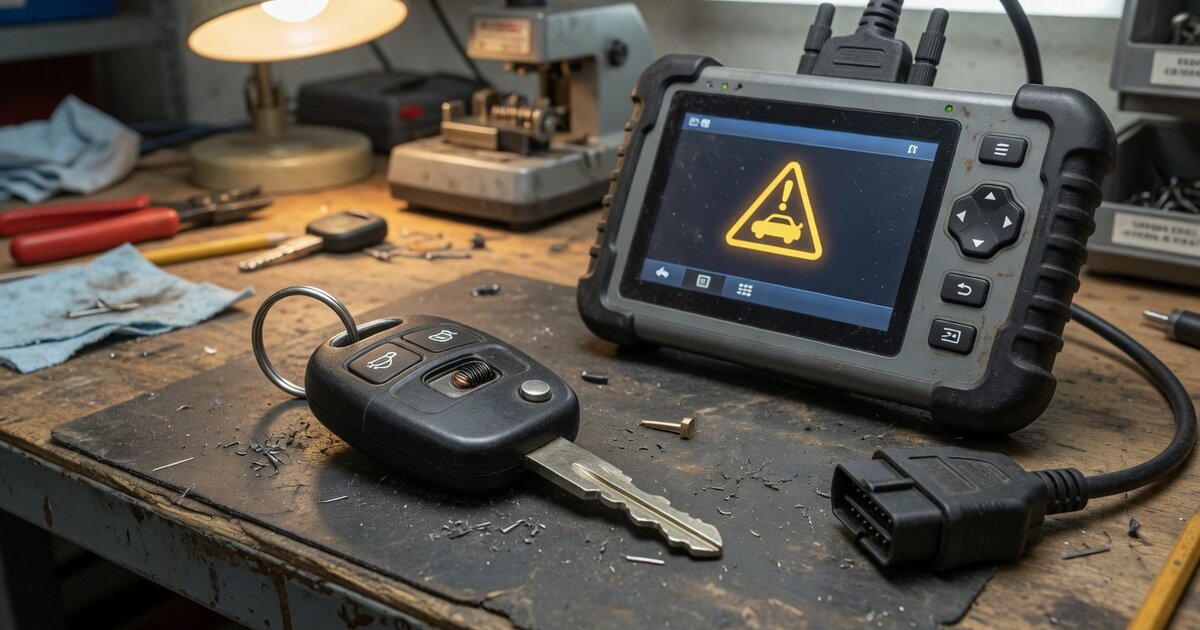
If a scan tool pulled up "B3055:00" (also written B3055-00 or B3055 00) while you were chasing a no-start, a key that won't crank the engine, or a light that came on after a key swap, here's the honest starting point: that exact code does not appear in the major public generic DTC references, including the standard SAE-based B-code chart and the aftermarket lookup databases technicians use daily. That is worth knowing before you burn an afternoon on contradictory forum posts about it.
This doesn't mean the code is fake or your scanner glitched. It means "B3055:00" most likely belongs to a manufacturer-specific or scan-tool-specific code set that isn't published in the open code libraries checked for this article. Rather than invent a definition, this guide covers what's actually confirmable about codes shaped like this one, how the colon-suffix format generally works, and a diagnostic approach that holds up whether or not anyone has documented the exact wording of your particular code.
What This Code Generally Indicates
DTCs that start with "B" belong to the body control domain of a vehicle's electronics — the systems handling comfort, convenience, lighting, remote keyless entry, and, on many platforms, the anti-theft/immobilizer system. That much is well-established as part of the standard DTC numbering convention. Where a specific number like B3055 falls inside that domain isn't answerable in general terms, though, because manufacturers assign their own meanings once you're past the handful of truly generic, cross-brand codes.
The colon-and-two-digit format you're seeing — B3055:00 — is a real, recognizable convention. Several manufacturer diagnostic platforms (Ford's IDS/FDRS is a well-documented example) append a two-digit suffix after the base code to specify a failure type, such as "circuit open," "signal invalid," or "no sub-type information." A "00" suffix commonly signals a generic or unspecified instance of the fault rather than a distinct failure mode, though this varies by platform and wasn't confirmable for this specific code number.
What we checked and couldn't find: B3055 doesn't appear as a documented entry in the standard SAE-derived generic B-code chart, and it's absent from the Ford-specific and general aftermarket DTC databases searched while preparing this article. Given that people searching for "B3055 00" consistently pair it with "transponder key," it's a reasonable working assumption that most readers hit this code during a key-recognition or immobilizer diagnosis — but that's an inference from search behavior, not a confirmed technical definition, and should be treated that way.
Some platforms do document distinct, confirmed codes for "ignition key transponder signal not received" or similar wording, describing the same kind of no-detection symptom that sends people looking up codes like this one. If you're unfamiliar with how a transponder actually communicates with the vehicle, it helps to first understand how a transponder key works and what to know about it before swapping parts based on a code number alone. Treat any online explanation of B3055:00 — including this one — as unconfirmed until you check it against your own scan tool's description or manufacturer service documentation for your vehicle's specific VIN, model year, and trim.
How to Diagnose It
Since the exact definition can't be confirmed here, diagnosis has to lean on process rather than a single documented repair. The steps below apply broadly to key-detection and transponder-communication complaints, which is where most searchers for this code appear to be looking.
- Record everything the scanner shows. Full code, freeze-frame data, and any accompanying codes. A B-series code rarely shows up alone when there's a real electrical fault; companion codes narrow things down fast.
- Confirm the vehicle's exact identity. Year, make, model, trim, and VIN. Code definitions in this family are frequently platform-specific, so a write-up for one model year is not reliable for another.
- Rule out the simplest cause first: the key battery. On smart-key and proximity systems, a weak coin cell is one of the most common reasons a system reports a key as "not detected" even though the transponder itself is fine.
- Inspect the transponder antenna ring around the ignition barrel (on vehicles that still use a physical cylinder) for cracks, corrosion, or damage from prior column or lock work.
- Test with a known-good, already-programmed OEM key. If the fault clears with a factory key that has never been touched, the problem is isolated to the original key rather than the vehicle's receiver, module, or wiring.
- Check related body-control wiring and grounds feeding the immobilizer/BCM circuit, since B-series faults live in that same wiring domain.
- Pull manufacturer service information and any relevant technical service bulletins for the VIN before ordering parts or attempting a repair based only on a generic code description.
- Bring in a professional when programming is required. If diagnosis points to a key that needs to be added, re-learned, or replaced, this is where finding a qualified transponder key programming provider saves time over guessing with limited equipment.
- Clear the code and retest only after addressing a suspected root cause, not as a first step — clearing it blind just hides the symptom until it reappears.
Common Mistakes to Avoid
The biggest mistake is treating an unverified online definition as gospel. Since B3055:00 isn't documented in the standard public references, anyone who confidently states exactly what it means without citing a source for your specific vehicle is guessing, however authoritative it sounds.
A second mistake is buying and attempting to program an aftermarket key or fob before confirming it's actually compatible with the vehicle's immobilizer generation and frequency. Mismatched chips produce the same "not detected" symptoms as a genuine hardware fault, wasting time chasing a wiring problem that isn't there.
A related trap is assuming that moving the internal board and transponder from an original key into a new shell automatically carries recognition over. It often won't, without a re-learn or re-pairing step depending on the platform — a distinction covered in this explainer on moving a key fob board and transponder into a new shell, worth reading before assuming a shell swap alone resolves a detection fault.
Finally, don't overlook mundane causes while chasing an exotic one: a dying key battery, a key ring overloaded with metal fobs interfering with the transponder signal, or simple corrosion on a ground connection can all mimic a deeper module or wiring failure.
Frequently Asked Questions
Is B3055:00 a Ford-specific code?
It couldn't be confirmed as belonging to Ford or any other manufacturer through the standard public DTC references checked for this article. The colon-suffix format is used by certain manufacturer platforms, but that alone doesn't prove which brand issued this code. Verify against your scan tool's built-in description or manufacturer service data for your VIN.
Why can't I find an official definition for this code anywhere?
Extended codes with sub-byte suffixes (the digits after the colon) are often manufacturer-proprietary or even specific to a particular diagnostic tool's internal code library, rather than part of the universally published generic DTC set. Plenty of legitimate, real-world codes simply aren't in the free aftermarket lookup sites.
Could a weak key battery really trigger a "key not detected" type fault?
Yes. On proximity and smart-key systems, a low coin-cell battery is one of the single most common causes of intermittent or persistent key-detection complaints. It's inexpensive to test and should be ruled out early, before assuming a transponder, antenna ring, or module has failed.
Should I take this to a dealer, an independent shop, or a locksmith?
Any of the three can potentially handle it, depending on what the diagnosis turns up. If the issue is confirmed to be the key or transponder itself rather than vehicle wiring, an automotive locksmith or key-programming specialist with the right equipment for your make is often faster and less expensive than a dealer visit for the same programming work.
Will an aftermarket transponder key work as a fix?
Often yes, provided the chip type, frequency, and cut match what the vehicle's immobilizer system expects, and the key is properly programmed to the vehicle afterward. Compatibility is the part people get wrong most often — confirm it before buying rather than after.
If I clear the code, will it come back?
If the underlying cause — a weak battery, a damaged antenna ring, a wiring fault, or an unprogrammed key — hasn't actually been addressed, clearing the code is almost always temporary. The code exists to flag a real electrical or communication condition, and it will typically log again once that condition repeats.