CMD ECU Tool (CMDflash): What It Is and Who It's Actually For
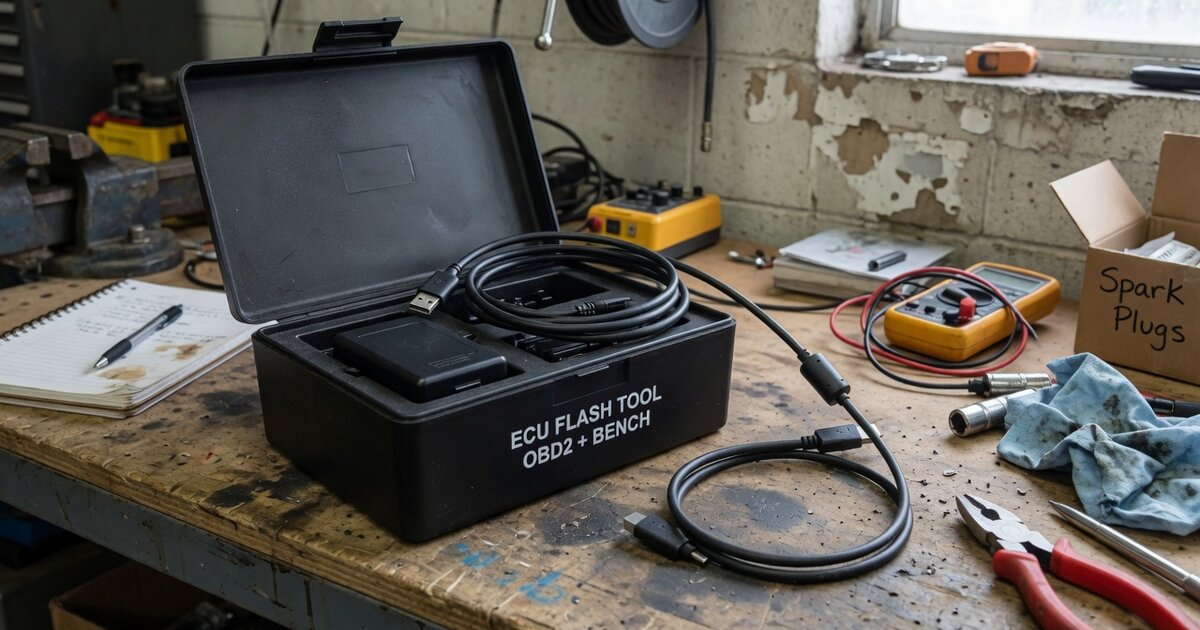
Searches for "CMD ECU tool" almost always land people in the wrong place first — a page about a cheap OBD cable, or a forum thread confusing it with something else entirely. In the professional chip-tuning world, CMD refers to CMDflash, a bench and boot-mode ECU programming platform made by the Swiss company Flashtec S.A. It sits in a noticeably different category from the low-cost interface cables that dominate searches in this niche, and understanding that distinction matters before anyone spends money on it.
This article looks at what CMDflash actually does, what a shop needs to think through before buying into it, and where people commonly go wrong — either by underestimating the tool or by assuming it works like the budget devices it's sometimes lumped in with.
What It Is and What It Does
CMDflash is developed by Flashtec S.A., a company that has been active in the professional ECU reprogramming market since 2004. It's built as a flash and boot-mode programmer aimed at tuning shops and professional technicians, not hobbyists working on a single car in a home garage.
The tool supports several distinct connection methods rather than just one. Over OBD, it communicates via K-line and CAN, and it also supports DoiP over ENET for newer vehicle networks. For VAG-platform files specifically, it works with FRF, ODX, and SGO formats, which matters to anyone who has dealt with the file-format headaches common on those platforms. Where CMDflash separates itself from a basic OBD cable is in bench and boot-mode work: it provides boot-mode access for processor families including ST10, C167, Renesas, TriCore, TC29x, and MPC5777, plus dedicated BDM (Background Debug Mode) support for MPC5xx-based ECUs. That's the kind of direct, chip-level access that lets a shop recover or reprogram units that can't be reached safely over a standard diagnostic connector — the same territory covered more broadly in the site's rundown of ECU tuning tools: piggyback, flash, and standalone options explained.
The other defining feature is the licensing structure. CMDflash is sold across tiered hardware units — commonly described as Master and Slave configurations. A Master unit can read and write unencrypted files without restriction, while Slave units work with encrypted files and, depending on the tier, may be tied to a specific Master rather than operating fully independently. Files can be encrypted and shared securely between Master users, which points to the tool being designed around a workshop network rather than a single standalone device. Hardware also ties into a registered account system, and the vendor notes that stolen units can be locked down remotely — a security measure that's rare among the clone-heavy tools common at the budget end of this market.
What to Consider Before Buying
The first thing to get straight is cost tier. CMDflash pricing sits in the thousands, not in the tens or low hundreds of dollars that budget interfaces typically cost. That's a fundamentally different purchase decision — it only makes sense as a business investment for a shop doing regular bench and boot-mode work, not as a one-off tool for an occasional job.
Second, understand exactly which license tier you're buying. A Slave unit tied to a specific Master won't give you the independent, unrestricted operation that a Master or an unrestricted Slave license provides. If the plan is to run a shop's programming work independently, that distinction changes which configuration is actually worth paying for — and it's easy to assume "Slave" means a cheaper version of the same capability when it may not.
Third, factor in the subscription model. Hardware purchases typically bundle a fixed period of software access — commonly reported as 12 months — after which renewal is required to keep receiving updates and new ECU/vehicle support. Ask the seller directly what renewal costs and how long the bundled period actually covers before treating the sticker price as the full cost of ownership.
Fourth, because this is registered, account-locked hardware, buying secondhand carries real risk. A unit reported lost or stolen can be locked out by the manufacturer, and there's no guarantee a private-sale unit is clean. Buying through an authorized partner, even at a premium, avoids that exposure.
Finally, always confirm current ECU and vehicle coverage directly with the vendor for the specific platforms your shop needs. Coverage expands through software updates over time, so a static spec sheet found online may already be out of date by the time you're comparing options.
Common Mistakes to Avoid
The most common mistake is treating CMDflash as a drop-in upgrade to a budget OBD cable. It isn't built for casual, plug-and-play flashing the way an entry-level interface is — it's built around bench and boot-mode workflows that assume the operator already understands ECU pinouts, power supply requirements, and the risk of physical damage during chip-level access. Shops that have only ever worked with something like the Galletto 1260 OBDII EOBD ECU flashing cable over standard OBD connections should expect a real learning curve before bench work becomes routine and safe.
A second mistake is buying a Slave license expecting full standalone independence, only to find it's tied to a specific Master unit and can't operate on its own. This is exactly the kind of detail that needs confirming with the seller before payment, not after.
Third, buyers sometimes treat the initial hardware price as a one-time cost and get caught off guard by subscription renewal fees once the bundled software period runs out — updates and new coverage don't continue indefinitely for free.
Fourth, skipping proper training before attempting boot-mode or BDM work on unfamiliar processor families is a fast way to damage an ECU. Bench-level access on chips like TriCore or MPC5xx involves direct physical connections that carry real risk if done incorrectly, unlike the comparatively lower-risk OBD flashing common on budget tools such as the one covered in the site's MPPS V21 ECU programming tool guide.
Finally, buyers occasionally shop for CMD on price comparison alone, without first confirming their target ECU families are actually supported. Given the tiered licensing and the vendor-controlled coverage list, it's worth confirming compatibility with the specific vehicles and ECU platforms a shop regularly services before committing to any tier.
Frequently Asked Questions
What does "CMD" stand for in CMD ECU tool?
In this context, CMD refers to CMDflash, a professional ECU programming platform developed by Flashtec S.A. The name is sometimes shortened informally to "CMD" in search queries and forum posts, which is why it can initially get confused with unrelated products.
Is CMDflash the same as the "CMD ECU tool" people search for?
Yes — searches for "CMD ECU tool" in the automotive tuning space are almost always referring to CMDflash. There isn't a widely known separate budget product going by that exact name in this niche.
What's the difference between CMDFlash Master and Slave licenses?
A Master license can read and write unencrypted files without restriction. Slave licenses work with encrypted files, and depending on the specific configuration, may be tied to a particular Master unit rather than operating fully independently. Confirming which tier you're buying — and what it lets you actually do — is essential before purchase.
Does CMDFlash work over OBD, or only in bench/boot mode?
Both. It supports standard OBD communication over K-line and CAN, plus DoiP over ENET for newer networks, in addition to dedicated bench and boot-mode access (including BDM) for ECU families that can't be safely or fully reached over a standard diagnostic connector.
Is CMDFlash worth it for a small independent workshop?
It depends entirely on workload. Given the tiered pricing and ongoing subscription costs, it tends to make financial sense for shops doing regular bench and boot-mode programming work, rather than for occasional or hobbyist use where a lower-cost, OBD-only tool would cover the actual need.
How does CMDFlash compare to budget tools like MPPS or Galletto?
They serve different purposes. Budget interface tools are generally low-cost, OBD-focused devices aimed at straightforward flashing jobs, and the market around them includes a well-known clone problem. CMDflash is a higher-cost, professionally licensed platform built around bench and boot-mode access to ECU families that budget cables typically can't reach, backed by a registered-hardware and subscription support model rather than a single low-cost purchase.