ECU Tuning Tools: Piggyback, Flash, and Standalone Options Explained
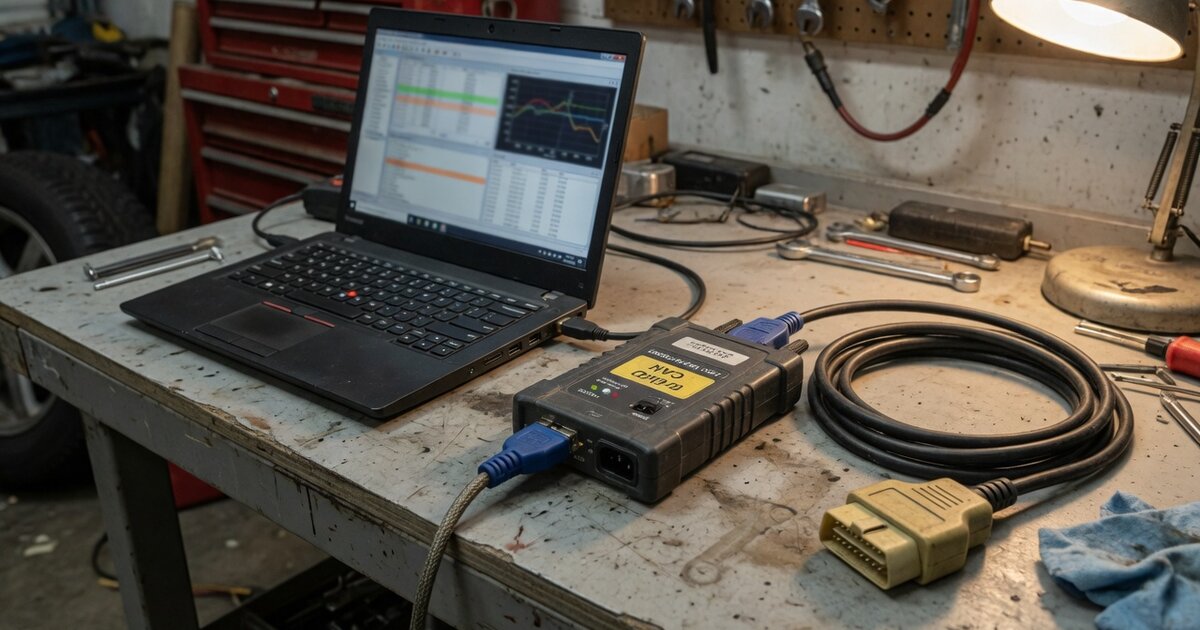
ECU tuning tools are the hardware and software used to change how an engine control unit manages fuel delivery, ignition timing, boost, and related parameters to increase power, torque, or responsiveness. That's a different job from stock reprogramming, which reloads a certified OEM calibration to fix a problem or restore a vehicle to factory spec — a category covered in ECU Reprogramming Tools: Types and How to Choose One. Performance tuning tools instead write custom or modified maps that push the engine beyond its factory calibration, ranging from simple plug-in boxes to full standalone engine management systems. Anyone stocking this category needs to know not just what each tool does, but where it sits legally, since tuning that touches emissions-related parameters is treated very differently from tuning aimed only at closed-course or off-road use.
Types of ECU tuning tools
Performance ECU tuning tools fall into four groups, and the right one depends on how deep the modification needs to go and whether the factory ECU stays in the loop.
Piggyback tuners (interceptors). A piggyback tuner sits in the wiring between the factory sensors and the stock ECU and modifies the signals passing through — for example, adjusting the reported boost pressure or airflow reading so the ECU responds by adding fuel or advancing timing. The factory calibration itself is never rewritten, which is why piggyback boxes are popular for their reversibility: unplug the unit and the car reverts to stock. The tradeoff is that gains are more limited than a direct calibration change, since the tool works around the ECU's logic rather than editing it.
Flash tuners and handheld programmers. These devices connect through the OBD-II port and rewrite the ECU's internal maps directly, the same access point used for reflashing tools, but loaded with performance calibrations instead of OEM files. Some handhelds ship with pre-validated "off-the-shelf" maps for common fuel grades and bolt-on combinations; others load a custom file built by a dyno tuner for one specific vehicle. Flash tuning generally reaches more of the ECU's internal calibration than a piggyback can, since it edits the stored tables rather than intercepting sensor data.
Standalone engine management. A standalone ECU replaces the factory unit entirely with an aftermarket engine management system programmed from scratch. This is the route for builds that outgrew what the stock ECU's sensors, injector drivers, or ignition outputs can support — heavily modified turbo setups, engine swaps, or race applications with hardware the factory calibration was never written for. Standalone systems need custom wiring, sensor calibration, and a base map built from zero, making them the most expensive, most labor-intensive category to install.
OBD-based tuning devices and apps. A growing segment plugs into the OBD-II port and pairs with a phone or laptop app to adjust a narrower set of parameters, log data in real time, or push a downloaded tune. These overlap with handheld flash tuners in function but lean on a connected app rather than a standalone screen, and some target monitoring and mild adjustment more than full remapping.
Shops already carrying diagnostic and key-programming equipment, including the gear covered in Automotive Locksmithing Tools: Programmers, Cutters & Decoders Explained, will find some overlap at the OBD-II hardware layer, but tuning tools and key/immobilizer programmers serve different jobs and are usually sold as separate lines.
Legal and practical considerations
Performance ECU tuning is not automatically illegal, but tuning that alters how emissions control systems behave is restricted in most places a vehicle is driven on public roads. In the United States, the Clean Air Act prohibits tampering with or disabling emissions controls on a road-going vehicle, and the EPA has pursued this aggressively: companies that made, sold, or installed devices designed to defeat diesel emissions systems have faced multimillion-dollar penalties in recent enforcement actions. Tunes and hardware certified under a CARB Executive Order (EO) number are recognized as compliant for use on emissions-controlled vehicles in states that follow California rules; anything without that certification is legally exposed even when marketed as a simple bolt-on product.
The practical line most shops draw is between street-legal tuning and track-only or off-road tuning. A tune that leaves emissions equipment (catalytic converters, EGR, DPF, evap systems) functional and stays within a CARB-approved calibration is generally treated as street legal where that certification applies. A tune built for maximum output on a car that will only see a dyno, a closed track, or off-road use is a different product, and selling or installing it as street legal is where enforcement risk concentrates. Buyers should expect a state or local emissions inspection to flag a modified calibration, and treat reverting to a stock or certified tune before inspection as routine.
Common mistakes to avoid
The most common technical mistake is tuning by feel instead of by data — adjusting a map based on how the car "seems" to pull and never logging air-fuel ratio, knock, timing, boost, and temperatures during a pull. Without a log, trends like creeping knock retard or a leaning-out condition at high RPM stay invisible until something fails.
A second recurring problem is mixing tuning platforms on one vehicle. Flash tools from different vendors often "marry" themselves to a specific ECU rather than handing off cleanly to a competing tool; switching platforms mid-project frequently requires an unmarry or full ECU reset step that is easy to skip and hard to diagnose afterward.
Buyers also underestimate compatibility: a handheld tuner's off-the-shelf maps are usually written for a specific fuel octane and set of supporting modifications, and loading a map built for a heavily modified car onto a mostly stock one (or the reverse) can produce a tune that runs poorly or unsafely. And treating "it plugs into the OBD port" as proof a device is street legal is a mistake that shows up constantly — port compatibility says nothing about whether the resulting calibration meets emissions requirements in a given state.
Frequently asked questions
What's the difference between a piggyback tuner and an ECU flash?
A piggyback tuner intercepts and modifies sensor signals between the engine and the factory ECU without rewriting its internal calibration, so unplugging it restores stock behavior instantly. An ECU flash rewrites the calibration inside the factory ECU directly, giving access to more parameters and generally larger gains, but it changes the stored tune rather than working around it.
Do I need a standalone ECU for my build?
Standalone engine management is generally reserved for builds where the factory ECU's hardware limits — injector drivers, sensor inputs, ignition outputs, or the calibration structure itself — can no longer support the modifications, such as major turbo upgrades, engine swaps, or race-specific hardware. For most street and mild performance builds, a flash tune or piggyback tuner working with the stock ECU is sufficient and far less involved to install.
Are handheld ECU tuning devices legal to use on the street?
It depends on what the tune changes. Devices and calibrations that leave emissions control systems intact and hold applicable certification (such as a CARB EO number where required) are generally treated as legal for street use. Tunes that disable or bypass emissions equipment are restricted under the Clean Air Act for road use in the US, and selling or using such devices on public-road vehicles has led to significant EPA enforcement against manufacturers and installers.
Can I use two different tuning tools on the same vehicle?
Not safely, in most cases. Competing flash platforms often "marry" themselves to the ECU, and switching tools without properly unmarrying or resetting the ECU first can leave the vehicle in an unpredictable state. Moving from one tuning platform to another should be a planned step, not a matter of simply connecting a second tool.
Will an ECU tune void my vehicle's warranty?
Modifying the ECU calibration can affect warranty coverage for related components, and dealers can decline claims where a non-stock tune is a contributing factor. Many tuning tools can revert a vehicle to its factory calibration before a dealer visit, but that does not erase evidence of prior tuning that may be logged elsewhere in the vehicle's modules.
What should I check before buying an ECU tuning tool?
Confirm the tool is validated for the specific make, model, model year, and engine, since tuning hardware and maps are rarely universal the way general reprogramming tools can be. Check whether its maps assume supporting modifications the vehicle doesn't have, whether it supports logging so a tune can be verified rather than guessed at, and whether the calibration carries emissions certification if the vehicle will be driven on public roads.