Denso ECU Tool: What It Actually Means and What to Use
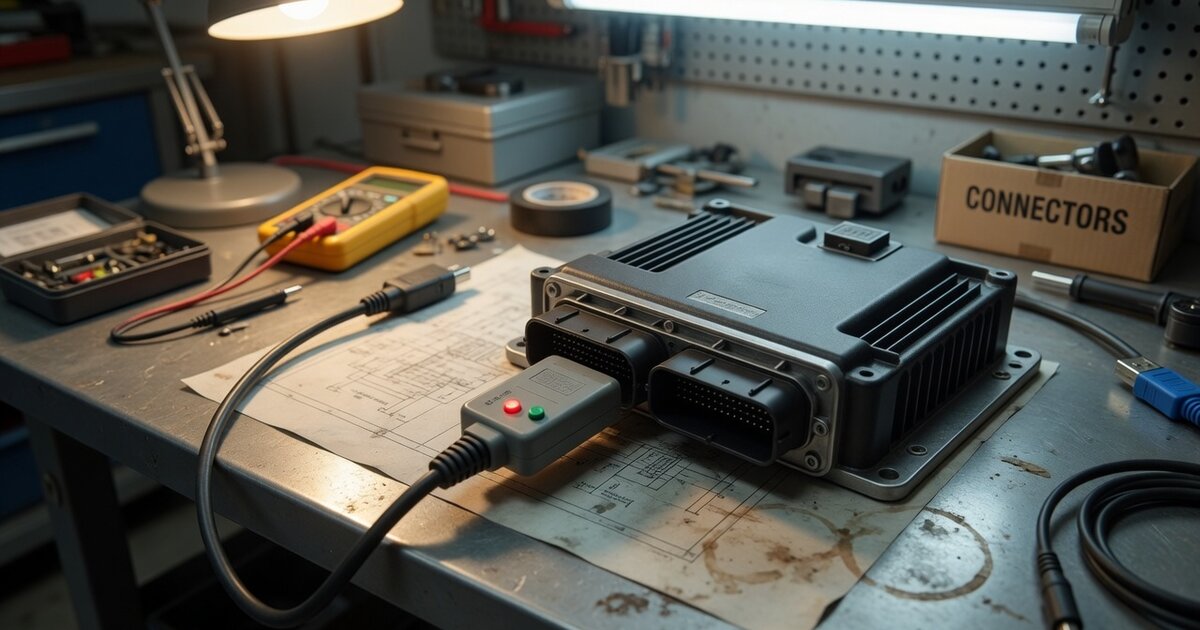
"Denso ECU tool" is a search term worth pausing on before you spend money on one. Denso is one of the world's largest automotive parts suppliers and one of the primary manufacturers behind the engine control units in Toyota, Lexus, Subaru, and other Japanese-market vehicles — but Denso itself does not sell a retail box labeled "Denso ECU tool." What technicians and locksmiths actually mean by that phrase usually falls into one of a few buckets: multi-brand bench or boot-mode ECU programmers that include a Denso protocol module, dealer-level programming software, or bench tools used to pull key and immobilizer data off a Denso-built module. This article sorts out what Denso ECUs actually are, what people really use to work on them, and where technicians most commonly go wrong.
What Denso ECUs are and why they need dedicated tools
Denso Corporation is a Japan-based Tier 1 automotive components manufacturer headquartered in Kariya, Aichi Prefecture, founded in 1949. In North America it's best known at the parts counter for spark plugs and filters, but its core business is broader: powertrain electronics, climate control, safety systems, and, relevant here, engine control modules. Denso is roughly one-fifth owned by Toyota, which explains why its ECUs are so common on Toyota and Lexus platforms, but the relationship isn't exclusive — reporting on the company has noted sales to the Toyota group make up under half of its total revenue, and Denso also supplies electronics used by Honda, Subaru, Acura, and other automakers.
That OEM relationship is exactly why "Denso ECU tool" is a confusing phrase in the first place. Denso doesn't build ECUs as a branded product line for the aftermarket; it engineers and manufactures them to each automaker's own specification. A Denso-made ECU in a Toyota Corolla and a Denso-made ECU in a Subaru can run different memory layouts, checksum routines, and immobilizer security algorithms, even though both carry a Denso part sticker. For background on what an engine control unit actually does before diving into brand-specific tooling, see our overview of what an ECU/ECM does and how it works. In practice, Denso units are often locked down tighter at the OBD port than some European ECUs, which is why technicians frequently need direct bench or boot-mode access — connecting to the processor pins with the ECU out of the car, or forcing it into a low-level boot state — instead of doing everything through a diagnostic connector.
Tools used for Denso ECU work
Because there's no single official "Denso tool," what actually shows up in a shop doing this work generally falls into three categories.
The first is multi-brand flash and bench programming platforms. These are general-purpose ECU programmers where the Denso protocol is one of several manufacturer modules supported alongside Bosch, Continental, Delphi, and others, rather than a Denso-exclusive device. That same category of hardware — and how it differs from signal-intercepting piggyback units — is covered in our breakdown of piggyback, flash, and standalone ECU tuning tools. The short version: flash-type tools read and write the ECU's memory directly, which is the approach Denso bench and boot work generally requires, unlike a piggyback module that only intercepts sensor signals without touching the ECU's own code.
The second category is OBD-based flashing tools scoped to a specific ECU family, and it's worth being precise here so you don't buy the wrong thing. A tool such as the MPPS V21 ECU programming tool is built around Bosch EDC/ME diesel and gasoline ECU families accessed over OBD — not Denso hardware. Denso and Bosch use different communication protocols and security schemes at the ECU level, so a programmer built around one manufacturer's ECUs generally doesn't carry over to the other. Before buying an OBD flasher for a Denso-equipped vehicle, check its supported manufacturer/ECU list rather than assuming broad coverage.
The third category — and the one most relevant to locksmiths — is dealer-level or dealer-equivalent diagnostic and key/immobilizer systems. For Toyota and Lexus, that typically means factory software such as Techstream run through a J2534 pass-through interface for ECM programming, plus separate key and immobilizer procedures that may involve the engine ECU, a dedicated immobilizer ECU, or the smart-key control unit, depending on model year. Locksmith bench tools that read EEPROM or flash memory off a Denso engine or immobilizer module to recover key data (commonly called ISN or similar security codes) sit in this same bucket, and they're usually marketed around the vehicle platform — Toyota, Lexus, Subaru — rather than the word "Denso" itself.
Common mistakes to avoid
- Buying on the word "Denso" alone. A listing that says "Denso ECU tool" without naming supported vehicles, ECU families, or protocol versions is not enough information to confirm it will work on the ECU in front of you.
- Assuming one purchase covers every Denso ECU. Denso supplies dozens of automakers and multiple ECU generations; a bench adapter or protocol license that works on one platform's Denso unit may not cover another.
- Forcing OBD programming when the procedure calls for bench or boot mode. Attempting a full flash over OBD on an ECU that requires bench access can leave it non-communicating, and Denso units are not always as forgiving of interrupted OBD sessions as some other brands.
- Skipping the backup. Always do a full read of the original EEPROM/flash contents before writing anything. Without a verified backup, a failed write on a Denso ECU can mean a dead module with no way back.
- Running bench work on unstable power. A voltage dip mid-write during bench or boot-mode programming is one of the more common causes of a corrupted Denso ECU, and it's avoidable with a proper regulated bench supply.
- Treating "Denso" and "Toyota" as interchangeable. It's easy to default to Toyota/Lexus assumptions and forget that Subaru, Honda, and other Denso-equipped platforms can use entirely different data layouts and immobilizer logic.
Frequently asked questions
Is there an official Denso-branded ECU programming tool for aftermarket or locksmith use?
No. Denso is an OEM/Tier 1 component manufacturer that builds ECUs to order for automakers; it does not market a standalone retail programming tool under its own name for independent shops. What people call a "Denso ECU tool" is almost always a multi-brand bench/boot programmer, a piece of dealer software, or a locksmith bench tool that happens to support the Denso protocol as one of many it handles.
Can I program a Denso ECU over plain OBD, or do I need bench/boot mode?
It depends on the ECU generation, the vehicle, and exactly what you're trying to do. Some diagnostic-level updates can be done over OBD through dealer-equivalent software, but full reads/writes and many immobilizer-related procedures on Denso units are commonly done with the ECU on the bench or forced into a boot state, since that gives direct access that the locked-down OBD interface doesn't always allow.
Which vehicles are most likely to have a Denso-made ECU?
Toyota and Lexus are the most consistent, given Denso's partial Toyota ownership, but Denso also supplies engine and electronic control components to Subaru, Honda, Acura, and other manufacturers. The only reliable way to confirm it on a specific car is to check the ECU's part sticker or part number rather than assuming by make alone.
What's the difference between reading a Denso ECU and programming (flashing) one?
Reading pulls existing data off the ECU — calibration, VIN, security/ISN data — without altering anything, and is the safer first step. Programming or flashing writes new data into the ECU's memory, which carries real risk if the process is interrupted or the wrong file/protocol is used, so it should only be attempted after a verified backup.
Do I need Toyota or Lexus dealer software for Denso ECU key work?
For fully OEM-compliant procedures, dealer software such as Techstream with a J2534 pass-through device is often the reference method automakers document. Aftermarket and locksmith bench tools can substitute for parts of that workflow — particularly key/immobilizer data recovery — but they don't always replicate every dealer function, so confirm what a given tool actually covers for your specific model year before relying on it.
What's the single biggest risk when working on a Denso ECU?
Bricking the module by writing to it without a verified backup, with unstable bench power, or with the wrong protocol for that ECU generation. The fix isn't a specific tool — it's discipline: read and save the original data first, confirm the correct protocol before writing, and keep bench power stable throughout the session.