Door Picking Tools: A Locksmith's Buying Guide
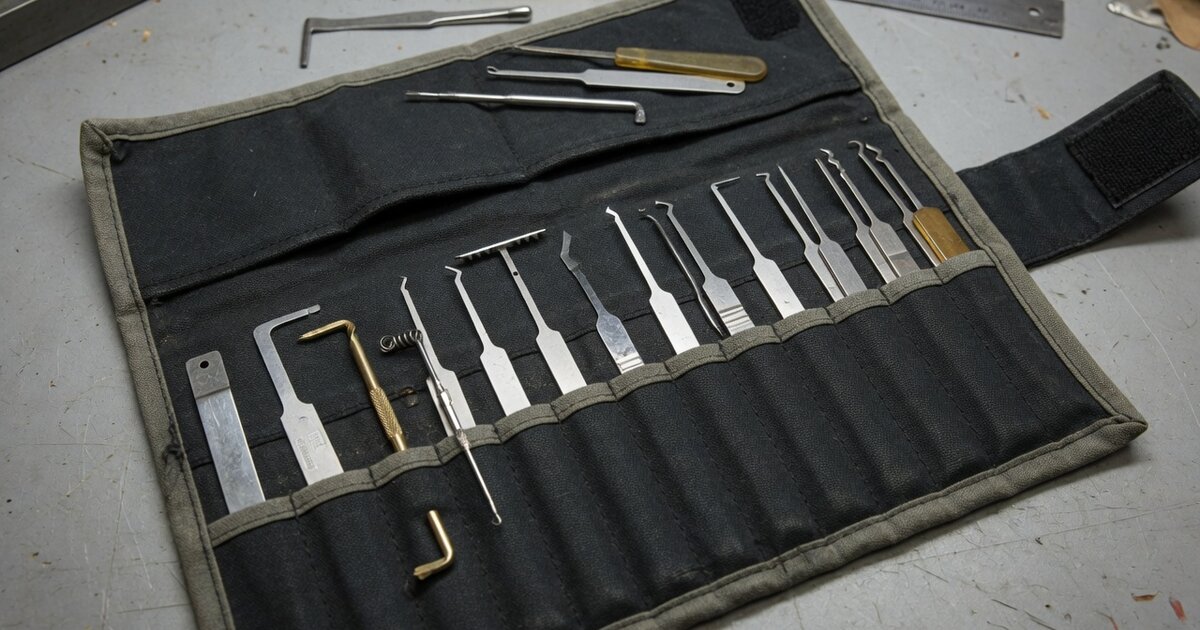
"Door picking tools" is the trade term for the hardware locksmiths, tow operators, and dealership service staff carry to open a locked vehicle without cutting or programming a key: tension wrenches, pick sets, air wedges, and long-reach tools. This is professional equipment for licensed locksmiths and other authorized personnel performing lockouts on vehicles they own or are contracted to open, and reputable suppliers restrict sales to verified trade accounts rather than the general public. Before any lockout, standard practice is to confirm ownership or authorization on the job, whether or not a given supplier enforces that at checkout. If you want the technique and legal background behind this equipment, our companion article, Auto Lock Picker: Tools and Techniques Professional Locksmiths Use, covers that ground. This guide stays on the buying side: what each tool does, what separates a set that lasts from one you will replace in a month, and how to avoid spending a training budget on the wrong kit.
Tool types and what to look for
Tension wrenches
A tension wrench applies light rotational pressure to the lock plug while a pick sets the wafers or pins, holding them in place as they clear the shear line. Automotive tension tools tend to run shorter and narrower than residential ones because vehicle door and ignition locks are often tighter and shallower. Material matters more than shape: spring steel or hardened stainless flexes under pressure and springs back, while cheap stamped steel takes a permanent bend after a handful of uses and starts throwing off your feel for the lock. A useful set includes a few widths and profiles rather than one universal blade, since a tension tool sized for a wafer lock will feel wrong in a tighter door cylinder.
Pick sets
Many vehicle door and ignition locks use wafers rather than pins, so automotive pick sets lean on jiggler and wafer picks alongside standard hooks and rakes. The difference between a usable set and a frustrating one usually comes down to tip machining: a precisely ground, tempered tip holds its edge and gives consistent feedback, while a soft-alloy tip dulls or bends after light use and stops transmitting anything useful back to your hand. Automotive pick sets on the market range from compact kits of a dozen or so pieces up to bundles running past fifty pieces with tension wrenches included. A larger piece count is not automatically better; buy toward the lock families you actually service rather than toward the biggest box on the shelf.
Air wedges
An air wedge is an inflatable rubber or nylon bladder inserted at the top corner of a door and pumped up to create clearance for a long-reach tool, without the paint damage, bent weatherstripping, or cracked window seals that a rigid pry tool can cause. Quality differences show up in the bladder material and construction: a reinforced double-wall wedge holds pressure and resists punctures, while a thin single-layer version can fail under load or tear against a door edge. Wedges are typically sold in more than one size, since the gap you can safely open varies by door design and vehicle type, and matching wedge size to the vehicle matters more than buying the largest one available.
Long-reach tools
A long-reach tool is a rigid or semi-rigid rod, usually with a soft vinyl-coated tip, that passes through the gap an air wedge creates to reach an interior lock button, handle, or linkage. Length needs to match the vehicles you actually work on; some suppliers offer extra-length rods well past two feet for larger trucks and SUVs where the lock mechanism sits further from the door edge. Beyond length, look for interchangeable or replaceable tips, since the tip shape that works on one interior layout can be useless on another, and a rust-resistant coating on the rod itself, since these tools spend a lot of time being handled with wet or gloved hands in the field.
Building a kit vs buying pre-made sets
Pre-made starter kits bundle a tension wrench selection with a broad pick set and sometimes a case, and they are a reasonable way to get broad lock-family coverage without researching every individual piece. If you are new to the trade or still deciding which vehicles you will specialize in, our guide to Locksmith Tools for Beginners: Building a Starter Automotive Kit walks through assembling that first kit deliberately rather than buying whatever bundle is cheapest. Once you have logged real jobs, the better move is usually to build outward from that base: replace the picks and tension tools you reach for constantly with higher-grade individual pieces, and skip restocking the ones that sit unused for the lock families you rarely see. A smaller kit of pieces you trust beats a large bargain-bin set padded with tools that bend on first use.
Common mistakes to avoid
The most common mistake is buying hobbyist sport-picking sets aimed at the lock-picking hobby community rather than trade-grade automotive tools; they are built for practice locks, not for holding up under repeated field use on vehicle wafer locks. A close second is choosing a set purely on piece count or price and ignoring the steel spec, which is how a kit ends up full of bent tension wrenches within a few months. On the entry side, skipping a proper air wedge in favor of improvised wedging tools risks paint and trim damage that a client will notice immediately. It also pays to think about the whole service call rather than just entry: a lockout often turns into a job that also needs a replacement key cut on site, and showing up without that capability means a second visit; our overview of Portable Key Cutters: How Handheld Key Cutting Tools Work covers what to look for there. Finally, treat your case as part of the tool: loose picks rattling around a bag dull tips and bend tension wrenches faster than actual use does.
Frequently asked questions
What is the difference between automotive and residential lock pick sets?
Automotive sets are weighted toward jiggler and wafer picks with shorter, narrower tension wrenches, matching the wafer-style locks common in vehicle doors and ignitions. Residential sets carry more pick profiles and depths for pin tumbler locks and tend to include longer tension tools for deeper house cylinders. There is overlap, and many working locksmiths carry pieces from both categories, but a kit bought specifically for cars will get you working faster than a general-purpose set.
Do suppliers require a license to buy door picking tools?
Many locksmith supply companies sell this category of tool only to verified trade accounts, including licensed locksmiths, towing companies, auto repossessors, and new or used car dealers, rather than to the general public. Requirements vary by supplier and by state, so check a given company's account terms before assuming you can buy at retail.
Is a bigger piece-count kit always the better buy?
No. A fifty- or sixty-piece kit padded with picks and tension tools you will never use for the vehicles you service is not better than a smaller kit built around the lock families you actually encounter. Piece count is a marketing number; steel quality and tip precision are what determine whether the kit holds up.
Are air wedges safe to use around side curtain airbags?
Placement matters. Many vehicles route side curtain airbag modules and sensors along the upper door frame, so it is worth checking vehicle-specific lockout guidance from your tool supplier or a service database before placing a wedge, rather than assuming every door frame is equally clear.
How do I know when to replace a tension wrench or pick?
Visible bending that does not spring back is the clearest sign; spring steel and quality stainless are built to flex and return to shape, so a permanent bend means the piece has already lost the properties you bought it for. A tip that no longer holds a sharp edge or feels different in the lock than it used to is worth retiring as well.
Can one long-reach tool work on every vehicle?
Not reliably. Interior door layouts, lock button shapes, and handle linkages differ enough across vehicle types that a single rod and tip combination will not reach or trip every mechanism. Stocking a couple of tip styles and at least one extra-length rod covers far more calls than a single all-purpose tool.