How Car Keyless Entry Remotes Actually Work
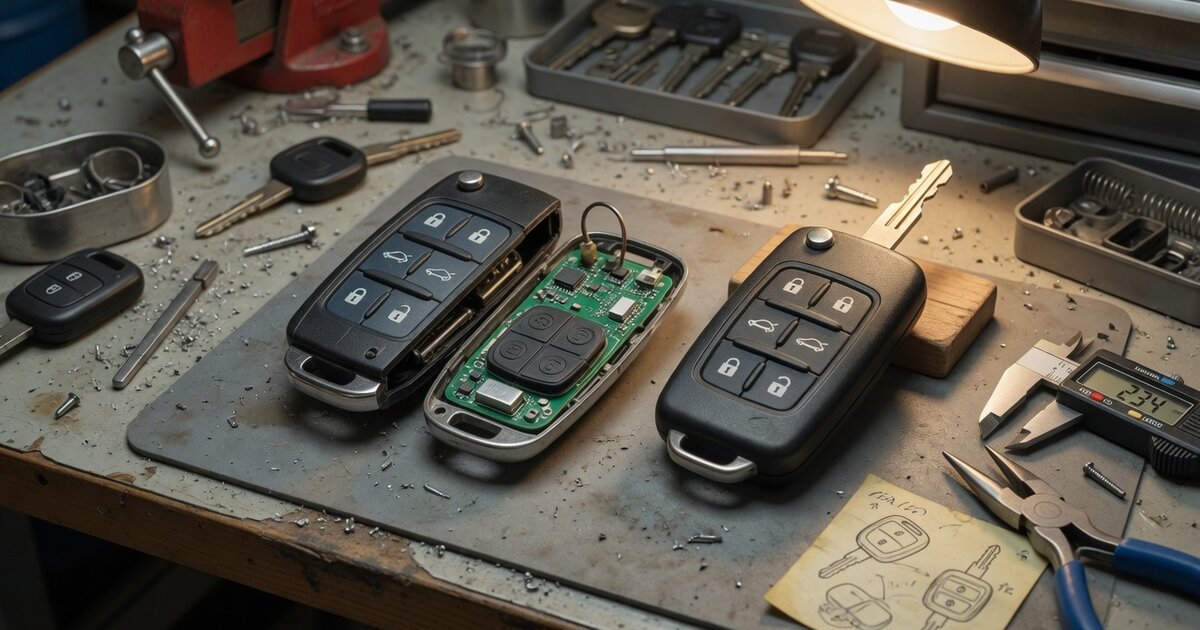
Press the lock or unlock button on a key fob from across the parking lot and the car responds before you even touch the door handle. It feels effortless, but that instant reaction is the end result of a small radio transmitter, an encrypted rolling code, and a receiver module quietly talking to the car's onboard computer network. Car remote control keyless entry, usually shortened to RKE, has been standard equipment on new vehicles since the 1990s, and it remains one of the most-replaced electronic parts on any car simply because fobs get dropped, soaked, or outlive their batteries. Understanding how the system actually works makes it much easier to tell a dead battery from a real fault.
How Car Keyless Entry Remotes Work
Every remote keyless entry system is built from three parts: the transmitter inside the fob, a receiver antenna built into the vehicle, and the body control module (BCM) that decides what to actually do with the signal. Press a button and a small chip inside the fob generates a radio frequency (RF) signal — almost always around 315 MHz in North America or 433 MHz across Europe — and broadcasts it as a short digital data packet, typically 64 to 256 bits sent in a fraction of a second.
That packet isn't just an "unlock" command. It also carries a rolling code (sometimes called a hopping code), a value that changes with every button press according to an algorithm shared only by the fob and the car. This is the feature that keeps someone from recording your signal with a cheap radio and replaying it later — the previous code is no longer valid once a new one has been generated. The car's receiver demodulates the RF burst and passes the decoded data to the BCM, usually over the vehicle's internal CAN or LIN bus. The BCM checks the rolling code and the fob's unique ID against what it expects, and only then sends the command out to the door lock actuators, alarm system, or trunk release.
It's worth separating two systems that get lumped together under "keyless entry." Standard RKE is active: you have to press a button, and the fob only transmits when you do. Passive keyless entry (PKE), found on most vehicles with push-button start, works differently — the car continuously polls for a nearby key using a low-frequency signal, and the fob answers automatically as you approach, unlocking the doors without ever touching the remote. Both use the same rolling-code logic underneath, but PKE's constant proximity communication is also what created the relay-attack vulnerability reported widely in recent years, where thieves use two linked devices to relay the fob's signal from inside a house out to a car in the driveway.
What to Consider and Common Issues
Range and reliability come down to a handful of physical factors, and most complaints trace back to one of them. Battery voltage is the biggest one — as a CR2032 or similar coin cell ages, the fob's transmit power drops gradually, so the classic symptom is a remote that used to work from thirty feet away and now only unlocks the door up close. That's a battery problem, not a receiver problem, and it's worth ruling out first.
Physical condition matters just as much. Buttons that feel mushy or don't spring back usually mean the rubber contact pad has worn down or the circuit board has corroded, which is common after a fob has spent time in a wet pocket or cup holder. Cracked housings let moisture in gradually even without an obvious spill. On the vehicle side, the receiver antenna's location and interference from aftermarket electronics or LED lighting can shrink effective range, which is why a fob that works fine in an open lot sometimes struggles in a parking garage.
Programming is another common failure point unrelated to the fob's hardware. A remote can lose its pairing to the BCM after a battery disconnect or software update, and in that state pressing the buttons does nothing even with a fresh battery installed. If you're shopping for a replacement rather than repairing an existing unit, it helps to understand the different remote types and how each gets matched to a vehicle, covered in more detail in this guide to aftermarket keyless remotes. When a fault genuinely sits on the vehicle side — a receiver that won't learn any fob, or intermittent BCM errors — a shop will typically confirm it with the kind of scan tools described in this overview of car diagnostic tools before replacing parts.
Common Mistakes to Avoid
The most frequent mistake is assuming a weak or dead remote automatically means an expensive repair. Nine times out of ten, a short-range or unresponsive fob just needs a new battery, and that's a five-minute job with a small screwdriver rather than a trip to a locksmith or dealer.
Buying a replacement remote without confirming it matches the vehicle's exact frequency and FCC ID is another common misstep — a fob that looks identical online can still be built for the wrong model year and will never pair correctly. It's also worth resisting the urge to keep mashing buttons when a remote seems unresponsive; on some systems, repeated failed attempts can desynchronize the rolling code counter enough that the fob needs a full resync instead of a simple re-pair.
People also tend to wait until they're down to their last working key before doing anything, which is risky since losing that final fob can mean towing the car. Getting a spare cut and programmed while the original still works is far cheaper, and the process for that — including where it overlaps with ordering a standalone remote — is explained in this piece on car key duplication. Finally, owners of push-button-start vehicles often overlook relay-attack risk entirely; a basic signal-blocking pouch or keeping the fob away from exterior doors and windows overnight closes off the easiest version of that attack at essentially no cost.
Frequently Asked Questions
What's the difference between remote keyless entry and passive keyless entry?
Remote keyless entry (RKE) requires you to press a button on the fob to send a command. Passive keyless entry (PKE) works automatically — the car and key constantly exchange low-power signals, so doors unlock and the engine can start as long as the fob is nearby, without any button press. Most push-button-start vehicles combine both: passive entry for convenience and active buttons as a backup.
Why does my key fob only work when I'm right next to the car?
This is almost always a weakening battery. As the coin cell inside the fob loses voltage, its transmit power drops, so effective range shrinks gradually before the remote stops working entirely. Interference from parking structures or a damaged receiver antenna can also reduce range, but a fresh battery is the first and cheapest thing to try.
Can I reprogram a keyless entry remote myself?
On many vehicles, yes — manufacturers support a simple in-car procedure using the ignition or door locks to put the BCM into programming mode, then have you press a button on the fob to pair it. Other vehicles require a dedicated key programming tool because the BCM won't accept a new fob ID without a security handshake a button sequence can't provide.
Do all car remotes use the same radio frequency?
No. North American vehicles typically use around 315 MHz, while European and many other markets use 433 MHz. A replacement remote built for the wrong frequency will not communicate with the vehicle's receiver even if the button layout and case look correct.
Can someone intercept my keyless entry signal and unlock my car?
A simple replay of a recorded signal doesn't work against modern rolling-code systems, since each transmission is only valid once. The real risk is different: on passive entry systems, thieves have used relay devices to extend the fob's passive signal from inside a house out to the car, tricking it into thinking the key is nearby. Storing the fob in a signal-blocking pouch at night is the standard defense against that specific technique.
How long does a key fob battery usually last?
Most coin-cell fob batteries last one to three years depending on usage frequency and the fob's design. A fob that's been getting noticeably slower to respond or shorter in range over a period of weeks is showing classic battery-drain symptoms rather than a sudden hardware failure.