Key Cutting Kiosk Near Me: What They Can (and Can't) Cut
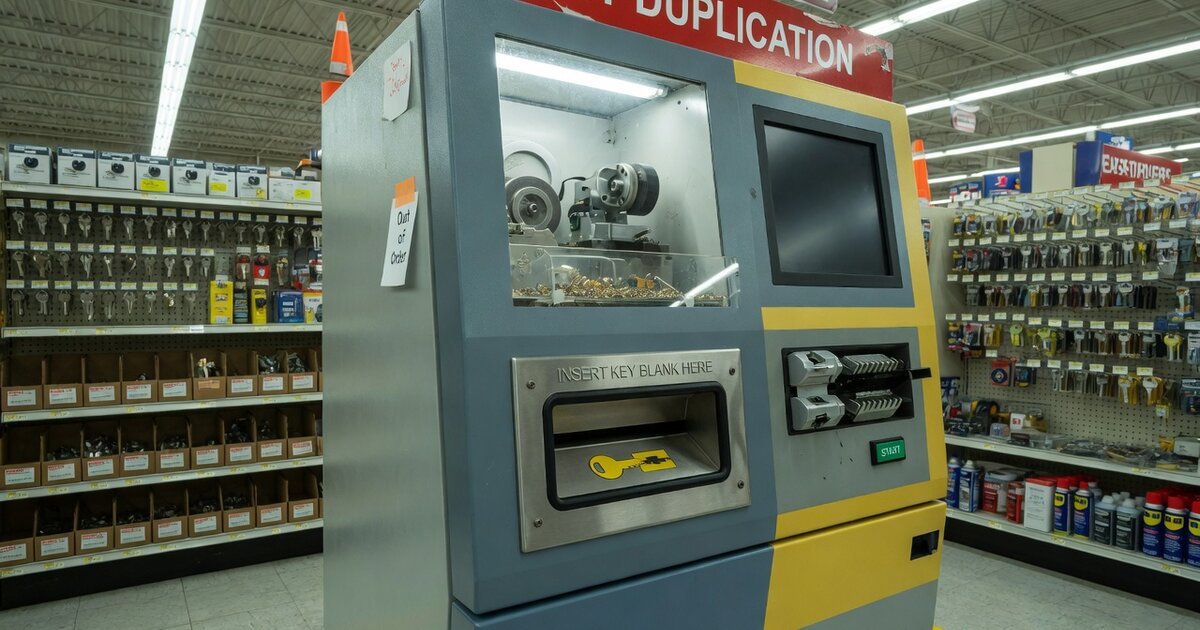
Typing "key cutting kiosk near me" usually means you are standing in a supermarket or hardware store aisle, looking at a self-service machine, and wondering whether it can solve your problem right now. For a basic house key, the answer is often yes. For a modern car key, the answer is more complicated - and knowing the difference before handing over your only working key can save you a wasted trip. This guide covers how kiosks work, what they can and cannot cut, and the mistakes people make when they assume a supermarket machine can replace a locksmith or dealership for a transponder or smart key.
How key-cutting kiosks work
Self-service kiosks from brands like minuteKEY and KeyMe are found in retailers such as Walmart, Lowe's, Kroger, 7-Eleven, and Rite Aid. The process is built around optical scanning rather than the manual tracing a locksmith uses on a traditional duplicating machine. You insert your original key, and the kiosk's analysis system first identifies the key type from a database of preselected profiles, then optically scans the blade to build a digital model of the cuts, pulls a matching blank from inventory, and mills the new grooves to match.
This computer-vision approach is a step up from older copy machines that physically trace a worn key and reproduce its wear along with it. Because the kiosk works from a digital model rather than a mechanical trace, manufacturers report high first-try success rates for standard keys. The whole cycle, from inserting the original to the machine dispensing a finished copy, typically takes only a couple of minutes.
What the kiosk cannot do is anything requiring electronics work. It has no way to read a car's immobilizer system, write data to a transponder chip, or pair a new remote to a vehicle's onboard computer. That is a fundamentally different job from cutting metal, which is why understanding car key duplication explained: how it works and what to know matters before you assume a kiosk can hand you a working spare for your vehicle.
What they can (and can't) cut
Kiosks are built around the keys that make up the bulk of everyday duplication requests: standard residential door keys from major brands, office keys, padlock keys, cabinet and mailbox-style keys, and basic car keys that are just cut metal with no embedded chip. If your key is a plain mechanical key with no black plastic head or electronic remote attached, a kiosk is very likely to handle it.
Where kiosks draw a hard line is anything stamped "Do Not Duplicate," restricted or high-security key systems, and, for this site's readers, most transponder and smart keys used in cars built since the late 1990s. A basic minuteKEY-style kiosk is not equipped to duplicate a chipped car key at all - it only cuts the metal blade of a non-chip key and screens out fob-related copies at the self-service slot. KeyMe kiosks go further: they advertise support for a large share of automotive keys by scanning the transponder's identifying data when you place the fob against the reader, then cutting a matching blade and coding a replacement transponder. Even then, the process is not always an instant walk-away transaction the way a house key copy is - depending on the vehicle, the finished key can be mailed rather than dispensed on the spot, and pricing for fob and transponder work runs well above the flat rate for a basic house key.
Compare that to what a locksmith carries in a service vehicle. Dedicated automotive key cutting machines explained in professional shops cut the mechanical blade to factory tolerances and, paired with an OBD-II programming tool, read and write the vehicle's immobilizer data in the same visit - something no retail kiosk attempts. Mobile locksmiths also rely on portable key cutters: how handheld key cutting tools work to cut on-site from the vehicle's lock or key code and program the transponder immediately, so you leave with a working key rather than a mailed part.
In short: if you need a spare house key, a mailbox key, or a plain non-chip car key, a kiosk is a fast and usually inexpensive option. If you need a working replacement for a transponder key, proximity fob, or push-button smart key, a kiosk is at best a partial solution and at worst a dead end that wastes a trip.
Common mistakes to avoid
A few avoidable errors show up again and again with kiosk key copying, especially from drivers who searched for a kiosk expecting an automotive fix:
- Bringing your only working car key. If a kiosk cannot finish the job on the spot, or needs to mail a coded transponder, you could be left without a working key for days. Never make a kiosk your first stop when you are down to your last automotive key.
- Assuming any car key qualifies. Many kiosks screen out fob and chip keys automatically, and even ones that attempt automotive work do not cover every make and model. Check the machine's prompts before you commit rather than assuming compatibility.
- Duplicating a worn key. A key worn smooth by years of use can produce a copy that reproduces the wear instead of the factory-correct depth, leading to a key that turns stiffly or not at all.
- Expecting an instant fob. Fob and transponder duplication through a kiosk is often not an on-the-spot process; treat any quoted turnaround as an estimate, not a guarantee.
- Not checking the price first. Transponder and fob duplication costs far more than a plain key copy - confirm the price on screen before inserting your original.
- Trying a restricted key anyway. Keys stamped "Do Not Duplicate" or on a restricted keyway are meant to be copied only with owner authorization - a kiosk is not the place to work around that.
Frequently asked questions
Can a key-cutting kiosk cut a transponder or chip car key?
It depends on the kiosk and vehicle. Basic minuteKEY-style units are built for plain mechanical keys and do not attempt chip keys at all. Some KeyMe kiosks can scan a transponder's data and produce a coded replacement for many vehicles, but coverage is not universal, and the finished key is sometimes mailed rather than handed to you immediately. For smart keys, push-button fobs, and many late-model vehicles, a locksmith with dedicated automotive programming equipment is the more reliable route.
Where can I actually find a key-cutting kiosk near me?
The two most common self-service brands, minuteKEY and KeyMe, place kiosks in high-traffic retail locations - minuteKEY is widely found inside Walmart and Lowe's stores, while KeyMe kiosks are common in Kroger-family grocery stores, 7-Eleven, and Rite Aid. Each brand offers an online store locator or app so you can confirm a nearby machine before making a trip.
How much does a kiosk key copy cost?
Pricing varies by kiosk and key type. A plain house or office key copy is generally inexpensive and priced as a flat rate. Fob and transponder key copies cost substantially more, since they involve reading and coding electronic data on top of cutting metal - check the price on screen before committing your original key.
Is a kiosk-cut key as reliable as one cut by a locksmith?
For standard, non-chip keys in good condition, optical scanning and computer-controlled cutting deliver high first-try success rates and can be just as reliable as a shop-cut duplicate. Reliability drops when the original key is heavily worn, when the key type falls outside the kiosk's database, or when any electronic programming is involved - situations where a locksmith's judgment and equipment matter more.
Can a kiosk program a key fob to work with my car?
Some kiosks can code a replacement transponder as part of producing a fob copy, but none of the common retail kiosks perform full onboard immobilizer programming or remote pairing the way a locksmith's OBD-II based programmer does. If your vehicle needs a key paired directly to its computer, that step is outside what a self-service kiosk offers.
What should I bring if I actually need a spare car key made?
Bring your existing working key and vehicle registration, and be ready to describe the exact trim and key type if you go to a locksmith or dealership rather than a kiosk. If your vehicle uses a transponder or smart key, calling ahead to confirm the shop stocks the correct blank and programming tool saves a second visit.