Keyless Car Replacement: What to Do When You Need a Proximity Key Now
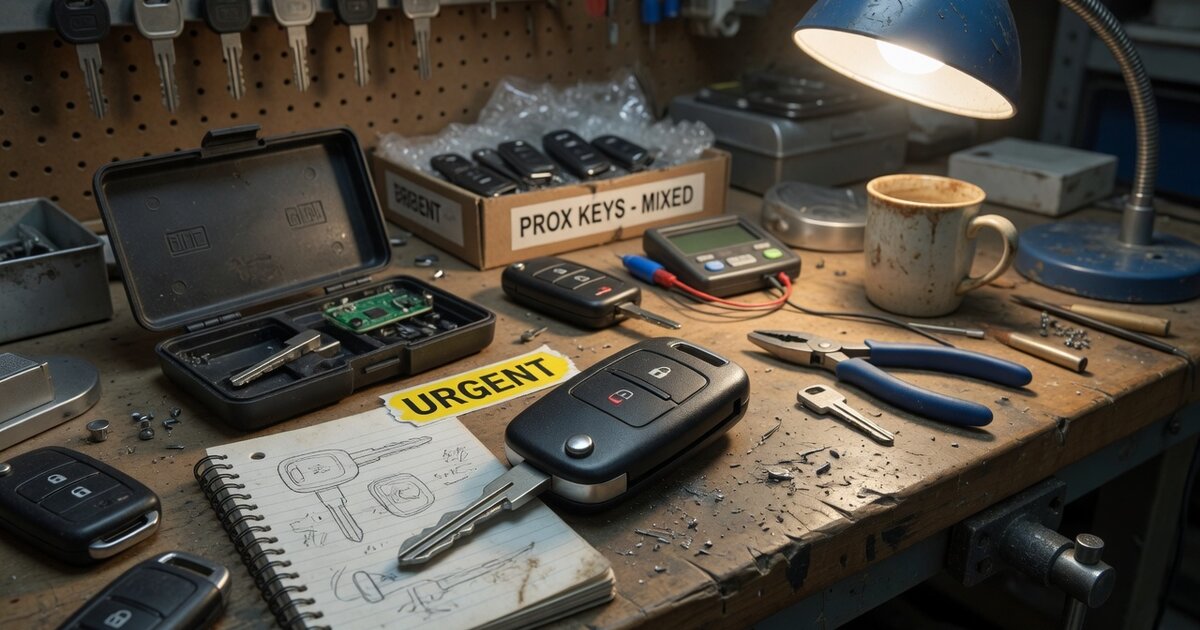
If you've lost or broken a keyless entry fob, you're not dealing with the same problem as someone who needs a basic remote replaced. A keyless (proximity, push-button start) car key does two jobs at once: it lets the car sense you're nearby to unlock the doors, and it authorizes the engine to start with no physical turn of a key. Lose it, and the car isn't just harder to lock or unlock remotely — it may not start at all. This guide skips the theory and focuses on what to actually do right now: how to source the right fob, who can program it, what to expect at each step, and the mistakes that turn a same-day fix into a multi-day headache.
What makes keyless replacement different
A standard remote or transponder key replacement is a relatively contained job — cut a blade, program a chip, done. A keyless proximity fob is a more layered piece of hardware. Inside it sits a low-frequency transponder that talks to the vehicle's immobilizer for start authorization, plus a separate RF system that handles passive entry and remote functions, often running rolling or challenge-response encryption to stop the signal from being copied. For a closer look at how that handshake actually works, see How Car Keyless Entry Remotes Actually Work — it's worth understanding before you start calling around for quotes.
That added complexity shows up in two places when you're replacing one. First, sourcing: you can't just order "a key fob for my car." Proximity fobs vary by FCC ID, frequency, and chip type even within the same model year and trim, so a part that looks identical on a listing photo may not pair with your immobilizer. Second, programming: push-to-start systems generally require a diagnostic tool with security-level access through the OBD-II port, and on some vehicles that access has to be authorized through the manufacturer's own servers rather than done locally with aftermarket equipment. That's a meaningfully higher bar than the programming needed for a simple remote-only fob, which is one reason the process, and the price, differ from a basic replacement.
Your options and what to expect
Dealer. The dealership is the one option guaranteed to have both an OEM-matched fob and full manufacturer server access, which matters on brands whose security architecture won't accept aftermarket tools at all. The tradeoff is speed and cost: you'll typically need an appointment, may need to bring the vehicle in (or have it towed if it won't start), and dealer labor rates run higher than independent shops.
Mobile automotive locksmith. For the large majority of vehicles on the road, an independent locksmith carrying multi-brand programming platforms can source a compatible fob and program it on-site, often the same day and for noticeably less than dealer pricing. The catch is that a handful of platforms — some FCA models, some Toyota/Lexus systems, and a number of European makes — use security architectures that require dealer-level tool subscriptions the locksmith simply doesn't have access to. A locksmith who knows their limits will tell you this upfront rather than attempt a job that can't finish; that's a sign of a shop worth using, not a red flag.
Self-programming. This is realistic only in narrow cases — mainly adding a spare on an older or simpler platform where a documented ignition-cycle procedure exists and you still have at least one working key. It is not a realistic path if the fob is lost or broken and you're locked out or stranded, and it's essentially never viable for a true all-keys-lost situation on a push-to-start system. If your situation is closer to a standard remote going bad rather than a full proximity lockout, the broader decision process — including where DIY genuinely fits — is covered in Remote Control Car Key Replacement: How It Actually Works.
All keys lost. This is the heavier version of the job. With no working key to reference, the technician typically has to perform a full immobilizer reset through the OBD-II port, which on many vehicles wipes every previously registered key from memory — meaning any old fobs that turn up later won't work again without being reprogrammed too. Expect this to take considerably longer than a spare-key job, and expect to be asked for proof of ownership before anyone will touch it.
Common mistakes to avoid
The most expensive mistake is ordering a bare aftermarket fob online and expecting it to work out of the box. An unprogrammed fob is just a plastic shell with a chip inside until it's been paired to your specific vehicle's security system — for the mechanics of what that pairing actually involves, see Keyless Entry Fob Replacement: How Pairing and Re-Sync Really Work. Buying the part is only step one.
Second, don't assume any listing labeled "compatible with [your model]" is actually a match. Confirm the FCC ID or part number against your specific vehicle before paying — trims and model years within the same nameplate can use different fobs.
Third, be upfront about whether it's a lost-and-locked-out job, a spare-key job, or a true all-keys-lost job when you call for a quote. These are different amounts of work, and a shop that quotes you for a spare-key job then discovers on arrival that all keys are gone will need to requote and may need extra time.
Fourth, don't skip having proof of ownership ready — registration or title plus matching ID. Reputable dealers and locksmiths alike will decline to program a key without it, precisely because that verification step is what stops a stolen VIN from turning into an easy new key for a thief.
Finally, don't default to towing the car to a dealer if you haven't checked whether a mobile locksmith can reach you first. If the vehicle runs but you've simply lost the fob, a mobile visit is very often faster and cheaper than arranging a tow.
Frequently asked questions
Can I replace a keyless car key without going to the dealer?
In most cases, yes. Independent and mobile locksmiths equipped with modern multi-brand programming tools can handle proximity key replacement on the majority of makes and models. The exceptions are certain brands and recent model years with security systems that require dealer-only tool access — a good locksmith will tell you this before taking the job rather than after.
How long does it take to replace a keyless proximity key?
If you still have one working key and are simply adding a spare or replacing a damaged unit, the job is often done in well under an hour once the correct fob is in hand. An all-keys-lost job, which usually involves a full immobilizer reset, takes considerably longer and can run well past an hour depending on the vehicle.
Do I need to bring my car in, or can someone come to me?
Many automotive locksmiths operate as mobile units and will come to your location with the equipment needed to cut and program a key on-site. Dealerships more often require the vehicle to be brought to their service department, which may mean a tow if the car won't start without its key.
What happens if I've lost every keyless key for my car, not just one?
This is treated as a bigger job than a single lost fob. Because there's no working key to authenticate against, the technician typically has to gain security-level access through the OBD-II port and reset the immobilizer's key memory, then program new keys into that cleared memory. Expect to provide proof of ownership, and expect more time and cost than a standard spare-key replacement.
Is an aftermarket proximity fob as reliable as an OEM one?
A correctly matched aftermarket fob, properly programmed, can work just as reliably as an OEM part for day-to-day use, and typically costs less. The risk isn't the aftermarket category itself — it's buying a fob that isn't actually matched to your vehicle's exact FCC ID and chip type, which is a common way people end up with a part that can't be paired at all.
What documentation do I need before someone will program a new key?
Expect to show proof of ownership — vehicle registration or title — along with ID matching the name on it. This isn't paperwork for its own sake; it's the security check that keeps someone from getting a working key cut for a car that isn't theirs, and both dealers and reputable locksmiths enforce it.