Keyless Entry Fob Replacement: How Pairing and Re-Sync Really Work
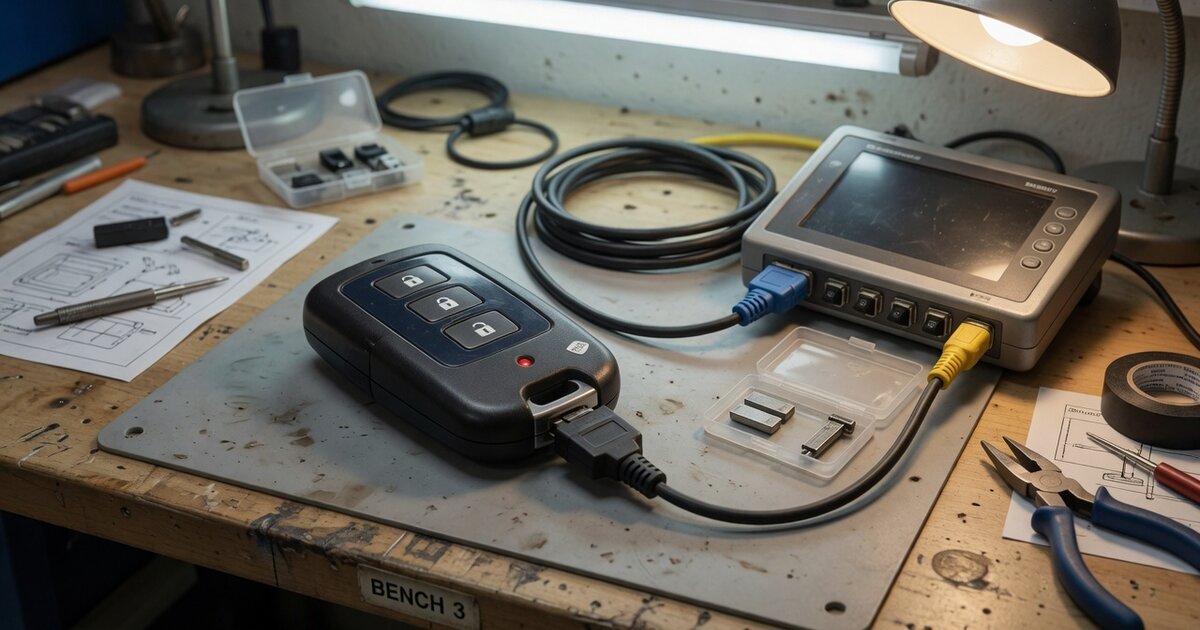
A keyless entry remote fob is not just a plastic shell with buttons — it is one half of a two-way relationship with your vehicle's receiver module. When people search for "keyless entry remote fob replacement," they are usually past the point of a simple dead battery and are dealing with a fob that will not lock, unlock, or start the car at all. Understanding how that relationship is established — and how it has to be re-established after a swap — explains why replacement sometimes takes five minutes in a parking lot and other times requires a trip to a locksmith or dealer with specialized equipment.
How replacement and pairing works
Every keyless fob talks to the car over a short-range radio link, most commonly in the 315 MHz or 433 MHz bands depending on region and manufacturer. There are two general flavors of this communication. Remote Keyless Entry (RKE) is one-directional: you press a button, the fob transmits a coded signal, and the car's receiver checks that code against what it expects. Passive Keyless Entry (PKE), used on proximity/push-button-start vehicles, is two-directional — the car continuously broadcasts a low-power signal, and when the fob is close enough it responds automatically, so the doors unlock and the ignition can start without a button press at all. Whether replacement is simple often comes down to which of these two systems your car uses.
Both systems rely on rolling codes: each transmission includes a new encrypted value so a captured signal cannot simply be replayed later. This is also why a fob cannot just be "turned on" after replacement — the vehicle's receiver has to be told that this specific fob's code sequence is now valid, a process usually called pairing, syncing, or programming. On vehicles with an immobilizer-linked ignition, the fob (or the key blade's transponder chip) also has to be recognized by the engine control system before the car will start, which is a separate check from the door-lock pairing.
Sourcing the replacement is the first real decision point. An OEM fob comes from the same supplier that built your original and is generally the safer bet for matching frequency, chip type, and encryption exactly. Aftermarket fobs are widely available and usually cheaper, and higher-quality aftermarket units use comparable chips and transponder technology to sync reliably with the factory immobilizer — but quality varies a lot between sellers, and a mismatched chip or frequency simply will not pair no matter how the programming steps are followed. If you are weighing OEM against a third-party option, it helps to understand the actual hardware differences first, which is covered in more detail in this buying guide to aftermarket keyless remotes.
Once you have a compatible fob, programming happens one of three ways. Some vehicles support self-programming through a sequence performed with the ignition or existing working key — for example, cycling the ignition a set number of times or holding a button combination while in the "on" position — and this is typically documented in the owner's manual for models that support it. Many newer vehicles, particularly those with proximity entry, require a professional programmer that communicates with the car's onboard computer or, in some cases, a connection to the manufacturer's server, which is why a locksmith or dealer is often the only realistic path. A third option some locksmiths offer is cloning an existing working fob, copying its identification code onto a new unit rather than adding it as a separate paired key — useful in some situations but worth confirming is appropriate for your specific vehicle's security system.
What to consider
Before replacing a keyless entry fob, it is worth working through a few practical questions rather than just ordering the first compatible-looking part:
- Which system does the car use? RKE-only vehicles (lock/unlock/trunk buttons, physical key still starts the car) are generally more forgiving to self-program than PKE/proximity systems tied into push-button start.
- Does the fob need to match a transponder chip too? If losing the fob means losing your only way to start the car, the replacement needs the correct chip, not just the correct buttons and frequency — this is a different scope than the mechanical and electronic breakdown covered in our general key fob replacement guide.
- Will other fobs still work afterward? On some vehicles, adding a new fob through the self-programming sequence erases previously paired fobs unless every working fob is present during the process; on others, fobs are added independently. This varies enough by make and model that it is worth confirming rather than assuming.
- Is programming included in the price? A fob purchased online is only half the job — factor in whether you can self-program it, need a locksmith visit, or need dealer-only equipment, since that determines both cost and turnaround time.
Common mistakes to avoid
The most common misstep is buying a fob based on looks or price alone without confirming the frequency and chip match the vehicle — a fob that looks identical to the original can still fail to pair if the internal hardware differs. A second frequent mistake is trying a battery-loss resync procedure (rapid button presses, holding lock and unlock together) on a fob that actually needs full reprogramming, or the reverse — assuming reprogramming is required when the issue is only that the rolling code drifted after a battery change and a simple resync would have fixed it. Skipping the owner's manual or a model-specific procedure and guessing at a generic sequence found online is another common source of wasted attempts, since self-programming steps differ meaningfully between manufacturers and even between trim levels. Finally, some owners attempt to clone or reprogram a fob without realizing their vehicle's security system requires all keys to be reprogrammed together, which can unintentionally lock out an existing working key.
Frequently asked questions
Can I program a new keyless entry fob myself?
On some vehicles, yes — many models support a self-programming sequence using the ignition or an existing working key, detailed in the owner's manual. Vehicles with proximity/push-button start and more advanced immobilizer systems more often require a professional programmer, since the pairing process communicates directly with the car's security module rather than relying on a button sequence alone.
Why did my fob stop working after I replaced the battery?
Rolling-code systems keep a synchronized counter between the fob and the receiver. When a fob's internal capacitor fully discharges during a battery swap, that counter can drift out of sync, and the car no longer recognizes the next code sent. This is usually fixed with a resync procedure rather than full reprogramming, though the exact steps vary by manufacturer.
Does a keyless entry fob replacement affect my other keys?
It can. On some vehicles, entering programming mode and adding a new fob clears all previously paired fobs unless every existing key is present during the process; on others, new fobs are added without affecting existing ones. This is one of the more overlooked details before starting a DIY attempt.
Do I need a dealer, or can a locksmith handle keyless entry programming?
Many automotive locksmiths carry programming equipment capable of pairing keyless fobs and even transponder-based immobilizer keys for most makes and models, often at lower cost and faster turnaround than a dealership. Some newer or more security-hardened vehicles still route programming through manufacturer-only systems, in which case a dealer visit is the more reliable option.
Is an aftermarket keyless remote a safe choice?
A well-made aftermarket fob using the correct chip and frequency can pair and perform reliably, and is typically less expensive than an OEM replacement. Quality varies significantly between sellers, so it is worth checking chip compatibility and buyer reviews before purchasing rather than assuming any listing labeled "compatible" will pair correctly.
What is the difference between remote keyless entry and passive keyless entry?
Remote keyless entry requires pressing a button on the fob to send a signal to the car. Passive keyless entry uses two-way communication between the fob and the vehicle so that doors unlock and the engine can start simply by having the fob nearby, without pressing anything. The system your vehicle uses affects how replacement fobs are sourced and how programming is carried out.