TOAD Pro OBD2 ECU Tuning Software: What It Actually Is
Search interest around "TOAD Pro OBD2 ECU tuning software" is real, but the phrase hides a question worth answering carefully: is TOAD Pro a genuine ECU tuning tool that belongs alongside dedicated flashing hardware, or a diagnostic package wearing a tuning label? Based on what's actually documented about the product, the answer sits in between — and knowing exactly where matters before anyone spends money or connects it to a running engine.
What TOAD Pro actually is
TOAD stands for Total OBD & ECU Auto Diagnostics. It's sold by Total Car Diagnostics, a company based in Byron Bay, Australia, publicly fronted by Alex Eisenberg, described in the vendor's own materials as a former ECU software programmer. The product has been on the market since around 2011, making it one of the longer-running names in the consumer OBD2 software space.
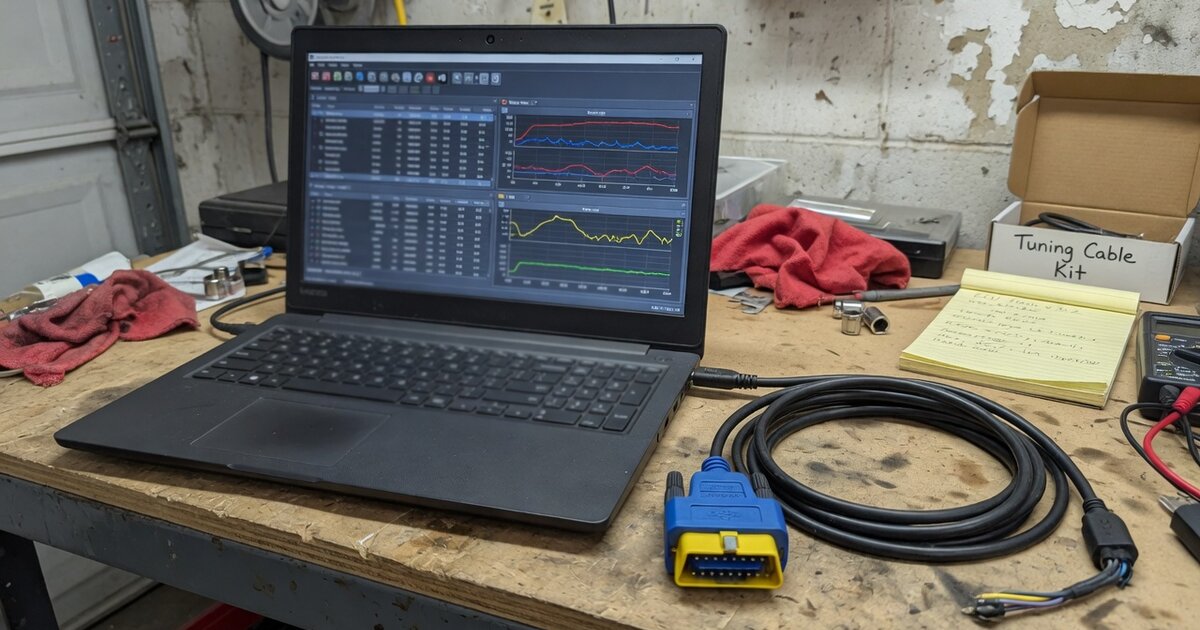
Functionally, TOAD Pro is Windows software that pairs with a standard ELM327-type interface — wired USB, Bluetooth, or Wi-Fi — the same class of adapter used by countless generic OBD2 scan tools. Through that connection, the vendor bundles roughly a dozen and a half smaller applications covering fault-code reading on engine and transmission systems, live data monitoring, and warning-light resets, marketed as pulling out a noticeably higher percentage of trouble codes than basic handheld scanners or phone apps.
The "tuning" part of the name comes from a separate module the vendor describes as letting a user edit, tune, and reprogram ECU chip data — adjusting parameters such as air-fuel ratios, ignition timing, and boost pressure — with access to a library of pre-built map files and claimed support for reading and remapping some encrypted ECUs. That's a materially different kind of claim than reading a fault code, and it's the part of the product that deserves the most scrutiny.
It's worth being explicit about what independent sources do and don't confirm. The diagnostic side of TOAD Pro is well documented across reviews and long-running owner forum threads going back over a decade. The tuning side is described almost entirely in the vendor's own marketing language, with far less independent, hands-on verification of exactly which ECUs it can write to, which map files are actually safe, or how its remapping compares in practice to purpose-built flashing tools. Where a concrete claim about coverage or specifications can't be confirmed outside the vendor's own copy, it's better treated as unverified than repeated as fact.
What to consider before using it
Reputation on TOAD Pro is genuinely split. Some long-time users, including at least one self-described professional mechanic, report using it across thousands of jobs without issue. Other reviewers and forum posters are more skeptical, pointing to a sales page that hides pricing behind a "contact us" step, promotional discounts that make the real price hard to pin down, and underlying hardware built on the same low-cost ELM327 chipset found in inexpensive generic adapters. That split means "does it work" has no single answer — it likely depends heavily on the specific vehicle, ECU, and what a buyer expects.
It also helps to place TOAD Pro next to the tools professional locksmiths and tuners reach for when the job is ECU reprogramming rather than fault-code diagnosis. Dedicated flashing tools such as the MPPS V21 ECU Programming Tool or the Galletto 1260 OBDII EOBD ECU Flashing Cable are built around defined, testable support lists for specific ECU families and protocols, not a generic OBD2 interface with a tuning module layered on top — a different philosophy worth weighing before assuming TOAD Pro's bundled approach fits a given job.
Before buying, ask the vendor for a specific, dated list of supported vehicles and ECUs for the tuning module — not a general percentage claim. Confirm in writing what the refund and support terms actually cover, since "lifetime support" only helps if its conditions are documented. And because TOAD Pro depends on a separate ELM327 adapter, that interface's own compatibility with a given vehicle is a second variable to confirm.
Anyone planning ECU tuning as regular work should recognize that professionals rarely rely on one all-in-one package — the trade spreads work across piggyback modules, direct-flash tools, and standalone ECUs depending on vehicle and goal, a distinction covered in ECU Tuning Tools: Piggyback, Flash, and Standalone Options Explained. A Windows diagnostic suite with a tuning add-on is rarely the only tool in that box.
Finally, adjusting fuel, timing, or boost parameters isn't low-stakes: it can affect emissions compliance, void a factory warranty, and, done incorrectly, shorten engine life or cause damage. That's why the vendor's own materials caution that tuning functions should be used by experienced mechanics rather than casual owners experimenting on a daily driver.
Common mistakes to avoid
The most common mistake is buying on the strength of a marketing percentage — a claim of pulling out a certain amount more fault codes than a basic scanner — without confirming that a specific make, model, and ECU is actually on a supported list.
A related mistake is conflating diagnostics with tuning. Reading and clearing codes through a generic OBD2 interface is mature and well understood. Writing new calibration data to an ECU is a different category of task, and software strong at one isn't automatically equally strong at the other just because both live under one license.
It's also easy to rely on outdated reviews. Consumer OBD2 and tuning software listings change pricing, bundled tools, and even ownership over time, so a five-year-old thread may not reflect today's product.
Skipping a written, vehicle-specific coverage list before paying is another recurring issue, particularly with sales models that avoid posting a fixed price and push buyers toward direct contact instead.
On the hands-on side, using downloaded or third-party map files outside a vendor's own tested library, on a vehicle without first backing up the original ECU data, removes the ability to recover if a write goes wrong. And overlooking basic requirements — Windows-only, plus a separately purchased ELM327 adapter whose own compatibility varies — is a simple, avoidable way to end up with a tool that doesn't work on the intended setup.
Frequently asked questions
Is TOAD Pro a real ECU tuning tool or just a diagnostic scanner with extra marketing?
It's genuinely both, but not evenly. The diagnostic side is a documented, ELM327-based OBD2 scanning package reviewed and used for over a decade. The tuning module is a real, separately sold feature, but its specific vehicle and ECU coverage is described mainly in the vendor's own marketing rather than confirmed in detail by independent sources — so treat the diagnostic claims as more established than the tuning claims.
Who makes TOAD Pro and how long has it been available?
TOAD Pro is sold by Total Car Diagnostics, an Australian company based in Byron Bay, publicly represented by Alex Eisenberg, a former ECU software programmer. The TOAD product line dates back to around 2011.
Does TOAD Pro work with a standard ELM327 adapter?
Yes. TOAD Pro is Windows software that connects through an ELM327-type interface over USB, Bluetooth, or Wi-Fi. The adapter is typically purchased separately rather than bundled at the base price, so confirm which adapter is recommended and whether it's included before buying.
Can TOAD Pro read and modify encrypted or manufacturer-locked ECUs?
The vendor claims support for reading and remapping some encrypted ECUs as part of the tuning module, but this is a vendor claim rather than something broadly verified across independent reviews. Given how much encrypted-ECU access varies by manufacturer and model year, get written confirmation of support for that exact ECU before purchasing.
Is TOAD Pro cheaper than professional flashing tools like MPPS or Galletto?
TOAD Pro is typically sold as a one-time software license in a lower price bracket than dedicated hardware-based flashing tools. But the comparison isn't purely about cost — dedicated tools are built around defined, testable ECU and protocol support lists for professional flashing work, while TOAD Pro layers a tuning module on top of a generic diagnostic interface. The right choice depends on whether the job calls for broad diagnostics with occasional tuning, or dedicated, repeatable ECU flashing work.
What should I check before trusting any ECU tuning software's coverage claims?
Ask for a current, dated list of specifically supported vehicles and ECUs rather than accepting a general percentage or "works with most cars" claim. Look for recent, independent user reports rather than only vendor testimonials. Confirm refund and support terms in writing. And before writing anything to a live ECU, back up the original data so there's a way back if a tune doesn't go as planned.